
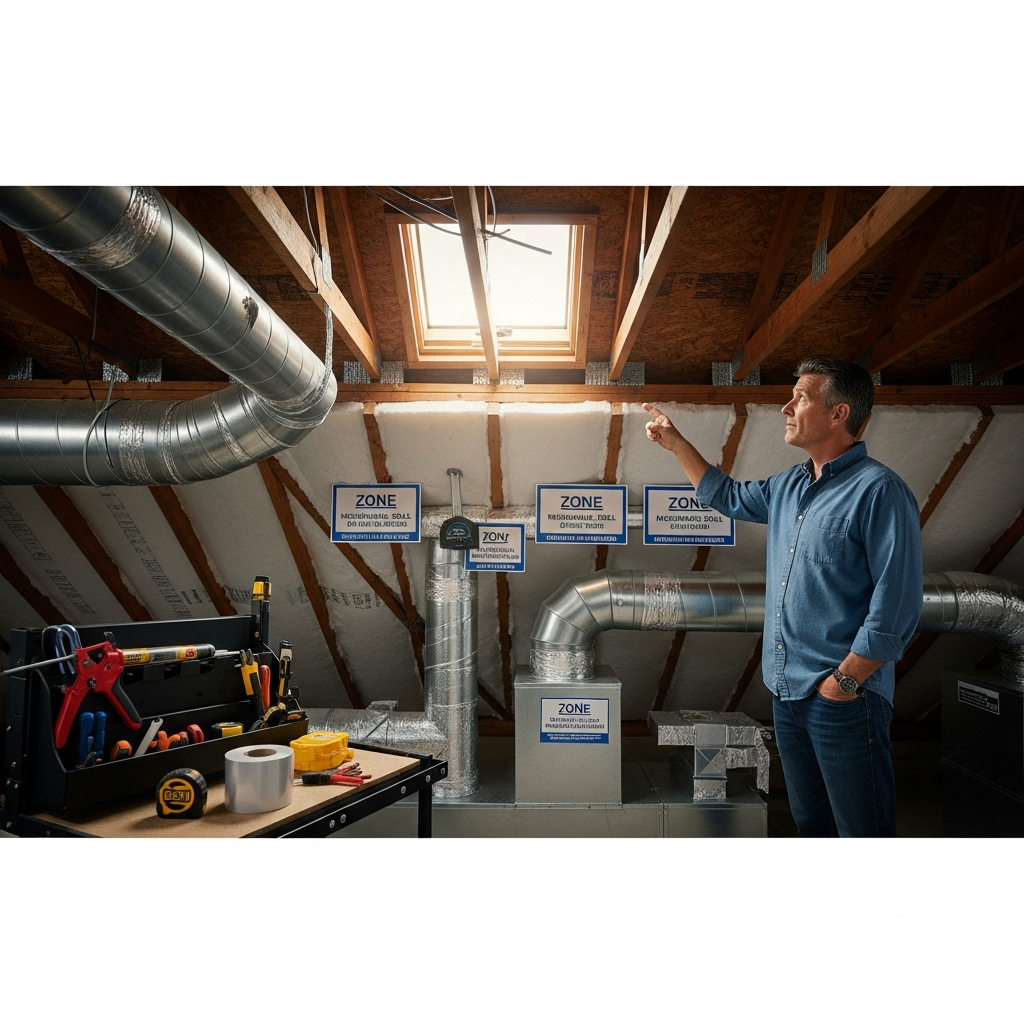
Energy savings in Malibu homes rarely come from a single dramatic upgrade. More often, they result from a series of thoughtful improvements that reduce waste and help your system deliver comfort steadily and quietly. Among the most impactful of these improvements is a reimagined duct system. When ducts are right-sized, sealed, and insulated with care, the equipment breathes easier, runs at gentler speeds, and maintains even temperatures without constant cycling. If you are beginning to explore how duct replacement can contribute to lower energy use and higher comfort, this guide offers a local perspective grounded in Malibu’s coastal realities.
Our climate gifts us with mild days and cool nights, but marine layer mornings and afternoon sun create daily swings that can be surprisingly demanding on distribution systems. Older ducts often leak, restrict flow with tight bends, and pass through spaces where insulation is thin or disconnected. The result is a system that forces equipment to work harder than it should. By redesigning the pathways, sealing meticulously, and insulating continuously, you remove friction from the process—literally and figuratively—so every bit of conditioned air reaches living spaces efficiently.
Right-sizing and resistance reduction
Efficiency starts with air moving easily. That requires ducts sized to meet room needs without forcing high fan speeds. Smooth interior trunks, minimized elbows, and generous radii at turns reduce resistance. When static pressure is lower, equipment can operate more of the time at quieter, more efficient settings. In practice, that means rooms feel even and calm, and your system avoids the on-off seesaw that wastes energy and comfort.
Returns are just as important as supplies. Many homes suffer from undersized or poorly located returns that starve the system of the air it needs to circulate. By improving return pathways, the entire distribution network breathes better. Bedrooms in particular benefit when returns allow doors to be closed without suffocating air movement—an everyday quality-of-life improvement that also supports efficiency.
Sealing that lasts in a coastal climate
In Malibu, the daily rhythm of humidity and temperature challenges mediocre sealing. Long-lasting mastics, mechanical connections, and correct supports keep ducts tight over time. Tight systems reduce the amount of conditioned air lost to attics or crawlspaces, which is an immediate efficiency win. They also improve indoor air quality by preventing dusty, unconditioned air from being drawn into the system through gaps.
Verification matters. Post-installation testing confirms that leakage levels meet modern expectations. You feel the difference the first warm afternoon when the living room stays steady instead of drifting warmer as the system tires against hidden losses. That steadiness is efficiency you can perceive without ever looking at a chart.
Insulation continuity and thermal alignment
Heat gains and losses along duct runs sap efficiency. Continuous, well-fitted insulation keeps air close to the temperature your equipment produces so that by the time it reaches each room, very little has been lost to the attic or crawlspace environment. Where ducts pass through spaces prone to condensation, proper insulation and vapor-smart strategies prevent dampness and preserve performance over time.
When insulation is paired with reduced resistance, equipment enjoys the best of both worlds: less effort to move air and less energy lost along the way. In Malibu’s microclimates, this combination helps hold indoor temperatures steady despite shifting outdoor conditions.
Designing for quiet comfort
Efficiency and quiet often go hand in hand. Ducts that allow smooth, balanced airflow reduce the need for high fan speeds, which in turn lowers noise. In open-plan homes—common near the coast—this can be transformative. Register choices, last-foot transitions, and grille placements that spread air gently across a room maintain comfort without a noticeable rush. When your home feels peaceful even during the warmest part of the afternoon, you know the distribution network is doing its job well.
Balancing completes the picture. After installation, adjusting dampers and registers to fine-tune each room ensures no area is over-supplied or neglected. That evenness avoids the common trap of overcooling one zone just to nudge a stubborn corner into range, which wastes energy and creates temperature swings.
Preparing for future equipment upgrades
Modern high-efficiency equipment thrives with low-resistance, airtight ducts. By addressing the distribution network now, you set the stage for future upgrades—whether you plan to switch to variable-speed systems or explore other high-performance options. A duct system that supports gentle, continuous operation opens your choices and lets equipment deliver its full potential.
This forward-looking approach is especially valuable in Malibu, where homes vary widely in age and architecture. A well-designed network adapts to different equipment types over time and integrates smoothly with other improvements like envelope sealing or window upgrades.
Air quality gains that accompany efficiency
Sealing and right-sizing do more than save energy; they help keep your home’s air cleaner. When ducts are tight, the system is less likely to pull dust, pollen, or attic fibers into circulation. Returns placed thoughtfully and filters matched to both airflow and household needs capture more of what you don’t want to breathe, all without forcing equipment to work harder. The side effect of an efficient system is a calmer, cleaner indoor environment—especially welcome during wildfire season or windy, dusty days along the coast.
Permitting, inspections, and peace of mind
Modern standards hold duct installations to a higher bar than many legacy systems ever met. Permits, inspections, and testing aren’t just checkboxes; they ensure that sealing, insulation, supports, and layout align with best practices. The result is a home that not only feels better but also has a paper trail validating the quality of hidden work. That record can be useful for future remodels or if you decide to list the home, as it demonstrates care in the building’s infrastructure.
Aligning design with Malibu microclimates
Homes on the water face different demands than homes up near the canyons. If your living room greets the morning marine layer, condensation management and insulation continuity are essential. If your bedrooms sit on a sunlit slope, afternoon loads may require special attention to supply routing and register choice. A design that accounts for these details avoids the stopgap tactics that waste energy, like running the system at high speeds or overcooling one room to nudge another into comfort.
Sometimes small design choices make big differences. Shifting a register a few feet to spread air across a larger window wall, or adding a return to a bedroom wing, can resolve long-standing comfort complaints while reducing run times. The art is in balancing these improvements so the system works as a whole, not as a collection of fixes.
Frequently Asked Questions
How does duct replacement save energy? By reducing resistance and leakage while improving insulation, your system delivers more of the conditioned air it produces to the rooms where it’s needed. Equipment runs at lower speeds more often, which uses less energy and feels quieter.
Is this only worthwhile with new HVAC equipment? No. Even existing equipment benefits from lower resistance and tighter ducts. When the distribution network improves, current systems usually run more steadily and efficiently.
Will I notice a difference during the afternoon warm-up? Most homeowners feel the change quickly. Spaces that used to drift warm in late afternoon hold steady when airflow is balanced and losses are minimized along the runs.
Do Malibu’s coastal conditions change how ducts should be installed? Yes. Sealing products, supports, and insulation continuity must stand up to humidity swings and salt air. Attention to condensation management is also important near the ocean.
How disruptive is the work? With planning, crews phase the project to limit downtime and protect finishes. Clear communication about access and daily cleanup keeps household routines comfortable.
Can this help air quality during wildfire season? Tighter ducts and a filtration strategy matched to your airflow improve capture of particulates. Balanced returns make those filters effective without forcing the system to struggle.
Your next step toward efficiency
If your goal is a Malibu home that feels calm, even, and efficient throughout the day, redesigning the distribution network is a powerful move. A well-executed project respects the coast’s microclimates, reduces hidden waste, and elevates everyday comfort. When you are ready to explore duct replacement as the backbone of an energy-saving plan, reach out to a trusted local professional who can translate design principles into quiet, measurable results.