
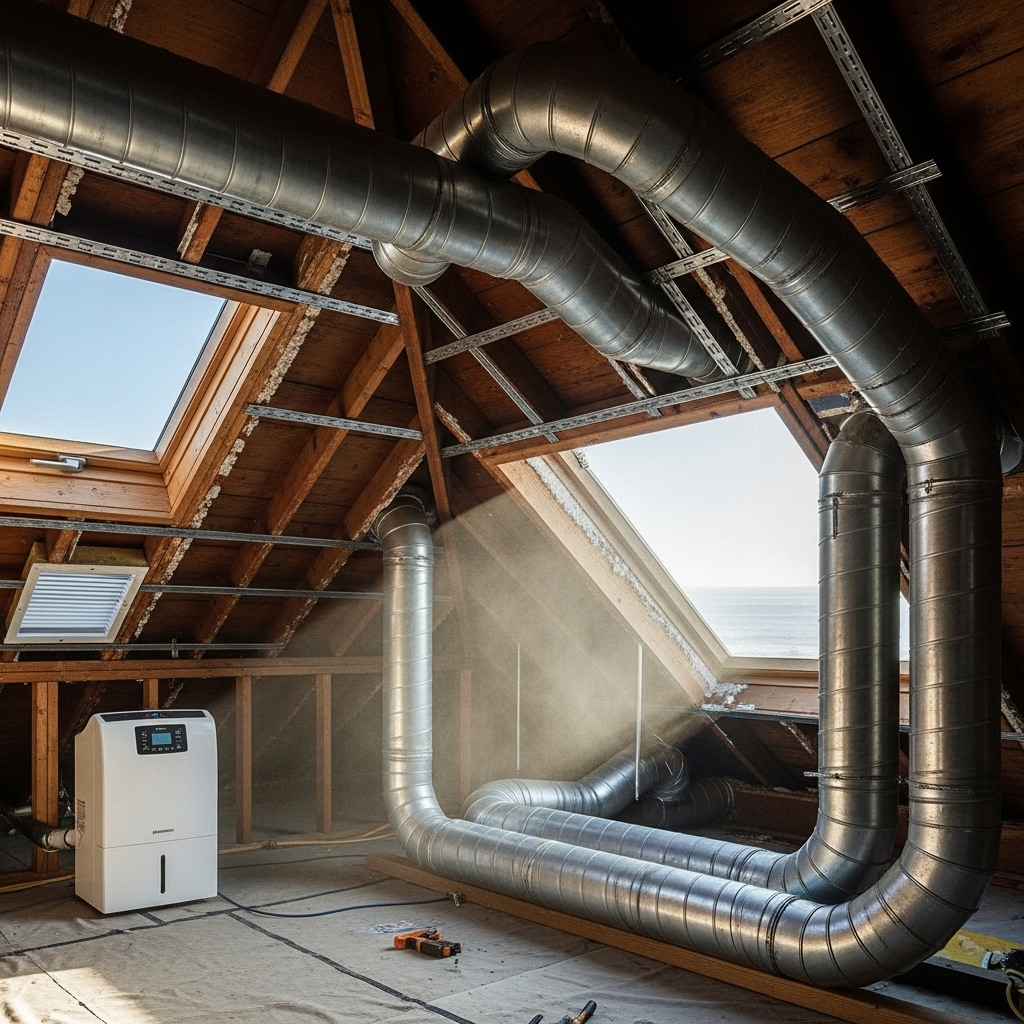
The Coastal Difference: Designing Ducts for Malibu’s Marine Life
Living by the ocean is a daily gift—sea air, shifting light, the soundtrack of waves—but Malibu’s coast also asks more of your home’s mechanical systems. Ducts in this environment endure salt aerosols, brisk winds, foggy mornings, and warming afternoons, plus the occasional sand and grit carried inland. Over time, those elements can corrode hardware, fatigue insulation jackets, and degrade seals. HVAC duct replacement for coastal homes is about more than swapping materials; it’s about engineering airflow and durability that honor the sea’s beauty while resisting its challenges. If you’re weighing duct replacement for a Malibu beach or bluff home, the best results come from marrying resilient materials with thoughtful design and careful installation.
Coastal homes often have design features that complicate airflow—vaulted ceilings, vast panes of glass, and open plans that blur the line between indoors and out. These spaces feel magical at sunset but can be tough for ducts, which must carry air farther and distribute it gently without noise. The solution is a duct strategy that favors stable trunk sizing, quiet register selection, and sealing that takes salt and moisture seriously. The reward is a home that stays serene no matter what the ocean sends your way.
Materials That Respect the Salt Air
Salt is relentless. It finds joints, screws, and thin coatings; it rides humid breezes into attic spaces. Choosing materials with corrosion resistance is your first line of defense. Coated or stainless fasteners and hangers, rigid metal trunks where distance and geometry demand, and high-quality insulation with robust vapor barriers work together to resist the coastal onslaught. Where appropriate, lined metal trunks can temper sound and protect interiors, while short, straight runs of insulated flex handle distribution efficiently when supported to prevent sag.
Sealing is equally important. Joints should be mechanically fastened and mastic-sealed; tapes must be rated for temperature and longevity. Boots need careful sealing to the surrounding building assemblies so you’re not losing air into cavities. At the beach, even small leaks count—salty air combines with moisture to find those gaps. Tight systems keep conditioned air where it belongs and help filtration do its job.
Designing for Quiet Comfort in Open Spaces
Many Malibu coastal homes flow from room to room with minimal interior walls. That openness requires gentle air distribution to avoid drafts and noise. Proper trunk sizing keeps static pressure within equipment limits, and register choices—often larger or linear diffusers—support lower face velocities. The goal is to bathe the space in even comfort rather than blast it from a handful of loud registers. Returns play a starring role, too. Adequate return area allows higher-MERV filtration for smoke and pollen without starving the blower, and strategic locations reduce noise by avoiding resonant hallways and echo-prone corners.
When ceilings soar or glass dominates, the temperature gradient can widen. Ducts serving these rooms benefit from careful balancing and, sometimes, slightly higher airflow rates at strategic times of day. Variable-capacity equipment can help, but only if the ducts can carry and return air calmly. That’s why a coastal duct replacement often includes upgrades to returns, filter cabinets, and register sizing—components that shape the system’s character as much as the ducts themselves.
Access, Logistics, and Protecting Your Home
Beach neighborhoods bring practical challenges: tight lots, shared driveways, and limited staging areas. Inside, finishes are often high-end and sensitive to dust and scuffs. A careful contractor will map access routes, protect floors and furnishings, and set up temporary containment at attic access points. On windy days, they’ll manage open doors and windows to prevent salt and sand from swirling into work zones. Demolition proceeds with an eye for cleanliness: removing old ducts without showering insulation down on living spaces, sealing unused penetrations, and keeping the home functional during the project.
Timing also matters. Coastal mornings can be damp and cool, with attics becoming workable as the day warms. Crews adapt to those rhythms, sequencing sealing and testing when materials cure best and conditions allow accurate measurements. This local timing knowledge isn’t flashy, but it preserves quality and keeps your project on schedule.
Filtration for Ocean Breezes and Seasonal Smoke
Malibu’s coastal lifestyle meets reality when pollen season or wildfire smoke drifts in. A duct system that supports efficient filtration lets you close doors and trust the indoor air. That begins with the return side: larger or additional returns reduce velocity and let high-efficiency filters breathe. During a replacement, your contractor can design for the filters you intend to use, so the system remains quiet and steady rather than strained. Sealed boots, tight ducts, and pressure-balanced rooms keep unfiltered air from sneaking in through gaps and cavities.
In open-plan homes, filtration is also about sound. A return placed near a calm hallway, sized generously, and outfitted with a quality cabinet can keep noise low while delivering clean air. Because salty air can be sticky, maintenance remains important after the upgrade; a well-designed system makes filter changes easy and provides access points for periodic inspection.
HERS Testing and the Value of Verification
Performance verification is part of California life, and it’s especially helpful on the coast. HERS testing confirms that leakage is low and airflow is where it should be. When your contractor designs for success—adequate return areas, right-sized trunks, clean sealing—the rater’s job becomes confirmation rather than discovery. This third-party signoff isn’t just a box to check; it’s a snapshot of how well your system is poised to deliver quiet, efficient comfort through sea fog and sunshine alike.
For homeowners who divide time between properties, HERS documentation is also peace of mind. You’ll have photographs and measurements that describe what’s behind the walls and above the ceiling, useful for future equipment upgrades or insurance documentation after storms. It’s part of building a home that’s as well-documented as it is well-built.
Integrating with Architecture and Aesthetics
Coastal homes often celebrate minimalism—clean lines, natural materials, and unobstructed views. Duct replacement respects those priorities. Register and grille selection can complement the interior, from discrete linear slots along ceiling edges to traditional grilles that match existing trim. In some homes, moving a register a few inches prevents a draft down a reading nook; in others, enlarging a grille transforms a noisy hallway into a quiet passage. These details are the fingerprints of a thoughtful project.
Where additions meet older wings, ductwork can unify spaces that once felt at odds. If a sunroom was tacked onto a mid-century core, or a modern kitchen replaced a closed plan, the new duct layout can erase temperature boundaries. Smooth transitions, balanced branches, and consistent returns produce even comfort that makes the house feel whole.
Preparing for the Future
Coastal homes are long-term commitments. When you replace ducts, it’s worth thinking ahead: future equipment upgrades, potential zoning, and even electrification plans. Designing today’s ducts with headroom for airflow and static pressure prevents bottlenecks later. If you plan to integrate smart controls or variable-capacity systems, your ductwork should be ready—quiet, stable, and balanced across rooms with very different exposures to sun and sea breeze.
If you are halfway through considering options and wondering which path brings the most peace of mind, focus on resilience and calm. The right combination of materials, design, and installation turns the ocean’s variables into a backdrop rather than a challenge. The moment your system cycles, the result should feel effortless. That’s the coastal standard for duct replacement in Malibu.
Frequently Asked Questions
Why do coastal ducts fail faster than inland systems?
Salt aerosols and humidity accelerate corrosion, and coastal winds drive those elements into attics and crawlspaces. Seams, fasteners, and thin coatings are the first to suffer. Over time, jackets crack, tapes lift, and joints loosen. Coastal replacement strategies counter that with corrosion-resistant hardware, robust sealing, and insulation with strong vapor barriers—plus thoughtful support to prevent sag that opens gaps.
Can I reduce drafts in my open-plan living room?
Yes. Drafts often come from high air velocity through small registers. During replacement, your designer can enlarge or reposition diffusers, reduce face velocity, and balance branches to bathe the room in gentle airflow. Rigid trunks and smoother transitions help, too, by lowering turbulence before air reaches the registers. The result is quieter, more even comfort in spaces where you gather most.
What about filtration for smoke and salt?
High-efficiency filters capture fine particulates, but only if the return path allows them to breathe. That usually means larger or additional returns and a quality filter cabinet. Sealed boots and ducts prevent unfiltered air from slipping in around the edges. After replacement, routine filter changes keep performance steady, especially during smoke events or heavy pollen periods.
Will the work disrupt my home near the beach?
A careful crew minimizes disruption by protecting finishes, staging thoughtfully, and coordinating around coastal conditions. They’ll manage open doors during windy periods, establish containment at attic accesses, and clean daily. Many homeowners stay in residence throughout; others schedule work while away. Clear communication and a tidy site make both choices comfortable.
Do I need HERS testing at the coast?
Most duct replacements in California require it. HERS verification confirms leakage and airflow targets, ensuring that sealing and balancing were executed correctly. On the coast, where conditions test materials and joints, this verification is especially valuable as a quality checkpoint that your system is ready for real-world demands.
What materials last longest by the ocean?
Coated or stainless fasteners and hangers, quality mastic sealing, and insulation with durable vapor barriers are baseline choices. Rigid trunks resist compression over distance, and lined metal can tame sound in certain runs. Flex used carefully for short, straight branches performs well when properly supported. The ideal mix depends on your home’s geometry and exposure.
When your home is shaped by the sea, your ductwork should be, too. A design-first approach, materials tailored for salt and moisture, and an installation that treats your finishes with care all contribute to calm, quiet comfort year-round. If you’re ready to align your system with the realities of Malibu’s shoreline, start with a plan that respects your architecture and the ocean equally—and finish with a verified, resilient duct replacement that lets you breathe easy.