
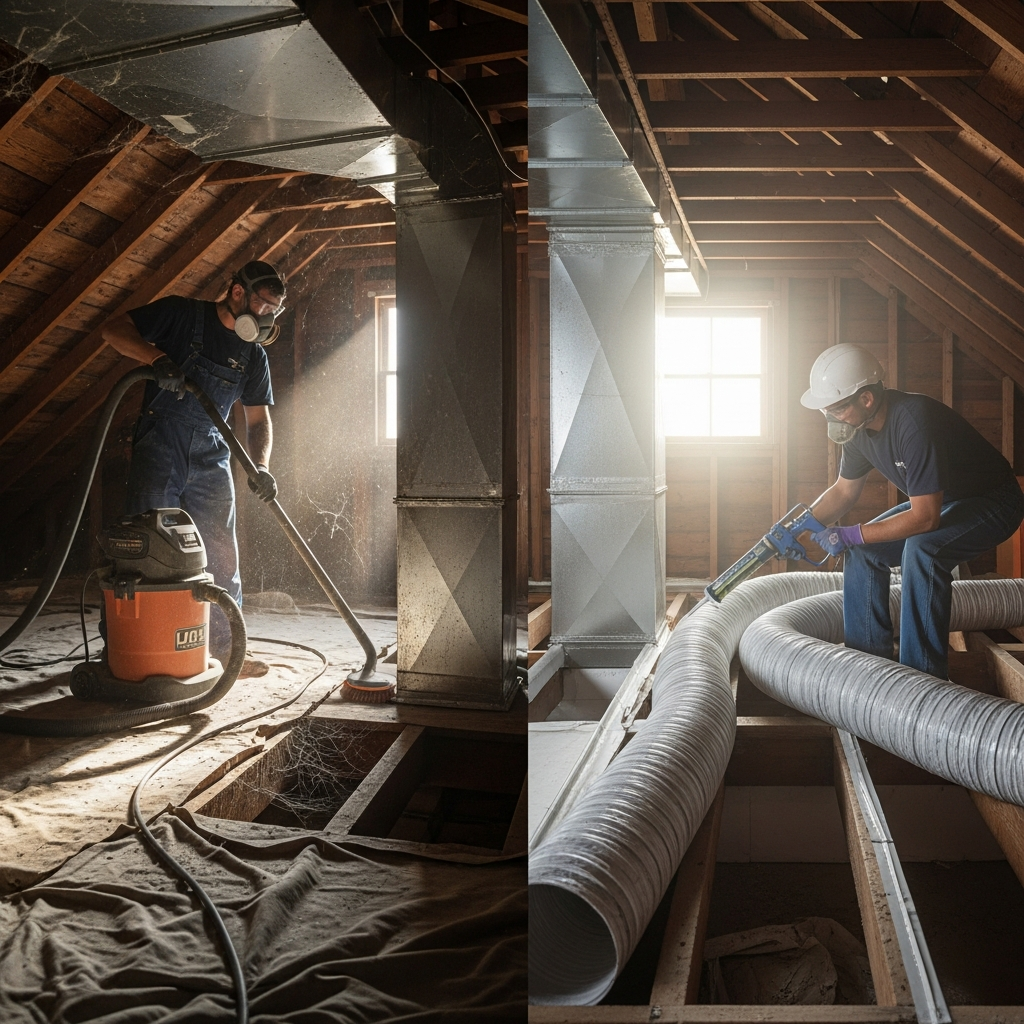
In Malibu, where ocean air meets canyon winds and wildfire seasons shape our routines, homeowners often ask a practical question: should I pursue duct cleaning, or is it time to replace the ducts altogether? The answer isn’t one-size-fits-all. It lies in what your system is made of, how it was installed, how it has aged in our coastal environment, and how well it serves the daily rhythm of your home. I like to frame the choice as a health check: cleaning is like a deep cleanse for a system that’s fundamentally sound, while replacement is a restorative procedure for a system that’s become structurally unsound or chronically inefficient. As you weigh the options, a clear overview of duct replacement can help you see where maintenance ends and renewal begins.
Let’s begin with what thorough cleaning can accomplish. When performed professionally, cleaning removes accumulated dust, construction debris, pet dander, and some microbial films from the duct interior and registers. It can also include sanitizing protocols where appropriate, provided materials can tolerate it. Cleaning shines in systems that are well-sealed, properly insulated, and reasonably well-designed, because the effort targets surfaces that influence air quality without fighting chronic leaks or structural damage. After a remodel or a particularly dusty season, cleaning can reset a healthy baseline, especially when paired with quality filtration and disciplined filter changes.
When cleaning is a smart first step
If your ducts are relatively young, the layout serves each room evenly, and the system has passed leakage tests with good results, cleaning can be the right tool. I especially recommend it for households noticing more dust than usual, experiencing mild odors after a period of closed-up living, or wanting peace of mind after construction. In Malibu’s coastal neighborhoods, salt air and morning moisture can cling to surfaces and make dust feel sticky; a careful cleaning can make a noticeable difference in freshness.
However, cleaning has limits. It cannot resize a branch that’s too small, straighten a route that squeezes airflow through sharp bends, or seal a joint that’s mechanically failed. It can’t restore crushed insulation jackets, nor can it reliably solve widespread leakage that draws attic or crawlspace air into the system. These are the moments when replacement enters the conversation.
Signals that replacement is the wiser move
Start with structure. If you see extensive tears in insulation, disconnected or poorly supported runs, or evidence of long-term moisture that has degraded jackets and tapes, you’re looking at reasons to renew rather than scrub. In older systems exposed to salt air, metal components can show corrosion that compromises integrity. We also encounter ductboard plenums and returns whose internal surfaces have eroded or whose seams no longer seal, inviting particles and unconditioned air to mix with supply streams.
Performance tells a story as well. Chronic hot and cold spots, a system that roars near the equipment yet starves distant rooms, and persistent dust streaks around ceiling registers are classic symptoms of layout and leakage issues. If duct leakage testing shows high losses, cleaning won’t change the underlying math. Replacement allows for right-sizing, better routing, and verified sealing that transforms both comfort and cleanliness.
Malibu-specific pressures on duct systems
Our environment accelerates certain wear patterns. Morning marine layers followed by sunny afternoons expand and contract materials daily. Salt encourages adhesives to fail early if they weren’t chosen wisely. Wildfire seasons leave fine particulates that migrate into systems through even modest leaks. Canyon homes often have tight attics and crawlspaces that make maintenance awkward and hiding places for pests easier to find. Over time, these factors combine to push some systems past the point where cleaning is a sustainable solution.
For households sensitive to noise, replacement opens design options that cleaning cannot. Sizing and routing can lower velocities and turbulence, reducing the “rush” many people notice when equipment cycles on. Thoughtful return placement can make open-plan living spaces calmer while improving mixing. These acoustic benefits rarely come from cleaning alone.
How to decide: a simple decision path
I recommend a structured evaluation. Begin with a visual and tactile inspection of accessible ducts, then pair it with leakage testing and static pressure measurements. Ask for room-by-room airflow readings to compare against reasonable targets. If the physical condition is solid and leakage is low, cleaning paired with better filtration may be your best value. If tests reveal significant leaks, poor balance, or undersized branches—and you see material degradation or corrosion—plan for replacement. The decision becomes clearer when data and condition align.
Remember that replacement is more than swapping parts. It’s a chance to redesign the distribution to today’s standards. In Malibu’s beach houses with long glass exposures, that can mean branch strategies that gently wash glazing to counter solar gain without drafts. In canyon homes with stratified great rooms, it often means additional or relocated returns to pull warm air down. These are design moves that cleaning cannot offer.
What cleaning really involves
Quality cleaning uses negative pressure from a powerful vacuum connected to the trunk, with agitation tools that dislodge debris at each branch and register. Registers and boots are removed and cleaned, and the interior surfaces are brushed or air-whipped depending on material. Technicians protect living spaces with drop cloths and control debris paths. After cleaning, filtration upgrades can help the system stay pristine longer, especially through windy seasons when dust sneaks in during door and window use. The result is fresher-smelling air and a reset baseline for indoor air quality—again, assuming the system was well-sealed to begin with.
Homeowners sometimes ask if cleaning can “fix” odors after a smoke event. It can help, but if ducts are leaky, ash-laden attic air may keep entering the system. Replacement, with thorough sealing and fresh materials, often yields the decisive improvement. Pairing replacement with upgraded returns and a filtration strategy is the most robust path to resilience in our region.
What replacement really involves
Replacement starts with design: calculating loads, mapping trunks and branches, choosing materials suited to coastal conditions, and planning access in attics or crawlspaces. Crews protect your home, remove old ducts, and install new runs with proper support spacing, gentle radii on bends, and meticulous sealing. Insulation meets or exceeds current code. Returns are added or resized as needed to quiet the system and stabilize pressure. When complete, testing verifies leakage, static pressure, and room-by-room airflow. The finished system feels even, sounds calmer, and keeps cleaner air circulating because it is no longer pulling from unconditioned spaces.
Mid-project, it’s common to revisit wishlists: moving a bedroom register for better mixing, swapping a grille style, or adding a return in an open-plan living room. Those small decisions personalize comfort. If you want to track your choices against fundamentals, keep a practical reference to duct replacement nearby so each tweak supports the overall design.
Frequently asked questions in Malibu
How often should ducts be cleaned? It depends on household activity, pets, and local conditions. After a remodel or a particularly dusty or smoky season, a professional cleaning can be beneficial for otherwise sound systems. With robust filtration and tight ducts, many homes go years between cleanings.
Will cleaning improve airflow? Not significantly. Cleaning can reduce minor obstructions, but airflow is governed by design, sizing, and pressure. If rooms are chronically uneven, look to redesign and sealing, not cleaning alone.
Is it safe to sanitize ducts? It can be, if the product and method suit your materials and if underlying moisture issues are resolved. Always prioritize source control and filtration before chemical treatments.
What signs point to replacement? Widespread leaks, degraded insulation, corrosion, repeated disconnections, poor balance, and high leakage test results all signal that replacement will outperform cleaning.
Can I replace just a few problem runs? Targeted replacement can help in some cases, but if trunks and returns are flawed, results may disappoint. Testing and a holistic plan yield the best outcomes.
How disruptive is replacement? Crews typically work in attics or crawlspaces, protect living areas, and coordinate inspections. Most projects finish within a few days once underway, though access and scope can extend timelines.
Will new ducts be quieter? When designed well, yes. Proper sizing, smoother routing, and improved return design reduce noise compared to older, leak-prone systems.
Whether you lean toward cleaning or replacement, the goal is the same: clean, even, quiet comfort that fits Malibu’s rhythm. If you’re on the fence, start with testing and a candid condition review. Use that clarity to choose maintenance or renewal with confidence. When you’re ready to map the path forward, schedule a home walkthrough with a trusted local pro who understands our coastal climate and canyon architecture. And if you’d like a straightforward explainer to compare against your home’s needs, keep this overview of duct replacement handy. When it’s time to make your home feel better in every room, request an on-site assessment and take the first step toward quieter, cleaner living with expert duct replacement designed for Malibu.