
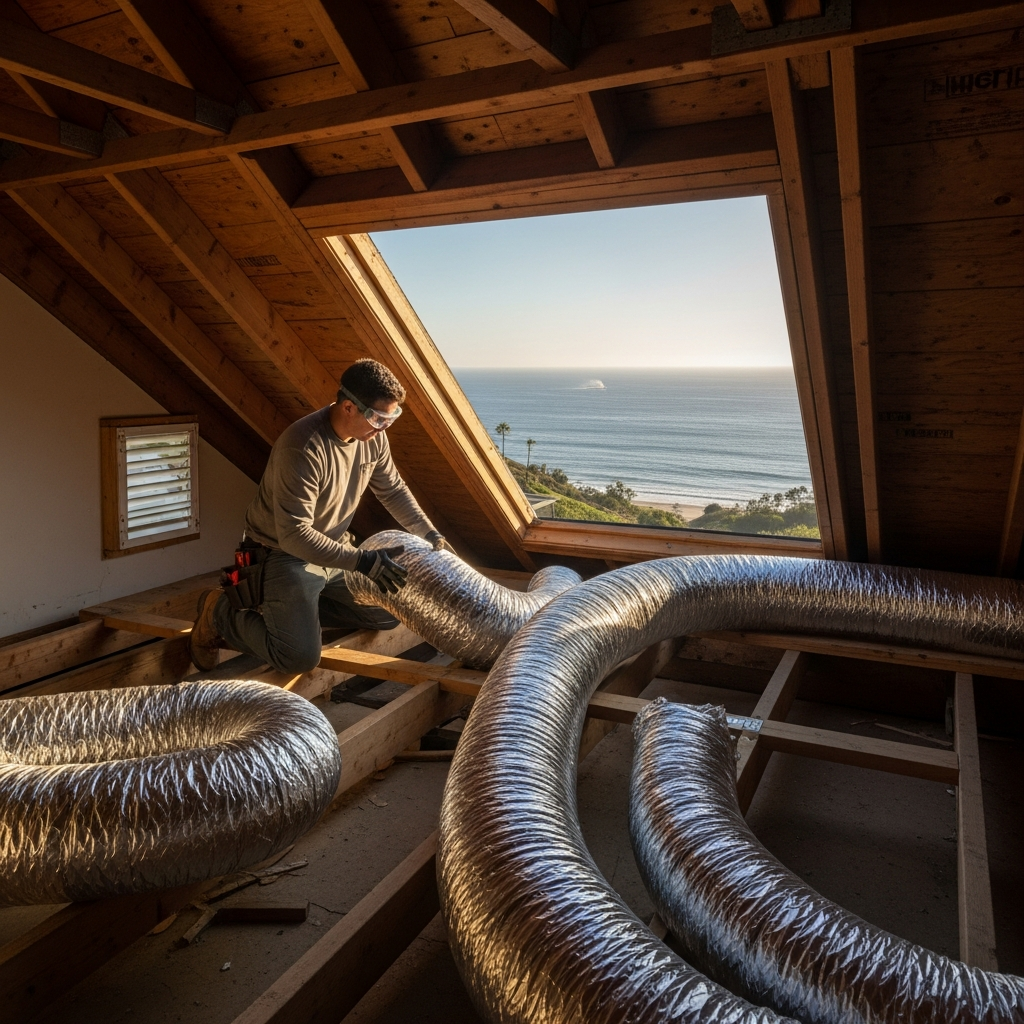
When you live in Malibu, you get used to the soundtrack of the Pacific—wind that sighs through canyons, waves that rinse the shoreline, and cool mornings that give way to golden afternoons. It is beautiful, but it is also a reminder that coastal living shapes the way our homes work, breathe, and age. For single family homes, the question of duct replacement often arrives not as a shock but as a steady conclusion reached after months of lukewarm rooms, elevated dust, or that persistent feeling the system is working harder than it should. If you are weighing the investment and wondering how to plan it wisely, you are already on the right path. Many Malibu homeowners start by researching duct replacement to learn what really matters for comfort, efficiency, and the long-term health of their home.
Talking about the cost to replace ducts in a Malibu single family home is really a conversation about context. No two houses are exactly alike here, whether perched against a hillside with dramatic wind exposure or sheltered on a quiet cul-de-sac closer to the lagoon. Duct configuration, attic accessibility, crawlspace conditions, and the materials chosen all shape timelines and outcomes. The numbers are not the whole story; what you are really choosing is a system that will keep pace with Malibu’s microclimates, coastal moisture, and seasonal temperature swings while honoring the architectural character of your home.
Understanding Malibu’s Climate and Its Effect on Ductwork
Malibu’s climate is famously moderate, but microclimates create noticeable differences from Point Dume to the canyons. Morning marine layers can saturate materials with salt-laden moisture, while afternoon sun can bake attics to higher-than-expected temperatures. Over years, that cycle can loosen duct connections, degrade mastic, and reduce the insulating value of duct wraps. In older homes, ducts may have been routed through tight rafter bays or improvised chases that complicate service and accelerate wear. When homeowners ask why ducts need attention even when the HVAC equipment still runs, this is the answer: our air distribution pathways live in spaces that face harsher conditions than the rooms we enjoy every day.
Salt air is another long-term force at play. While metal ducts are often protected, even small breaches in insulation allow condensation and corrosion to find a foothold. In some homes, signs appear as subtle temperature imbalances: a cool family room in the afternoon while bedrooms never quite catch up at night. If you are noticing inconsistent airflow, higher fan noise, or rooms that collect dust more quickly, the climate may be whispering that your ducts are ready for renewal.
What Shapes the Investment for Single Family Homes
In Malibu, single family homes span compact beach bungalows, mid-century moderns with exposed beams, and larger estates with intricate layouts. The path that ducts must travel—across attics, through knee walls, down chases—affects the effort to remove, redesign, and install. Accessibility is a major driver. An attic with proper catwalks, lighting, and clearance makes for a smoother project than one with tight eaves and limited entry. Crawlspaces can add complexity if they are low, damp, or obstructed by existing utilities.
Design decisions play a starring role. Replacing “like for like” might feel straightforward, but many Malibu homeowners opt to improve the design while they are at it. That can mean balancing supply and return locations, resizing trunk lines for quieter operation, or adding dedicated returns in larger rooms. Material choices such as rigid metal with external insulation, high-quality flex for final runs, or sealed and masticed duct board plenums influence longevity and performance. Each upgrade is less about spending more and more about investing where it delivers the smoothest, most comfortable airflow day after day.
Comfort, Air Quality, and Energy in a Coastal Setting
Replacing ducts is one of the most impactful ways to improve comfort without altering the character of a home. Properly sealed ducts hold onto conditioned air, getting it to the rooms that need it with minimal loss. Balanced duct designs even out pressure, reducing the sensation of drafts under doors and cutting down on noise that once felt like a distant rumble in the ceiling. In Malibu’s coastal environment, well-insulated ducts also help tame humidity swings that can make summer evenings feel muggy even when temperatures look reasonable on a weather app.
Indoor air quality benefits arrive almost immediately. New ducts, sealed system joints, and better filtration keep attic dust, insulation fibers, and garage odors out of the living space. Households with allergy concerns often report easier breathing and less visible dust on surfaces. While energy savings are a welcome bonus, most homeowners call the intangible benefits the winners: sleeping through the night without hot and cold zones, morning routines that take place in rooms that feel evenly tempered, and a system that fades into the background as it should.
Knowing When It’s Time to Replace
Homeowners usually see a pattern before they decide. One classic signal is chronic imbalance: a room that is always last to heat or cool. Another is elevated fan or whistling noise, which can be the sound of undersized runs pushing air too fast or leaks at unsealed joints. Attic inspections sometimes reveal crushed flex runs, disconnected boots, or deteriorated tape. If your home has done a few decades of service and any of these signs appear, it may be more effective to pursue a thoughtful replacement than to patch isolated trouble spots. That approach not only resets the system’s baseline but allows improvements that were impossible during quick repairs.
Homes that have undergone additions or remodels benefit enormously from reassessment. A living room or primary suite created after the original ducts were installed may never have gotten a proper return path or sized supply. Replacing ducts lets the design reflect how the house is actually used today, not how it was imagined on paper years ago. When ducts match modern living patterns—open kitchens, great rooms, home offices—the entire system runs with less effort and more poise.
Materials and Methods That Stand Up to Malibu
In coastal homes, tight duct assemblies sealed with mastic or high-grade sealants tend to outperform tape-reliant approaches over the long haul. Many Malibu projects combine rigid metal trunks, which deliver stability and easy cleaning, with short, properly supported flex runs for quiet transitions into rooms. External insulation with the appropriate R-value is essential in attics that heat up under summer sun; continuous insulation blankets reduce thermal loss and minimize condensation potential during cool, damp mornings.
Attention to supports and hangers is another hallmark of work that endures. Sagging flex runs collect dust and drag on airflow; sturdy, evenly spaced straps keep lines true and quiet. Boots should be secured and sealed to ceilings for an airtight, clean finish. When returns are thoughtfully located and sized, the HVAC system breathes better, and that quieter, smoother performance is often the first improvement families notice.
Permits, Codes, and the Malibu Mindset
In California, code compliance is not just a checkbox; it is the way you ensure safety, performance, and resale confidence. Duct replacement in Malibu will typically involve permits and inspections that verify proper materials, sealing, support, and insulation. Title 24 energy standards, local amendments, and best practices oriented to wildfire risk and coastal conditions inform the details. Good contractors will manage the process, but homeowners who understand the outline can make sharper decisions. When the work aligns with code, it aligns with the life you want to live in the home—quiet, clean, and reliable.
Testing can be part of the experience as well. Duct leakage testing benchmarks the system before and after, making improvements tangible. Pressure balancing and airflow measurements fine-tune comfort room by room. Even minor adjustments, like redirecting a diffuser away from a window seat or adding a return in a closed-off office, can complete the picture.
The Replacement Process Inside a Single Family Home
Most Malibu homeowners want to know what daily life looks like during a duct project. The process usually begins with a careful survey, photos, and measurements. A plan is built around access points, whether through the attic hatch, a garage, or a crawlspace. Protection matters: drop cloths, booties, and containment at the attic access keep the living area tidy. Crews remove existing ducts section by section, capping open equipment connections and keeping insulation out of circulation. New lines are assembled and supported methodically, with seals applied at each joint so the system maintains integrity from the first elbow to the last boot.
Midway through, a quality-focused team will test flows and verify that the system is tracking to the design. This is the perfect moment to make any nuanced adjustments, like opening a damper to a back bedroom or slightly resizing a diffuser for a reading nook. Homeowners who came to this project because of uneven temperatures usually feel a shift even before the registers are trimmed. The midpoint check is also a natural time to revisit the plan you started when you first looked into duct replacement and confirm every priority is still on track, from quieter airflow to better balance across floors.
Timing Your Project Around Seasons and Schedules
While Malibu never sees the dramatic seasons of the interior valleys, there are still smarter and less convenient times to take on duct work. Spring and fall often provide generous weather windows when you can temporarily pause heating or cooling while crews do their work. School schedules, travel plans, and even the arrival of guests can shape a realistic timeline. A well-run project moves steadily: careful removal, thoughtful installation, testing, and clean-up. Because most of the activity stays in attics or crawlspaces, the disruption to daily routines is more modest than many expect.
If you are pairing duct replacement with equipment upgrades or electrical improvements, plan the choreography early. Coordinating trades leads to shorter overall timelines and fewer return visits to adjust trim or add access. The best experiences feel like a single, well-managed event rather than a series of surprises.
Design for Quiet, Balanced, Everyday Living
In many Malibu homes, aesthetics and acoustics share the spotlight. Exposed beam ceilings, open kitchens, and sunlit nooks call for diffusers that complement design. Quiet operation becomes part of the peace of the house. That is why duct sizing and diffuser selection matter. When air moves at comfortable velocities, conversations do not compete with a background hiss. Bedrooms stay restful, and home offices feel composed even when the system is working on a sunny afternoon.
Balance takes the edge off hot and cold spots. Returns located strategically invite air to travel naturally, not fight through narrow hallways or around partitions. Ducts that are sealed tight allow filtration to make a difference, capturing fine particles that would otherwise swirl into the home. After replacement, many families notice that the thermostat spends less time jockeying for control, because the house itself is cooperating with the system rather than resisting it.
Life After Replacement: Maintenance and Peace of Mind
Once the new ducts are in place, maintenance is pleasantly uneventful. Keeping filters changed on schedule and having the system inspected annually protects your investment, but day to day, the best sign of success is forgetting about it. Attics that were once strewn with patched flex runs are now clean and orderly. Registers sit flush and quiet. The first time a cool breeze fills the living room on a hot afternoon without stirring dust or rattling vents, you feel the change in your bones.
For homeowners thinking ahead, documentation matters. Photos of the finished work, test results that show leakage reductions, and a sketch of the final design come in handy at resale or when you take on a future remodel. Ducts rarely get the attention that kitchens and bathrooms do, but they are the hidden infrastructure that makes daily comfort possible.
FAQs: Malibu Single Family Duct Replacement
Q: How long does a typical duct replacement take in a Malibu single family home? A: Most projects fit within a few days, depending on access, home size, and design refinements. Homes with tight attics or complex layouts may take longer, but careful planning keeps daily life manageable.
Q: Will new ducts actually fix my hot and cold spots? A: In most cases, yes, because replacement is the moment to rebalance supplies and returns, resize key runs, and seal the system so the air you pay to condition reaches the rooms that need it.
Q: Do I need to move out during the project? A: No. Work occurs primarily in attics and crawlspaces. With proper protections and daily clean-up, families usually stay comfortable at home throughout.
Q: What materials work best near the coast? A: Many Malibu homes succeed with rigid metal trunks for stability and cleanliness, paired with short, well-supported flex runs to rooms. High-quality insulation and meticulous sealing are essential.
Q: Will my indoor air quality improve? A: Yes. Sealed ducts reduce the entry of attic dust and pollutants, while balanced airflow and filtration help maintain a cleaner living environment.
Q: Is permitting required? A: Duct replacement generally requires permits and inspections. Working with professionals who understand California energy standards and local expectations ensures a smooth process.
Q: Can I keep my existing equipment? A: Often you can. Many homeowners replace ducts to restore performance to current equipment. If equipment is due for renewal, the project can be coordinated so both parts of the system fit perfectly.
Q: What about noise—will new ducts be quieter? A: Properly designed and sized ducts typically run more quietly, with reduced whistling and humming. The goal is for your system to fade into the background of home life.
Ready to Breathe Easier in Your Malibu Home?
If you are considering a project and want straight answers grounded in local experience, now is a smart time to speak with a trusted professional. A short conversation can clarify priorities, from comfort goals to code requirements, and set you on a path that keeps daily life simple while the work gets done. When you are ready to map the steps, explore duct replacement with a team that understands Malibu homes, and feel the difference a well-designed system makes from the first day it runs.