
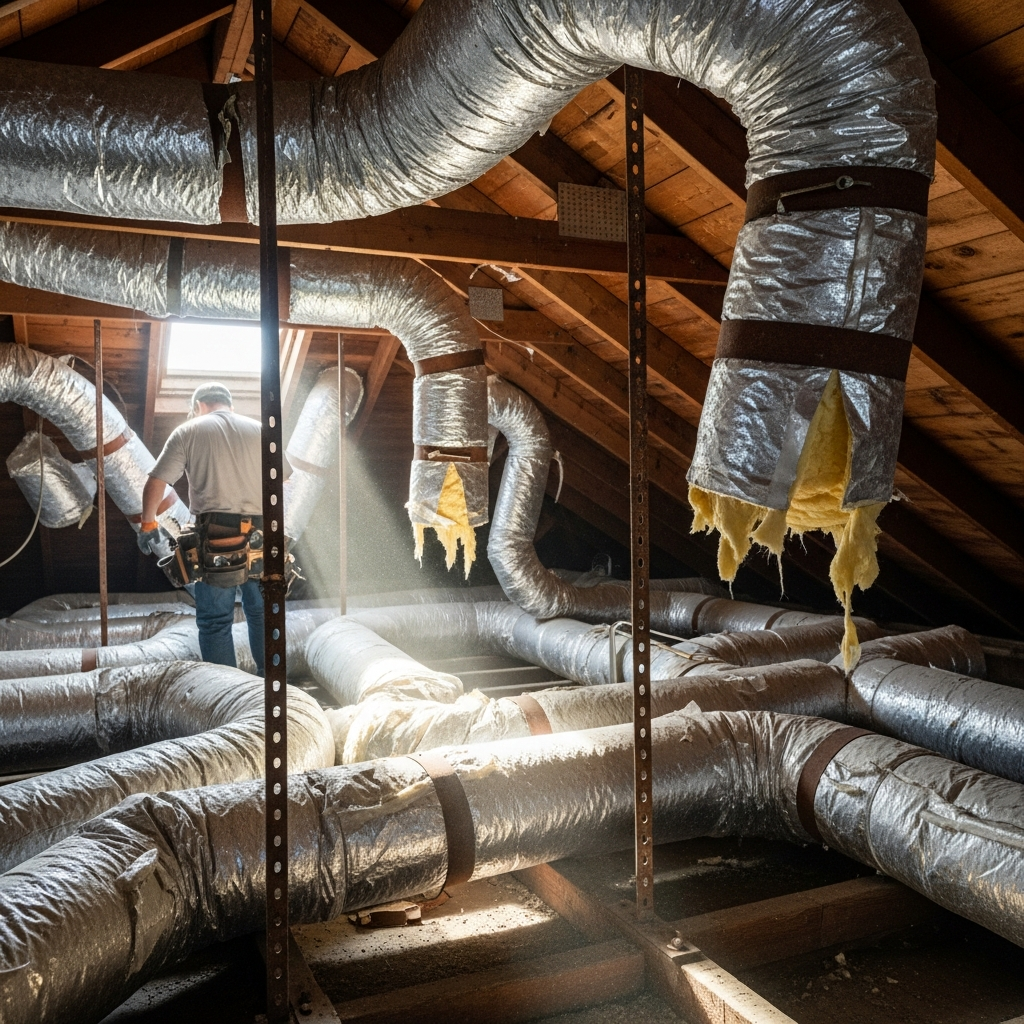
Step into a Malibu attic on a sunny afternoon and you will feel a different climate from the rooms below. Heat builds quickly under low-slung roofs, marine air creeps in along eaves, and the maze of framing that makes our architecture beautiful also makes duct runs tricky. Over time, that environment exposes every shortcut and amplifies small mistakes. After years of crawling through spaces from La Costa to Trancas, I have learned that most comfort complaints track back to the same handful of problems. Understanding those recurring issues, and knowing how to correct them during duct replacement, is the surest way to transform the way your home feels day to day.
The attic is where physics, craftsmanship, and Malibu’s climate meet. Heat accelerates duct aging, salt air nudges fasteners toward corrosion, and the occasional critter squeezes through any soft spot. If the system is undersized or poorly supported, kinks and sags grow over time, turning once-smooth pathways into choke points. Leaks draw in dusty attic air, which then circulates through bedrooms and living spaces. By the time you notice rooms out of balance, the damage is usually spread across multiple runs, and the best answer is a comprehensive plan rather than piecemeal patching.
Crushed and kinked flex duct that strangles airflow
Flex duct is flexible, but it is not forgiving. A tight bend behind a truss, a strap pulled too tight, or a box pushed into place during another trade’s work can all pinch the inner liner. In Malibu attics, where clearances are often tight under low slopes, this is common. The result is whistling registers, rooms that lag, and equipment that seems to run endlessly without ever catching up. During replacement, we reroute to create gentle curves, increase support spacing, and favor rigid sections for longer straight runs so airflow stays smooth and quiet.
It is amazing how often a single kink compels homeowners to crank the thermostat. Eliminating those choke points is like clearing a river; the whole system calms. Over time, properly supported ducts hold their shape despite attic temperature swings, and that stability keeps comfort consistent through foggy mornings and warm afternoons.
Disconnected joints and leaking seams
Every loose collar and unsealed seam is a leak that mixes attic air with your supply or return. On windy days, that air can be musty, salty, or smoky, depending on the season. In many older Malibu homes, ducts were taped with products that have long since dried out. We now rely on mastic and mechanical fastening—the belt and suspenders approach—so connections stay secure through heat and cool cycles. New fittings and sealed plenums, combined with careful transitions, dramatically cut leakage and stop the attic from becoming an unofficial part of the system.
One of the most striking before-and-after moments in a replacement project is the pressure test. Numbers that once read like a leaky tent quickly settle into a tight, efficient range. The proof shows up again at the vents, where airflow feels steady rather than gusty, and the system’s sound softens from hiss to hush.
Insulation that is thin, torn, or compressed
Many flex ducts in coastal homes have jackets that have seen better days. Salt air and time make the outer cover brittle; critters can tear at it; and straps can compress the insulation until its value is cut in half. Compression is a silent performance killer because the duct may look intact, yet it is sweating on cool nights and losing temperature on hot days. Replacement gives us a chance to restore full-thickness insulation, use supports that do not crush the jacket, and route runs away from heat sources that can bake the materials.
Think about those humid mornings when the attic cools quickly under a blanket of fog. Thin insulation encourages condensation at collars and metal fittings. That moisture can lead to musty odors and even stains if it drips onto the ceiling below. A fresh, well-insulated duct system resists those swings, which is critical in Malibu’s coastal belt.
Undersized trunks and poorly balanced branches
Original systems sometimes relied on rules of thumb rather than measured design, especially in remodels where rooms were added over time. The result is undersized trunks that push air too fast, noisy takeoffs that whistle, and branches that oversupply some rooms while starving others. During replacement, we adjust sizes for the equipment’s real airflow, smooth transitions at plenums, and set damper positions to fine-tune balance. That tuning is what makes a far room finally match the thermostat without overserving a closer guest bedroom.
Balance is not a luxury; it is the path to quiet, even comfort. You can hear the difference at night when the system cycles. Without the rush and rattle of air racing through a narrow trunk, the house settles. Sleep comes easier, and mornings begin without the old tug-of-war between hot and cold rooms.
Corroded hangers and hardware near the ocean
Metal straps and screws take a beating in Malibu’s salty air. Over time, rust weakens hangers and allows ducts to sag. That sagging creates pockets where air slows and turbulence rises, which further stresses the system. When we replace ducts, we use corrosion-resistant hangers and space them to hold shape without compressing insulation. Hardware choices may seem minor until a Santa Ana wind rattles the roof and everything below stays put, quiet and solid.
In some hillside homes, we also contend with tricky access and long spans. Intermediate supports, protective saddles, and rigid sections in key areas keep runs stable. By investing care in these details, we prevent tomorrow’s problems rather than just solving today’s.
Return paths and attic air intrusion
Leaky returns are notorious for pulling dusty, salty air from attics, especially when doors are closed and pressure in a bedroom spikes. A thorough replacement closes those gaps and confirms that return pathways are clear and adequately sized. We also inspect and seal penetrations in the mechanical closet or plenum area, so the system breathes from where it should, not from wherever a gap happens to be. In smoke season, that control becomes a shield, keeping particulates out and filtration effective.
Once the return is contained, supply balance becomes easier to achieve. The home stops behaving like a straw drawing from the attic, and you feel the difference in the way your eyes and throat react on dry, windy days.
Condensation and mold concerns at fittings
Wherever cold metal meets humid air, condensation can form. That is why collars and takeoffs are frequent trouble spots in coastal attics. In older systems, thin or missing insulation around those junctions invites moisture. Over time, that moisture can stain drywall or foster odors. During replacement, we seal, insulate, and verify that insulation stays full-depth at fittings rather than getting pinched. The result is a system that shrugs off foggy nights and quiets worries about dampness overhead.
We also pay attention to vapor barriers and jacket integrity. Small tears add up, especially when a cool evening follows a hot day. A tidy jacket without gaps is a detail you may never see—but you will appreciate its impact.
Wildlife and attic hygiene
Raccoons, rodents, and the occasional bird do not read building codes. If they find a soft spot in duct insulation, they take it. Torn jackets, droppings, and burrowed nests are more than a nuisance; they contaminate the air that may end up inside your home. Replacement includes removing compromised sections, verifying cleanliness, and sealing openings that invited visitors in the first place. With tight returns and robust jackets, critters are less tempted and less successful.
Hygiene also means leaving the attic better than we found it. We tidy up old tape scraps and loose fiberglass, resecure wiring that draped across ducts, and create service pathways that reduce future contact and wear. A clean attic is a calmer attic, and calmer attics are kinder to ducts.
Planning a replacement that solves, not shifts, problems
The best projects start with testing and end with verification. We measure static pressure, count registers, and size runs to the home you have today, not the one drawn a generation ago. Then, when the old system is out and the new one is staged, we walk through placements and confirm access for future service. Mid-project adjustments—like straightening a bend or enlarging a trunk—are where experience pays off, and where the long-term benefits become obvious.
At the heart of a good plan is a clear sequence. Removal, cleanup, layout, fastening, sealing, insulation, and finally balancing—each step has a purpose, and skipping any of them invites a return of old problems. With a careful approach, the attic goes from a source of frustration to a quiet partner in comfort.
What you will notice right away
Most homeowners first notice sound, or rather the lack of it. The hiss softens, the rattle fades, and the system seems to disappear into the background. Next comes evenness: the distant bedroom and the sunny office stop arguing with each other. And finally, you will see it in the way the system cycles—shorter, calmer runs that reach setpoint and rest, rather than long struggles that never quite land.
On foggy mornings, registers will no longer sweat or drip because insulation is full and intact. On windy days, you will not smell the attic at the supply vents. That quiet competence is the sum of many small decisions made correctly.
Frequently Asked Questions
What are the most common attic duct issues in Malibu?
Kinked or crushed flex runs, leaky collars and seams, thin or compressed insulation, undersized trunks, corroded hangers, and leaky returns are the usual suspects. Malibu’s heat, salt air, and wildlife pressure all contribute, making comprehensive replacement a smart way to fix multiple issues at once.
How do I know if my attic ducts are leaking?
Uneven room temperatures, dusty supply air, musty odors when the system starts, and whistling registers are clues. A professional can confirm with pressure and leakage testing and by visually inspecting connections and jackets. In many cases, the test numbers make the decision to replace simple.
Is repair ever enough, or do I need full replacement?
Targeted repairs can help if damage is limited, but when problems are scattered—kinks, leaks, sagging, and insulation failures across multiple runs—replacement is usually more effective. A complete plan lets you correct sizing, routing, and support all at once, which is hard to achieve with patches.
Will new ducts reduce attic odors and dust in my home?
Yes. Tight returns and sealed supplies stop attic air from mixing into the distribution system. Combined with good filtration at the air handler, this dramatically reduces dust and the occasional salty or musty scent that rides on coastal air.
How long does attic duct replacement take?
Most single-family projects finish within a few days, depending on complexity and access. Careful planning, good staging, and clear homeowner preparation—like clearing paths to access points—keep the schedule on track while maintaining a tidy work area.
What should I do to prepare my attic?
Clear space near access hatches, relocate fragile or sentimental items, and point out any known critter activity so it can be addressed safely. If you plan other attic work, such as adding insulation or improving ventilation, coordinate it with the duct project for a clean finish.
Next steps for a quieter, cleaner attic
If your home has rooms that never agree with the thermostat, whistling registers, or dusty supply air, an experienced eye on your attic ducts can make all the difference. A thorough plan, strong materials, and a careful installation replace frustration with calm, even comfort.
When you are ready to solve attic issues the right way, schedule a consultation for professional duct replacement and let a local team map the clearest path to a quieter, healthier home.