
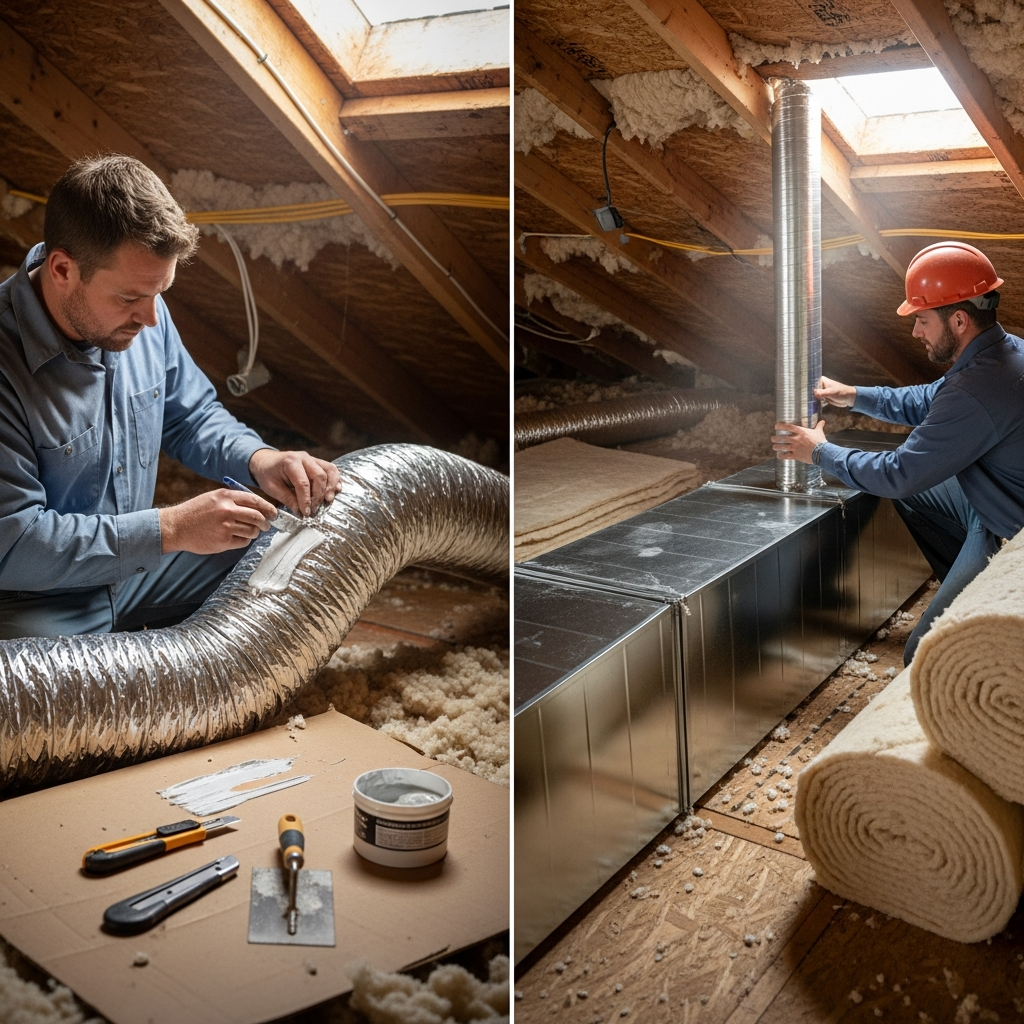
For many Malibu homeowners, the first nudge that something’s off with the HVAC system shows up quietly. A bedroom runs cooler than the living room, a bathroom register hisses, or dust settles fast despite frequent cleaning. In a coastal community where homes blend modern lines with midcentury bones and hillside charm, it’s natural to wonder whether the solution is a targeted repair or a more comprehensive replacement. The answer, more often than not, comes from understanding how air actually moves through your home and how small weaknesses can cascade into daily discomfort. If you’re weighing your options, start with goals—comfort, air quality, quiet operation—and let those guide the decision. As you begin, it helps to ground your expectations with quality resources on duct replacement so that terms and testing make sense from the outset.
Repair makes sense when issues are localized, the underlying layout serves the home’s needs, and the duct materials are in healthy shape. Think of a torn run in an otherwise tidy attic, a disconnected boot discovered during insulation work, or a visibly crushed section from past storage. In those cases, a focused fix can quickly restore performance. Replacement becomes the smarter path when the system’s fundamentals are off—undersized or overextended branches, chronic leakage, returns that choke airflow, or a layout that fails to reach rooms as they’re actually used. Malibu’s renovation history means many homes wear a patchwork of past solutions, and while individual repairs can relieve symptoms, they may not resolve the system-level mismatch driving those symptoms in the first place.
Start with a clear assessment. A good technician won’t just peek and guess; they’ll measure. Static pressure at the equipment, airflow at representative registers, and leakage indications tell a story about how well the network moves and contains air. Visual cues matter, too: sharp bends, long unsupported spans, taped rather than sealed metal connections, and registers that howl under load all hint at foundational issues. If data and visuals align to say the network is fundamentally sound with a few problem spots, repair may be perfect. If they reveal systemic constraints, you’ll save time and frustration by planning a redesign and replacement.
Understanding Malibu’s environment helps. Coastal moisture and salt air test materials at seams and terminations, while marine layers and afternoon sun create daily swings that expose inefficiencies. Ducts installed decades ago may lack modern insulation values or rely on sealants that have aged past their prime. Rodents can compromise insulation jackets or gnaw flex, especially in certain canyons or near open spaces. When these patterns show up across multiple runs, it’s a sign the system will benefit from a comprehensive reset rather than piecemeal attention.
When repair is viable, it succeeds on craftsmanship. Replacing a damaged section with the right material, matching diameters and insulation levels, supporting the run per best practices, and sealing connections with long-lived mastics or gaskets all matter. It’s just as important to step back and check the effect of even a small repair on the whole. A straighter, less restrictive section can increase airflow and shift balance. Professionals will adjust nearby dampers or register settings to keep the room-to-room experience stable.
Replacement, by contrast, is design-led. The process begins with room-by-room air needs and return strategy, then translates those needs into routes, sizes, and diffuser choices. Malibu homes often have a mix of vaulted and flat ceilings, open living areas, and bedrooms that crave quiet. That variety asks for careful assignment of register types and locations, with an ear for sound as much as for temperature. Rigid ducts may shine on longer main runs for durability and smooth flow, while flexible ducts can be perfect for short, gentle connections when supported and routed well. Insulation values reflect attic and crawlspace conditions, and hardware at exterior caps respects coastal exposure.
There’s a middle path, too: phased upgrades. If the home’s layout is mostly sound but key zones suffer, a targeted redesign that rebuilds mains and returns while retaining healthy short branches can yield big gains. The key is verification—measuring after each phase to ensure progress isn’t undermined by what remains. Phased work is especially useful when you’re coordinating with other projects like roofing, solar, or interior renovations.
Another lens is how equipment plans influence your choice. If you’re moving to a heat pump, airflow targets may change from legacy equipment, calling for tweaks to duct sizes or register selections. If zoning is on the horizon, planning for that now during a replacement avoids rework later. Conversely, if your equipment is relatively new and performing well, a fine-grained repair that restores duct integrity may be the fastest path to a home that feels better immediately.
Communication style is often the tell. Proposals that lean into outcomes—quieter bedrooms, steadier living areas, cleaner air—and explain how design or repair choices serve those outcomes tend to lead to better experiences. Look for clarity about sealing methods, support spacing, insulation levels, return sizing, and verification testing. Whether repairing or replacing, a plan that shows its work earns trust because you can connect each choice to what you’ll actually feel at home.
It’s worth pausing on returns again because they’re so influential. Undersized or poorly located returns make equipment strain and generate noise, and they encourage dust to bypass filters. If your assessment reveals return issues, fixing them often unlocks comfort and air quality no matter which path you take. In a repair scenario, that might mean opening an existing return cavity and installing a deeper filter cabinet. In a replacement, it could involve adding a second return or relocating the primary one to a cleaner, calmer spot.
Home access sets the practical tone. Malibu crawlspaces can be low, and some attics are a maze. If repair requires reaching a single section in a difficult area, it might be disruptive without delivering whole-home gains. Conversely, a replacement may proceed smoothly if main routes are accessible and a team can sequence work efficiently. Transparent scheduling, protection of finishes, and day-end cleanups will matter in both cases—and you should expect them no matter which path you choose.
Whichever route you take, testing is the finale that proves the plan worked. After repair, measuring static pressure and airflow at affected rooms confirms the fix did more than just look pretty. After replacement, duct leakage testing, static pressure checks, and balancing make the improvement tangible. You’ll hear it in quieter returns and feel it in steadier conditions across rooms that used to misbehave.
From there, maintenance keeps gains locked in place. Regular filter changes, a glance at exterior terminations after windy days, and periodic checks of insulation jackets in semi-exposed areas are simple habits that support both repaired and replaced systems. Malibu’s coastal life rewards this light but regular attention.
For many homeowners, the deciding moment isn’t data, but daily life. If you’ve been living with uneven rooms, frequent dusting, or a system that seems to argue with you each afternoon when sunlight hits the hillside, it may be time to step back and reimagine distribution rather than poking at symptoms. If, on the other hand, you’ve enjoyed largely good performance and a recent change or small accident caused a clear issue, repair is both sensible and satisfying.
As you weigh options, remember that your home’s architecture and your lifestyle set the brief. The right choice meets that brief and supports how you live—quiet dinners without vent noise, restful bedrooms without drafts, clean air that doesn’t irritate. In Malibu, where the ocean’s presence is felt even in the breeze that slips under doors, a well-tuned distribution system is a quiet luxury you notice every day.
Frequently Asked Questions
What symptoms suggest replacement rather than repair?
When multiple rooms underperform, returns are noisy or undersized, and testing shows high leakage or static pressure across the system, replacement is usually the more efficient route. Localized tears, crushed sections, or a single disconnected boot often point to repair.
How do I make sure a repair won’t unbalance the rest of the home?
Ask for post-repair checks of static pressure and airflow at representative rooms. Simple balancing adjustments at dampers or registers can tune the system so that one improvement doesn’t over-supply a nearby room.
Are Malibu’s coastal conditions a reason to replace even if damage looks minor?
Not necessarily. Coastal exposure argues for durable materials and careful sealing, but if the network is healthy overall, focused repairs can be appropriate. The decision hinges on testing and on the condition of materials beyond the obvious damage.
Can I phase a replacement over time?
Yes. Many homeowners rebuild mains and returns first, then fine-tune branches and diffusers later, especially if access varies or other projects are planned. Each phase should include verification testing to confirm gains.
Will a replacement help with noise?
Often, dramatically. Right-sized returns, smoother routes, and thoughtful diffuser selection allow systems to operate at lower pressures, which reduces hiss, rattle, and vibration.
How do equipment upgrades influence this decision?
If you’re moving to or planning for a heat pump, air volume targets and diffuser choices may change. A replacement ensures the distribution system matches the equipment’s profile. If equipment is newer and healthy, a well-executed repair can restore performance without reworking the entire network.
If you’d like help interpreting test results, understanding options, and mapping a path that fits your Malibu home and routines, it may be time for a guided walkthrough and design conversation. Start by exploring best-practice ideas for duct replacement and then schedule a local assessment so you can compare a targeted repair plan to a design-led replacement, with confidence in what each will mean for your comfort every day.