
When the Wind Turns and the Sky Changes Color
In Malibu, you can feel fire season before you see it. The air dries, the canyons funnel wind toward the water, and a faint tang of smoke arrives from miles away. Even when flames never come near the PCH, our homes breathe that air through every gap around a door, through attic vents, and via the HVAC systems that keep us comfortable. Having worked in homes from Broad Beach to Corral Canyon, I’ve learned that the steps we take before, during, and after smoke events shape how safe and calm our interiors feel. Central to that plan is timely, professional air duct cleaning, because that’s where the story of lingering smoke either ends or continues.
Wildfire smoke is sneaky. The larger ash flakes settle outside, but the fine particles—the ones that make sunsets surreal—are precisely the size that lodge inside ductwork. They cling to any dust already inside, and the moment the system cycles on, minute vibrations re-launch them into the air stream. You may notice it as a persistent campfire scent that refuses to fade, or a slightly scratchy feeling in your throat first thing in the morning. Clean ducts remove that reservoir so the home can reset, and your body can drop its guard.
Understanding Smoke and Your HVAC System
Think of your HVAC as the lungs of the house. Returns draw air in, the blower moves it across a coil, and supplies push it back through rooms. In normal conditions, good filtration catches the majority of particulates. During fire season, smoke concentrations rise rapidly, and filters load far faster than usual. That means more particulate matter reaches duct interiors, settling in seams, around turning vanes, and in the slight ripples of flexible duct runs. The longer it sits, the more it adheres, especially when coastal humidity returns at night and creates a light tackiness on surfaces.
In the days following a smoke event, simple signs tell the tale. The filter you changed last week is already gray. Sunbeams reveal a swirling of fine dust each time the system kicks on. A favorite room never quite smells neutral. These are signals that ducts deserve attention, not just for comfort but for the very real task of reducing the PM2.5 that can aggravate lungs and eyes.
Preparation Before the First Red Flag Warning
Early preparation pays off. Before the season hits, a thorough cleaning removes baseline dust so there’s less for smoke to cling to. Returns and supply trunks feel like freshly rinsed glass rather than slightly sticky surfaces that invite accumulation. With that reset, a clean high-quality filter has an easier job, and air pathways are unobstructed. It’s the difference between starting a race with a full breath versus a cough.
Sealing also matters. Small leaks at boots or seams let smoky attic air slip into the system and bypass filtration entirely. During a cleaning visit, identifying and sealing those leaks reduces the amount of intrusion under windy conditions. When the Santa Anas push hard, your system has a better chance of maintaining positive pressure with the windows closed, keeping the worst of the outdoor air out.
When Smoke Is in the Forecast
On days when the AQI spikes, the home becomes a refuge. Limit the system to recirculation, keep windows and sliders shut, and let the filtration do its work. Still, some smoke will find a way in—through door swings, garage entries, or the smallest envelope gaps. That’s when the dust already inside the ducts becomes critical. If those surfaces are clean, there’s no dusty bed for smoke to settle into. If they’re not, every cycle risks another release of embedded particles. I’ve watched homes ride out smoky weeks far more comfortably simply because they entered the season with ducts in good order.
After the Ash Settles
Once the winds calm and the horizon clears, a post-event cleaning makes a difference you can feel. The process removes ash that evaded your filters, helps neutralize odors clinging to that ash, and returns air pathways to a smooth, low-friction state. It’s also the right time to inspect coils and blowers, because smoke-laden dust often migrates past the filter when frames aren’t seated perfectly. A careful technician will show you what was captured and suggest small tweaks—better filter fit, improved return sealing—that pay dividends in the next event.
In the middle of the fire season story is a simple truth about Malibu living: we love opening our homes to the ocean air whenever we can. That rhythm doesn’t have to change; it just needs a counterbalance. Partnering routine filtration with periodic professional air duct cleaning gives the house a way to reset after each stretch of compromised outdoor air, so you can throw open the sliders with confidence as soon as the breeze turns clean again.
Comfort, Energy, and Peace of Mind
Beyond health, clean ducts help the system do its work with less strain. Ash and dust roughen the interior of ducts, increasing friction and reducing airflow to distant rooms. After cleaning, the whole system breathes easier. Bedrooms up a level stop lagging behind the thermostat. The living room regains its crisp, cool edge on warm fall afternoons. And perhaps most valuable, that constant reminder of the fire—an echoing scent—finally fades.
What to Expect From a Thoughtful Cleaning
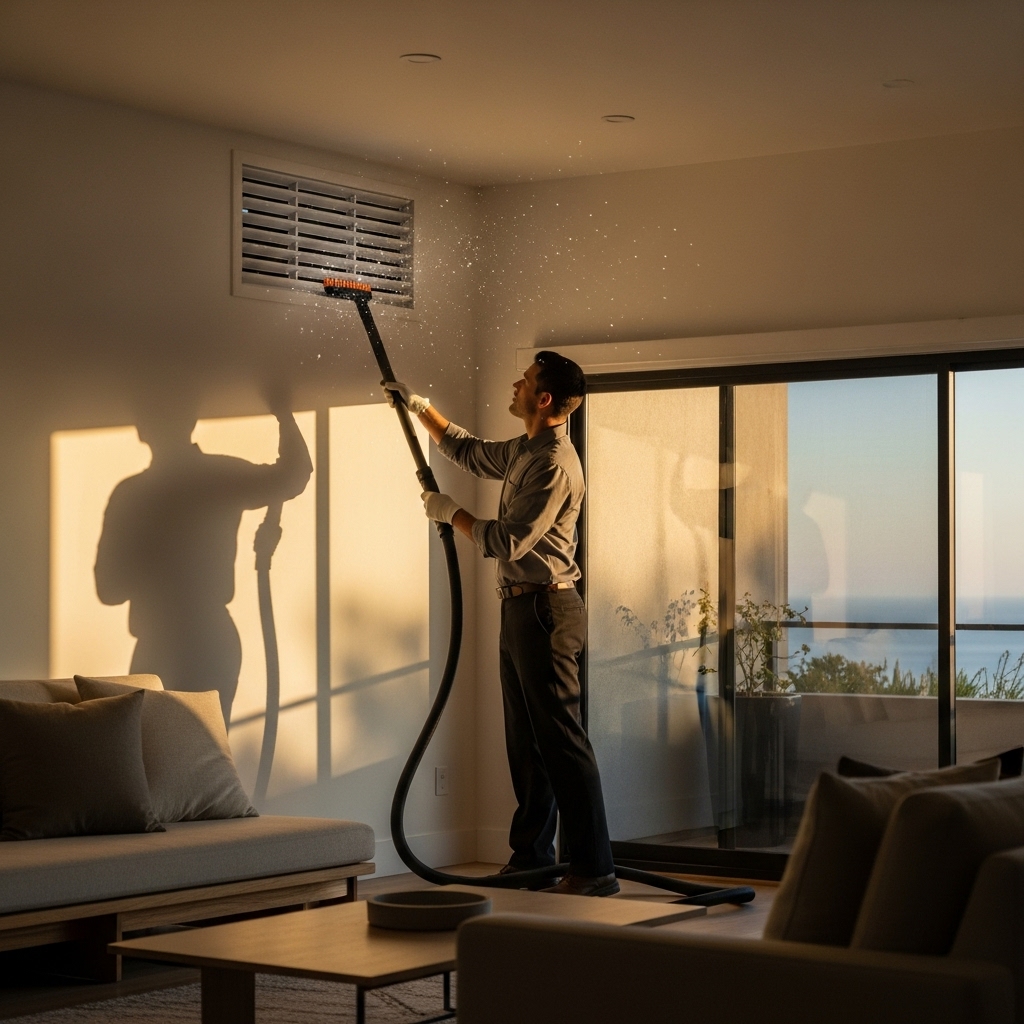
The best work is meticulous and calm. Vents are covered, negative pressure is established, and agitation tools loosen residue while the vacuum captures it. Returns get special attention because they collect the most smoke-laden dust. If you’ve ever compared the content of a return to a supply, you know the difference—it’s where life inside the home gathers, and it deserves care. A good visit concludes with a walk-through, a look at the filter fit, and a plan for the coming months.
FAQs
How soon after a smoke event should ducts be cleaned?
As soon as the outdoor air stabilizes and it’s safe for technicians to work, a cleaning helps remove residue before it binds more firmly to duct surfaces. Acting within a few weeks offers the best results for odor and particulate reduction.
Can duct cleaning remove the smoke smell completely?
In most homes, yes. When the odor is primarily from dust-bound compounds inside ducts and returns, removing that dust lifts the scent. If odors persist, attention turns to coils, insulation, and soft furnishings that may also have absorbed smoke.
Will I need to replace filters more often during fire season?
Expect faster loading. During smoky periods, checking filters every few days is wise. After the air clears, return to your normal schedule, but plan on an extra change following a significant event.
Is it safe to run the HVAC when the AQI is poor?
With windows closed and a well-sealed system, recirculating air through an effective filter can improve indoor conditions compared to outside. The key is minimizing fresh air intake and ensuring your system isn’t drawing smoky air through leaks in the return or plenum.
What about portable purifiers—do they replace duct cleaning?
They complement, not replace. Purifiers help rooms feel better quickly, but they don’t address residue inside the ductwork that will continue to reintroduce particles each time the central system runs. Cleaning deals with that hidden source.
Let Your Home Breathe Easy Again
Fire season tests our routines, but it doesn’t have to define how your home feels. If the last round of smoke left your rooms carrying a memory you’d rather not keep, take the simple, restorative step that returns calm to your living spaces. Schedule professional air duct cleaning so the next onshore breeze is the only scent you notice, and let your home become the refuge it’s meant to be.