
Living along Malibu’s coastline is a gift you feel in your bones—the hush of the marine layer, the rhythm of the surf, the way sunset light turns even a simple living room into a gallery. But the same salt-kissed breeze that keeps our days comfortable also asks more of our homes, especially the hidden pathways that move air from your HVAC to every corner of your living space. After years servicing homes from Broad Beach to the Malibu Pier, I’ve learned that HVAC air duct care on the coast is a different discipline. It’s not just about removing dust; it’s about understanding salt, moisture, and coastal construction so the air you breathe stays as clean and steady as the horizon outside your window. If you’re looking to start strong, consider scheduling professional air duct cleaning early in your maintenance calendar so the rest of your system can do its job smoothly.
Salt, moisture, and what they do to your ducts
The ocean’s gift is a constant exchange between indoors and outdoors. You open a slider to hear the waves and, within minutes, fine salt crystals float across your floors and onto your sofa. You can wipe a table; you can’t wipe the inside of your ductwork. Salt attracts water. In the soft, moist air of a marine layer morning, particles cling to surfaces more stubbornly than they do inland. Inside ducts, that means dust and salt film can create a tacky layer that resists airflow and traps odors. If your home sits right on Carbon Beach or above the bluffs at Point Dume, that film forms faster because salt concentration is higher and there’s less buffer from vegetation.
Moisture also nudges temperature swings. When cool night air meets warmer supply air at thin metal, a trace of condensation can form just enough to grab particles and hold them. Over time those sticky zones near supply boots and in elbows become rougher surfaces that collect more debris. A well-timed cleaning smooths that path again so air moves gently and quietly.
Coastal construction details matter
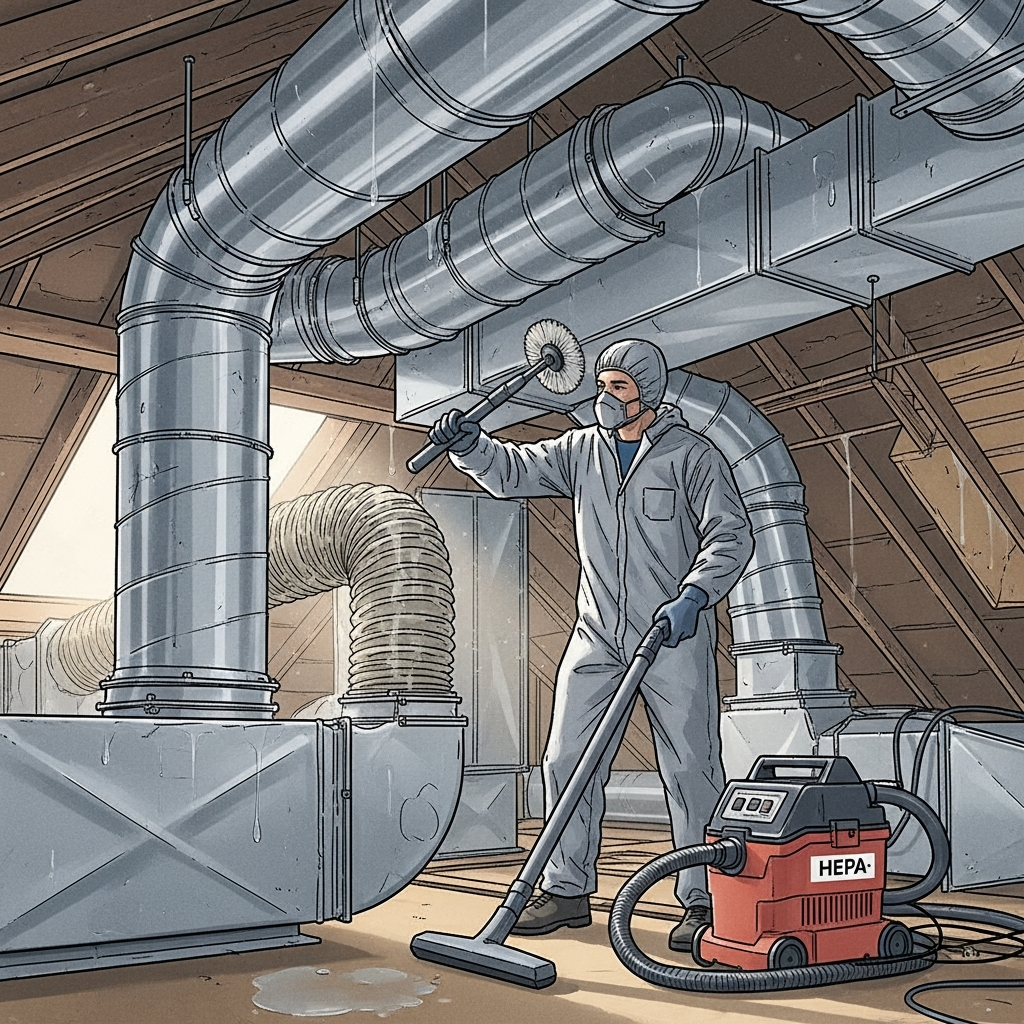
Malibu homes present a full tour of duct materials: older galvanized trunks in mid-century canyon houses, rigid duct board in 1990s renovations, and high-efficiency systems with flex runs in modern infill builds. Add to that the architectural love of high ceilings, mezzanines, and glass—each impacting how air stratifies. A coastal-savvy technician adjusts tools and technique to those details. Flexible runs need soft-bristle agitation to protect the inner liner; duct board prefers controlled air whips to avoid scuffing; sheet metal can take a firmer brush, especially at joints where salt residue tends to settle.
Insulation condition is another coastal tell. Salt and moisture can degrade the outer wrap on older ducts and create micro-gaps at seams. Those tiny leaks pull dusty attic air into your system and push conditioned air into spaces you don’t inhabit. A cleaning appointment is the perfect time to assess those seams and recommend sealing or replacement where needed. Sealing a few key joints can sometimes have a bigger comfort payoff than any gadget you could buy.
Routine on the water’s edge
Inland schedules don’t always fit on the coast. If you open up for the evening breeze most nights, you’re inviting the ocean’s chemistry inside, and your ducts see more than average particle load. I encourage homeowners along Malibu Road and La Costa to pair duct cleaning with filter changes and an annual coil inspection. When ducts are clear, filters do their job longer and coils stay cleaner, which protects your blower and reduces noise. It’s all one continuous system; caring for one part supports the rest.
Timing counts, too. Early spring cleanings set you up before warm days push your system harder. Late summer appointments prepare you ahead of dry winds. And if a smoky event sends ash across the canyons, a post-incident cleaning keeps that residue from embedding in salty films where it’s harder to remove.
What a coastal-focused cleaning looks like
We start with a walkthrough that includes a look at coastal exposure: Which rooms catch the breeze? Which windows stay open most? Are there signs of salt creep on nearby metal fixtures? Then we isolate the system by sealing supply registers and connecting a negative-air machine to the trunk. Agitation tools—brushes and air whips—dislodge buildup while HEPA-grade suction carries it away. We go gentle where the material calls for it and thorough where hardened films hide tucked in elbows.
We also pay attention to returns, because that’s where beach living shows up first. Sandy sandals, pet hair after shoreline runs, and fine soot from PCH traffic can hide just inside those grilles. If we find gaps or loose fasteners around return boxes, we’ll explain how sealing them will keep attic air out and make your system quieter. In homes with dedicated fresh-air intakes, we verify screens and paths, because those channels can pull marine air directly into ductwork if they’re not balanced correctly.
About mid-visit, we often check in about airflow feel. Clients report a subtle shift—less hiss, more glide—as passages clear. That’s the system exhaling more naturally, free of the drag that dusty films create. And if you’re wondering about professional support beyond the ducts, we can coordinate filter upgrades and simple sealing steps so your home gets the full coastal benefit of clean pathways. This is also a good moment to plan your next maintenance touchpoint and, if you haven’t yet, secure a spot for comprehensive coastal air duct cleaning before busy seasons stack up.
Comfort you can measure with your senses
After a careful cleaning, the first change is the quiet. Fans don’t strain; registers don’t whistle. Then you notice the smell. The way a room warms in winter or cools in summer feels steadier, like a well-tuned instrument. In open-plan homes, that can mean fewer hot or cool pockets near second-floor railings and lofts. In bedrooms tucked along canyon walls, it can mean sleeping without that faint, stale edge that sometimes creeps in after foggy nights.
For those with sensitivities, cleaner ducts reduce recirculation of settled particles so your filter focuses on what comes from outside—pollen from the sycamores along the creek, dust after a windy day, or that fine grit that seems to drift off PCH. None of this is magic; it’s systems thinking paired with local conditions, applied consistently.
Questions coastal homeowners often ask
Will salt air corrode my ducts? Over long spans of time, unprotected metal can show wear. Regular cleaning and inspection catch early signs and let you choose smart fixes—sealing seams, adjusting insulation, or replacing short sections—before small issues spread.
Is there a best time of day to run the system? Many coastal homes do well with daytime runs when humidity is lower indoors. Overnight, if windows are open, keep the system fan setting thoughtful so you’re not pulling damp air through ducts unnecessarily.
Do I need special filters? The right filter is the one your blower can handle without strain. We help match a higher-capture option to your specific equipment so you trap more salt-laden dust without creating pressure problems.
What about mold? Coastal humidity can invite growth where there’s standing moisture. A sound system shouldn’t have standing moisture inside the ducts. We look for causes—improper insulation, gaps, or drainage issues at coils—and we address them alongside cleaning.
Can cleaning reduce odors from the ocean? The ocean itself doesn’t cause bad smells, but dampness can amplify existing household odors. Clearing films inside ducts and confirming drainage at coils often reduces those stubborn, musty notes.
How often should we schedule service? Frequency depends on how open you keep the home and your sensitivity to air quality. We’ll recommend an interval after seeing your system and learning your household rhythms.
If your Malibu home rides the edge of land and sea, give your HVAC the same attentive care you give your windows and decks. Protect your comfort, your quiet, and your view by booking expert air duct cleaning with a team that understands the coast—and breathe easier every time you step inside.