
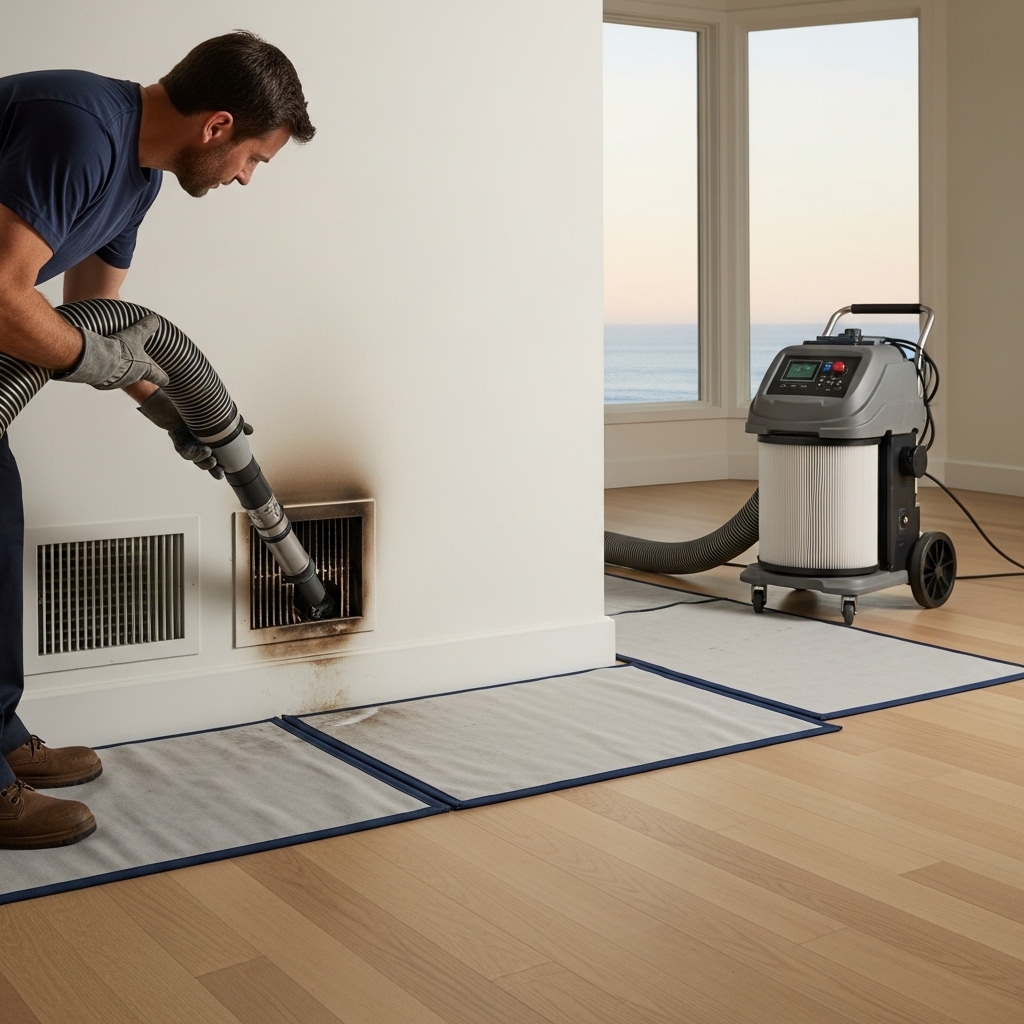
Wildfire smoke moves differently from everyday dust. It is finer, more pervasive, and it carries odors that cling long after the sky clears. In Malibu, where winds can guide smoke through canyon corridors and over coastal neighborhoods, homes that were never close to flames can still feel the impact indoors. The first sign may be a faint scent when the HVAC starts or a fine residue near return grilles. For households eager to reclaim a sense of normal, speed matters—but so does method. The right approach captures and removes what settled in your system without spreading it further. If the air in your home feels altered after a smoky day, start by understanding the essentials of professional air duct cleaning and how emergency service adapts those fundamentals to post-smoke conditions.
As a local technician, I have seen the range of scenarios Malibu presents after a smoke event. Oceanfront townhomes near Broad Beach may draw in smoke through frequently opened sliders, while hillside homes in Latigo Canyon or up Malibu Canyon Road can experience downdrafts that push smoke past weatherstripping despite closed windows. The HVAC system becomes a background participant in this story: if it ran while smoke was present, even briefly, ultra-fine particulate likely moved into the return, across the filter, and toward the coil and blower. That does not mean there is lasting damage. It means a focused, careful reset will restore the clean baseline your home had before the event.
What smoke does inside an HVAC system
Smoke is a complex mixture of gases and ultra-fine particles. Those tiny particles follow airflow into the return, where they can settle in the first sections of ductwork or, if the filter allows, move toward the blower and coil. Because smoke particles are small and often sticky, they cling to surfaces more readily than typical dust. Over time, they can produce a persistent odor when the system starts and distribute faint residue in rooms near the affected runs. The first objective after a smoke event is to identify where particles likely settled and to capture them under controlled conditions so they do not drift back into living areas.
In Malibu’s coastal microclimate, moisture can complicate the picture. On foggy mornings following a smoke day, smoke residue may attract additional humidity, creating a thin film that resists casual wipe-downs. That is why emergency cleaning emphasizes negative pressure, proper agitation techniques, and careful attention to components like the blower wheel and coil, where sticky residues can lurk out of sight.
First steps homeowners can take safely
Before a professional visit, there are practical measures that help. With windows closed, run the system on recirculate with a fresh filter to begin clearing indoor air, but avoid high-speed fan runs that could disturb settled residue near the return. Wipe the face of return grilles gently to remove visible dust, and hold off on using whole-house fans until the system has been evaluated. If you notice strong odors from a particular room or a visible halo around a vent, make a note; this information helps the crew focus efforts where they will matter most.
Resist the urge to remove registers and probe deeply into ducts without proper equipment. Without negative pressure and capture tools, disturbing residue can send it back into the room. Instead, document what you see with a quick photo and share it with your technician. A brief visual can guide decisions about where to start and how to pace the work.
What emergency duct cleaning includes after smoke
An emergency visit starts with a walk-through to understand exposure: which rooms were used during the smoke event, whether windows were open, and how the system was set. Technicians will stage protection for floors and finishes, then establish negative pressure at the air handler so that agitation pulls debris toward the vacuum rather than into occupied spaces. The work typically begins at the return and proceeds to the first trunk sections, where smoke residue is most likely to have settled.
Special attention goes to the blower and coil. The blower wheel’s fins can accumulate fine residue that releases a telltale scent whenever the system starts. The coil’s tight fins require gentle, precise cleaning if smoke residue is present. When addressed correctly, these components stop reintroducing odors and particles into the airstream, providing immediate, noticeable relief.
Adapting to Malibu’s access and architecture
Service in Malibu often means planning around tight mechanical spaces, scenic but narrow driveways, and rooms with high ceilings and custom finishes. Crews familiar with local logistics bring corner guards, extended protection for floors, and tools capable of reaching long runs without scraping. They coordinate with homeowners about parking and access so equipment can be staged efficiently. All of this supports a steady, controlled pace, which is exactly what post-smoke cleaning requires.
For homes that back onto canyons, technicians may anticipate longer duct runs and plan stronger capture equipment to maintain negative pressure at distant registers. In compact oceanfront units, smaller, maneuverable equipment can be the smarter choice to avoid blocking hallways or disturbing neighbors. The shared goal is to move through the home with care so the work improves conditions without adding disruption.
When odors linger even after cleaning
Sometimes, smoke settles into porous materials near the air handler or in rooms where windows were open for long stretches. If, after a thorough cleaning, a faint odor persists, the follow-up focuses on adjacent surfaces that may be acting as reservoirs: the return closet, nearby insulation, or carpets close to the return. Documenting these areas during the initial visit helps guide a targeted secondary pass if needed. The objective remains the same: remove sources methodically until the indoor environment stabilizes.
It is also wise to consider the timing of filter changes in the days after service. Running the system with a fresh filter helps catch any residual fine particulate that might remain in the living space, especially if doors and windows were opened during cleanup. Checking that filter sooner than usual can confirm that air is trending clean and odor-free.
Coordinating with other post-event work
After a smoke episode, many homes tackle other tasks: wiping surfaces, laundering fabrics, and treating areas exposed to outdoor air. Aligning duct cleaning with this effort pays off. When registers are serviced early and the system is run briefly under supervision, some of the remaining airborne particles are captured. Then, as surfaces are cleaned, less residue is available to re-enter the system. Scheduling in this order reduces the likelihood of chasing odors from room to room.
For multi-unit buildings, coordination with property managers matters. Shared spaces and stacked systems require planning so that work in one unit does not inadvertently affect another. Crews used to Malibu’s rental landscape will communicate with managers about timing, documentation, and any special access considerations, keeping the day organized and respectful of neighbors.
Maintaining momentum after the emergency pass
Once the system is reset, small habits help preserve the improvement. Watch how your home responds over the next several days. If a particular room continues to hold a smoky scent, note when it happens—first thing in the morning, after running the HVAC, or during calm evenings. These observations can point to specific runs or nearby materials that would benefit from a brief follow-up. In most cases, a measured second pass in targeted areas resolves the last traces left by a stubborn event.
Looking ahead, plan for a quick evaluation whenever smoky conditions return. Because each event behaves differently depending on wind direction and intensity, the best defense is timely attention based on what actually happened in your home. This approach avoids unnecessary disruption while keeping indoor air consistently pleasant.
Mid-incident perspective: deciding when to call
Homeowners sometimes wonder whether to wait or act immediately. The rule of thumb is simple: if you can smell smoke when the system turns on or if a light residue appears near returns and registers, it is time to schedule an evaluation. Waiting rarely makes the situation easier because sticky particles do not disappear on their own. A calm, focused response restores the home’s baseline quickly and prevents minor intrusion from becoming a nagging issue. If you want a refresher on the fundamentals of professional air duct cleaning, revisit them as you decide, and choose a provider who explains how they will protect your home during the process.
Frequently asked questions about post-smoke duct service
How soon should I schedule cleaning after a smoky day?
As soon as you notice persistent odors or visible residue. Acting quickly makes removal more straightforward and reduces the chance that particles settle deeper into the system or nearby materials.
Will a filter change alone fix the problem?
A fresh filter helps, but it rarely addresses residue already on duct surfaces, the blower, or the coil. A targeted cleaning under negative pressure captures what the filter cannot reach and typically delivers a more complete reset.
Can I safely clean registers myself?
Wiping the face of registers and return grilles is fine, but avoid reaching into ducts without proper capture equipment. Disturbing residue without negative pressure can send particles back into the room.
What if my system was off during the smoke event?
There may still be intrusion through door and window use, but the extent is often smaller. An inspection will confirm where, if anywhere, residue settled and whether a limited, focused cleaning is sufficient.
How do Malibu’s conditions affect recovery?
Moist marine air can make residue clingy, and long duct runs in canyon homes may require stronger capture equipment. Experienced local crews plan for these variables so the process remains efficient and effective.
Will cleaning eliminate all odors immediately?
Most homes notice a significant improvement right away. If faint odors linger, the follow-up focuses on nearby porous materials or specific runs that held more residue. Documentation from the first visit guides that targeted work.
When the sky clears and you are ready for your home to feel like itself again, move forward with a plan built on care and precision. Emergency service should be calm, thorough, and tailored to your home’s architecture and exposure. To restore fresh, comfortable air with a team that understands Malibu’s terrain and timing, schedule professional air duct cleaning and let your home exhale the last of the smoke.