
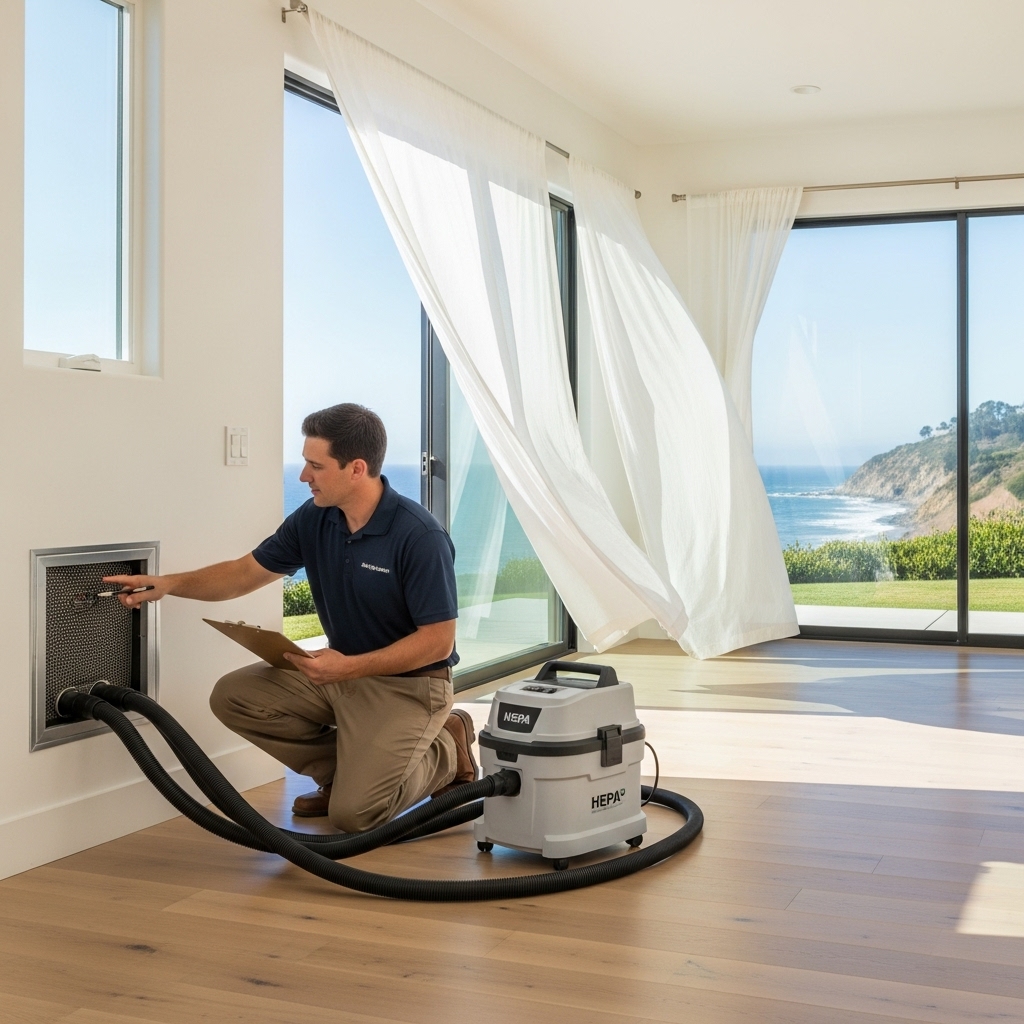
Ask ten neighbors in Malibu what they paid for air duct service and you will likely hear ten very different stories. That is because the true cost of restoring a home’s indoor air in our oceanfront community is shaped by far more than a simple square footage number. Salt air, hillside access, the age of the home, and the unique microclimates from Point Dume to the canyons all play a part in what a reputable company will recommend and how they plan the job. If you are trying to make sense of it all, the best starting point is understanding the factors professionals evaluate and how those details translate into time, equipment, and team expertise. Early on, it also helps to review how pros define terms like supply, return, trunk lines, registers, grills, and plenums so your expectations match the scope being proposed. When you grasp the anatomy of your system and the realities of Malibu’s environment, the estimate process feels far more transparent, and you can select a provider based on value rather than guesswork. For many homeowners, the first step is gathering a clear picture of professional air duct cleaning so you can compare options with confidence.
As a local technician who has spent years crawling through attics over Carbon Beach, under floors near Malibu Colony, and into tight chases in Latigo Canyon, I can tell you there is no one-size-fits-all approach. The work can range from straightforward to painstaking depending on accessibility, system design, and what we find inside. Homes exposed to coastal wind carry more fine particulate than you might expect. Add in the occasional marine layer that keeps interiors slightly damp, and it is easy to see why some systems accumulate stubborn films on duct walls, coils, and registers. This variation is why two houses of similar size can receive dramatically different timelines and scopes, even when the goal for both is simply to breathe cleanly and run HVAC equipment smoothly.
Understanding what drives air duct estimates in Malibu
The conditions we encounter from Big Rock up to Trancas Canyon often require customized planning. A townhouse off the PCH with underground parking will have a different access path than a bluff-top home with a long, narrow driveway. Ceiling heights, architectural features, and how the ducts were routed during construction all influence labor planning. Even the choice between rooftop or side-yard negative air machine placement can affect how quickly hoses and power can be run, which alters setup time and safety considerations. These are not complications; they are just realities of working in the terrain and architecture that make Malibu special.
Environmental exposure matters as well. Ocean salt tends to attract and hold moisture, which can contribute to films on metal surfaces and fan blades. In homes where windows are open to catch those sea breezes, we often see fine sand and organic matter settle in returns and along the first runs of ductwork. During dry seasons, dust from canyon trails and construction activities can travel farther than expected, especially in homes with powerful return systems or whole-house fans. When a system draws more outside particles, cleaning the first few feet of ducting around the air handler and the return plenum becomes more involved, and the technician may recommend more thorough agitation methods to lift material that has adhered to the metal over time.
Home size, layout, and accessibility
Square footage tells only part of the story. A modestly sized home with many individual supply runs can take longer to service than a larger home with a simpler trunk-and-branch layout. Ducts that snake around skylights or follow sinuous rooflines require more ladder moves, more time to protect finish surfaces, and often more creative solutions when registers are tucked behind built-ins or high shelving. If your home has decorative grilles that are painted or custom fabricated, technicians may need to protect or hand clean them, which adds care and time to the process. Likewise, if your furnace or air handler sits in a tight mechanical closet, attic knee wall, or crawlspace, the team will plan for safe entry and careful staging of tools so that nothing in the surrounding area is disturbed.
In homes with multiple systems, such as a separate unit for the primary suite and another for the main living areas, planning includes ensuring each system is isolated so that debris from one does not circulate into another. That means more than simply closing dampers; it includes strategic use of containment, HEPA-rated vacuums, and attention to the order of operations so each area is truly finished before moving on. When a proposal includes details about how many systems will be addressed and how each will be isolated, you are seeing the kind of thoroughness that protects both results and your home’s finishes.
Condition of ducts and level of contamination
No two systems age the same way. Some Malibu homes have sheet metal ducts that remain in surprisingly good condition for decades, while others include sections of flex duct that may kink or settle over time. Flex duct can be safely cleaned when it is intact and supported properly, but technicians may adjust methods to avoid damaging the liner. When we encounter heavy buildup near kitchen areas, especially in homes that love to cook with open windows, it may call for more agitation to dislodge grease-bound dust particles. Homes that have recently completed renovations often need special attention around returns, since construction dust can move into the system even when vents are masked.
Beyond simple dust, there are times when we discover signs of moisture or biological growth. Malibu’s foggy mornings can, in certain conditions, contribute to condensation where duct insulation is compromised or where unconditioned air meets colder surfaces. When a professional identifies potential biological contamination, they will describe the steps required to address it safely and in compliance with industry standards. That often involves additional containment and equipment, and it can influence the schedule for the day. The key point is that cleaning should never spread contaminants. A reputable crew will explain how they will keep the negative pressure balanced and ensure that material is captured at the source.
Equipment and techniques that influence scope
Many homeowners are surprised by how much planning goes into choosing the right combination of negative air units, agitation tools, and filtration. In a canyon home with long duct runs, technicians might deploy stronger vacuum units to maintain consistent capture at distant registers. In compact beach cottages with limited parking or power access, smaller, more maneuverable equipment can be the smarter choice. There is also the question of how to handle coil and blower cleaning when the system needs it. Coil cleaning is not always included in a basic duct cleaning scope, and when it is recommended, a good proposal will explain how the coil will be protected, what solutions will be used, and how rinse and recovery will be handled to safeguard surrounding finishes.
Register by register, technicians decide whether soft-brush agitation is sufficient or whether more robust tools are necessary to break up stubborn accumulations. When metal ducts have intact seams and good access, a combination of forward and reverse air sweeping—with the vacuum running at negative pressure—can restore surfaces effectively. In sections with tight elbows or transitions behind walls, the team may use specialized whips or micro-cameras to confirm progress, reducing the chance of leaving pockets of debris in hidden corners. All of these techniques are about matching the method to your home, not about applying the same recipe everywhere.
Preparing your home and what to expect on service day
A smooth experience begins with preparation. Before arrival, think about parking and pathways. Surfaces are protected with drop cloths, but it helps if you can clear a few feet of space near returns, registers, and the air handler. Pets are safest in a quiet room away from the work zone. Once the team arrives, the first step is a walk-through to confirm supply counts, return locations, and any occupied rooms that need extra care. The crew will set up containment where appropriate, establish negative pressure, and then work in a methodical pattern so that what is dislodged is also captured. Good communication is essential; expect periodic updates, especially if the technicians find something unexpected behind a register or within a plenum.
In most homes, you will notice the crew moving through an orchestrated sequence rather than rushing. That deliberate pace is by design, reducing the chance of dust migrating into finished spaces or a pet sneaking through an open door. When the system calls for coil or blower work, it typically happens after the bulk of duct cleaning so the final debris is pulled toward the vacuum rather than back through the coil. Expect the crew to show you what they found. Many professionals will provide before-and-after photos of accessible sections, which helps you understand the improvements made and plan what to watch for in the future.
Why Malibu’s microclimates matter to the plan
From the cooler, fog-prone mornings near Broad Beach to the warmer, drier afternoons in the hills above Pepperdine, microclimates nudge systems toward different maintenance rhythms. Oceanfront homes endure the gentle abrasive effect of salt and sand, while canyon homes may collect more pollen and fine dust from hillside trails and landscaping. This is why two neighbors may have very different recommended intervals between cleanings. One might need attention after seasonal winds, while another can comfortably extend the time because their home sits behind a protective stand of trees and uses tighter seals. Rather than looking for a universal schedule, pay attention to how your home breathes: do you open windows daily, do pets carry sand inside, do you notice grill discoloration or a film on nearby surfaces? These clues tell a story that a local technician will recognize and incorporate into the plan.
Seasonal events also matter. Wildfire smoke, even when the flames are miles away, can leave ultra-fine particulate in systems that were running at the time. If a fire incident coincides with an open-window day or a whole-house fan running, the system may draw in more of that smoke than usual. In those cases, a professional may suggest a more thorough pass through returns and the first trunk sections, and may recommend replacing filters promptly after service to ensure the newly cleared pathways remain clean. This is not fear-based advice; it is about understanding how the system behaves under stress and restoring it to a stable baseline.
How to choose a provider without guessing
Look for clarity rather than flashy promises. A solid proposal describes the number of supplies and returns to be addressed, how the system will be isolated, what equipment will be used, and which components beyond ducts—such as coils and blower assemblies—are included or excluded. It will address how registers and grilles are handled, especially if you have custom finishes, and how any discovered issues like damaged insulation or loose connections will be documented. When a company can explain how they adapt their method to coastal conditions, tight attic spaces, or long hillside runs, you know they are thinking like a local.
Communication after the initial call matters as much as the first impression. If a provider follows up with a detailed plan, a realistic time window, and specific guidance on how to prepare your space, you are seeing the operational discipline that translates into smoother service day experiences. It also helps to ask what kind of post-service documentation you will receive. Clear notes and photos become a baseline for future visits, making it easier to notice changes and decide when the next cleaning makes sense.
Value versus shortcuts
It can be tempting to chase the fastest timeline, but in practice, shortcuts in duct cleaning usually show up later as lingering dust or uneven airflow. When a crew takes the time to protect surfaces, move carefully through tricky access points, and verify their progress, the results last longer and the system runs more comfortably. This is especially true in Malibu’s architectural diversity, where a careless step can damage a delicate finish or a rushed pass can stir up debris that the vacuum did not capture. The better approach is to prioritize methodical work and clear communication over speed, even if it means adjusting your day to accommodate a more thorough plan.
Professional service also helps with the subtler aspects of indoor comfort. When registers are cleared and ducts are free of blockage, airflow balances more predictably. Rooms that used to feel stuffy begin to breathe again, and the system can spend less effort overcoming hidden resistance. While those improvements might be hard to quantify in advance, you will feel them in daily life—a home that smells fresh after being closed up for a few days, surfaces that stay cleaner between dustings, and a quieter system because it is not laboring against restriction.
Maintenance habits that protect your investment
Once your system is clean, small habits keep it that way. Changing filters on a cadence that matches your lifestyle makes a bigger difference than most people realize. Homes with pets, frequent cooking, or lots of open-window days tend to benefit from more frequent filter checks. Pay attention to how filters look at change-out time; they are an honest record of what your system encounters. Make use of doormats, especially near beach entries, to trap sand before it drifts toward returns. If your home needs occasional drywall work or sanding, take the time to mask returns and registers, and keep the system off during dusty tasks. Simple steps like these stretch the time between deep cleanings and keep airflow consistent.
Being proactive also means listening to your system. If you notice unusual sounds near the air handler, a faint musty odor after marine layer mornings, or reduced airflow in a room that used to be comfortable, those are signals worth investigating. They do not automatically point to a major problem, but they are hints that something has changed. A quick inspection—removing a register to take a look, checking for obvious obstructions—can help you decide whether to call a professional for a deeper evaluation. The earlier you address a developing issue, the easier it is to correct without extra disruption.
Some homeowners also appreciate a mid-cycle touch point with their provider. That might be a brief inspection during a seasonal HVAC tune-up where photos are compared to the post-cleaning baseline. If everything looks stable, you gain confidence. If a hot, dry season or unusual construction nearby has introduced more dust than expected, you can make a timely decision about whether a targeted refresh is warranted. The point is not to over-service; it is to maintain awareness so you can act rather than react.
Midway perspective: making sense of the plan
By the time you are reviewing proposals, your goal is to align the work with the realities of your home. If a provider has walked your site, noted access points, and described how they will safeguard finishes, you are on the right path. It is equally reassuring when they explain what will be addressed and what will not, and why. When they illustrate that understanding with clear language around containment, negative pressure, and post-cleaning verification, you know you are not just buying a service—you are investing in a method designed for Malibu living. At this point, it is helpful to revisit your initial research and the fundamentals of professional air duct cleaning so that the scope you approve matches your expectations for indoor air quality and comfort.
Frequently asked questions about Malibu duct work
How often should Malibu homes have their ducts cleaned?
There is no universal calendar because homes breathe differently. Oceanfront houses with frequent open windows may see buildup sooner than canyon homes that stay closed and rely on conditioned air. Instead of a fixed interval, use signs like visible dust at registers, a fine film on nearby surfaces, or noticeable airflow changes as cues to schedule an evaluation.
Do coastal conditions really make a difference?
Yes. Salt air and marine layer moisture change how fine particles behave, sometimes causing them to cling to surfaces more stubbornly. Homes closer to the water often collect more fine sand and organic material near returns. These conditions do not make cleaning complicated, but they do influence the methods and cadence that make sense for long-term results.
Will duct cleaning help with odors after smoky days?
When smoke has moved through a system, addressing the returns and first sections of ducting can reduce lingering odors. Combined with filter replacement and careful cleaning around the air handler, many homeowners notice fresher air. The best results come from a plan that isolates the system under negative pressure so disturbed material is captured rather than recirculated.
What if my ducts are a mix of metal and flex?
That is common in Malibu. Both can be serviced when they are intact and appropriately supported. Professionals adapt tools to avoid damaging liners and to work within tighter bends. The key is a method focused on agitation at the point of contact and immediate capture, rather than forcing air blindly and hoping for the best.
Is coil or blower cleaning always included?
Not necessarily. It depends on the condition of those components and the scope you approve. A thorough evaluation will make recommendations based on visible evidence and performance symptoms. When included, technicians will protect nearby finishes and ensure that any cleaning solutions are recovered safely so that they do not affect the surrounding space.
Can cleaning improve airflow to rooms that feel stuffy?
It often does. Removing accumulated dust and debris reduces resistance inside the ducts and across the coil. Once those bottlenecks are eased, many homes experience more even temperatures and quieter operation. Airflow improvements are particularly noticeable at the end of long runs or in rooms with high ceilings.
How should I prepare my home for the visit?
Clear a bit of room near registers, returns, and the air handler, secure pets, and plan for parking so equipment can be staged safely. If you have custom grilles or delicate finishes, point them out during the walk-through so the team can take extra care. These simple steps make the day smoother and protect your home’s details.
What will I receive after the service?
Expect a summary of the work performed, notes on any findings such as minor leaks or insulation gaps, and photos of accessible sections. This documentation serves as a baseline for future reference and helps you decide on filter cadence and whether any follow-up repairs are warranted.
If you are weighing your options and want a straightforward path to cleaner indoor air, choose a provider that treats your home with the same care you do. Malibu homes are as individual as their ocean views, and your plan should reflect that individuality. When you are ready to move from questions to action, schedule a professional evaluation and set expectations around method, protection, and communication. To start the process with a team that understands the rhythm of our coastline and can tailor solutions to your exact footprint, reach out and book expert air duct cleaning so your home can breathe easy again.