
Living in Malibu means embracing the rhythm of the Pacific, the quiet of canyon mornings, and the occasional rush of the Santa Ana winds. It also means paying attention to the unique way our coastal-and-canyon environment affects the air we breathe inside our homes. When neighbors ask me what shapes the overall investment for having their ductwork cleaned, I start by painting a picture of Malibu itself. Salt-laden ocean air, fine canyon dust, seasonal wildfire particulates, and the stop-and-go reality of Pacific Coast Highway all play roles in how a professional team scopes and schedules your project. Understanding these factors helps you read an estimate with clarity and confidence, and it also sets practical expectations for timeline, preparation, and outcomes from expert air duct cleaning.
Even if you have a solid handle on your home’s HVAC system, the way a seasoned technician views your property can be eye-opening. They see the relationship between returns and supplies, the bends and turns where dust hides, the sealed or unsealed seams that influence how air moves and what contaminants remain suspended. In Malibu, that trained eye is also watching for signs of salt corrosion near the coast, microclimate moisture in shaded canyons, and the kind of fine, stubborn ash that can linger months after regional fire events. While no two homes are the same, the fundamentals behind a professional scope follow a clear logic that any homeowner can learn to recognize.
The Malibu context: ocean air, canyon dust, and seasonal realities
Malibu’s microclimates are sharp enough that a technician might approach a Point Dume cottage differently than a Rambla Pacifico hillside retreat. Homes near the water often experience a gentle but persistent film of salt that can work its way into outdoor equipment and, in time, contribute to surface oxidation on metal components. Canyon homes, meanwhile, collect an invisible confetti of decomposed granite, brush pollen, and wind-borne debris. When Santa Ana winds push through, even tightly sealed houses find their filters challenged as pressure differences tug air through the smallest gaps. These environmental conditions don’t just add material to ducts; they shape the pace, method, and thoroughness that a credible crew will bring to your job.
Seasonality matters, too. Dry months often coincide with dustier conditions and heavier HVAC runtime for cooling, while winter brings cooler nights and a different usage pattern that redistributes settled material inside ductwork. After major wind or fire events, many homeowners understandably want service promptly. Reputable teams balance that demand with realistic scheduling and quality control, ensuring that every step—from supply register removal to final system test—is performed to standard rather than rushed to meet a surge.
What technicians evaluate during a walkthrough
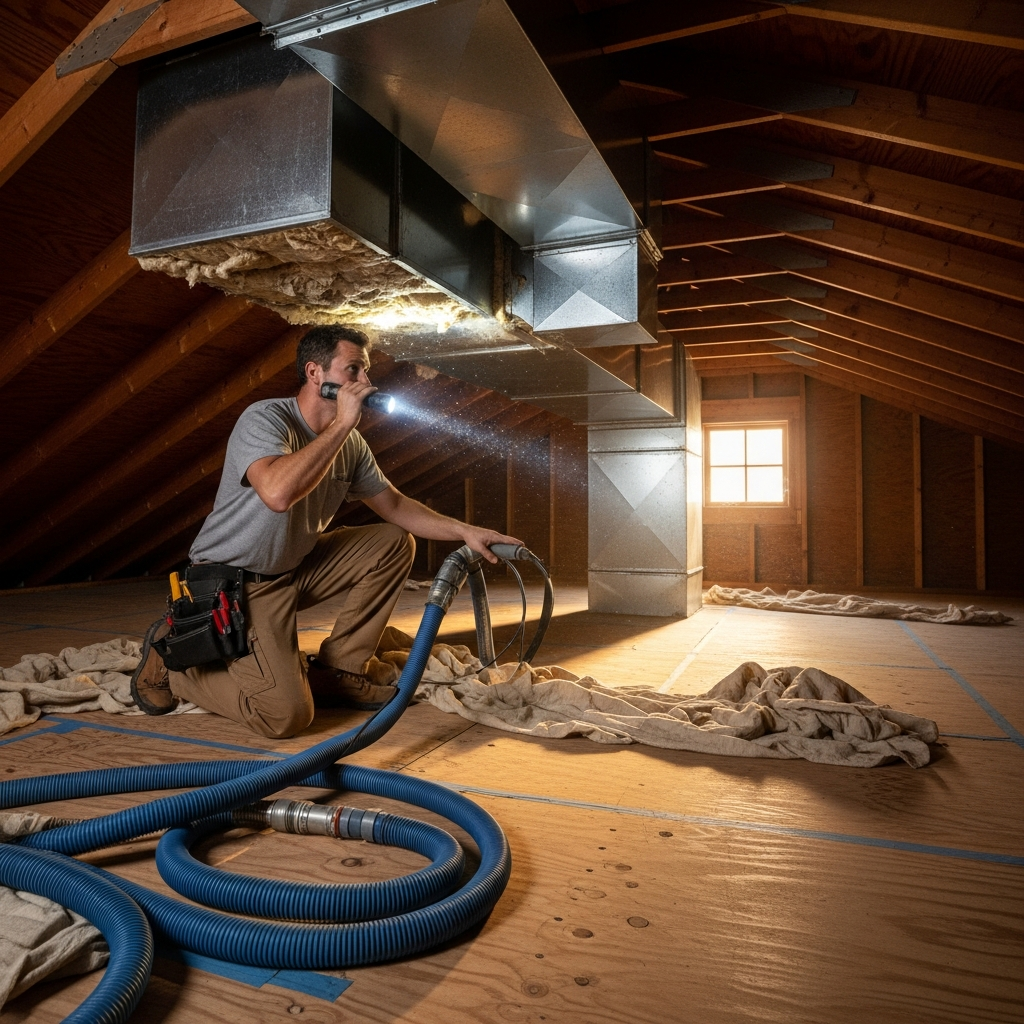
On a site visit, technicians build a mental map. They note the number of registers and returns, the accessibility of the air handler, the condition of plenums, and whether duct runs are rigid metal, flex, or a combination. They look at attic or crawlspace access, ceiling heights, ladder requirements, and the presence of built-ins that might complicate register removal. In Malibu, I see particular attention paid to insulation quality in attics exposed to intense sun, as well as to crawlspaces in older beach homes where clearance is tight and sand intrusion is possible. This initial assessment guides the team on manpower, equipment, time on site, and any special containment measures required to protect interiors.
Airflow characteristics also inform the approach. If a return is undersized or a filter rack has gaps, you may have bypass that introduces debris back into the system. If the ductwork includes multiple branch transitions, technicians anticipate extra time for methodical agitation. When homeowners understand that these details drive the job’s scope, the line items in an estimate make more sense, and comparing proposals becomes a matter of apples to apples in terms of process rather than guesswork.
Home layout and access considerations
Malibu homes can be architectural showcases with sweeping glass, high ceilings, and creative geometry. Those beautiful choices often translate into real-world access considerations. Vaulted living rooms may require tall ladders and extra hands to safely remove and reinstall registers. Cliffside properties might present parking and staging challenges for vacuum trucks and containment equipment. Any time there’s limited access for tools, the project calls for careful planning so that hoses, negative air machines, and protective coverings can be set up without impacting finishes, flooring, or landscaping. Access issues don’t necessarily mean a longer day, but they do shape how the crew organizes their sequence and the measures they take to leave your home exactly as they found it—just cleaner.
For older homes, access can be about construction realities. You might find returns hidden behind bespoke millwork or registers painted in place through past remodels. A thoughtful team will anticipate this and treat trim and hardware gently, documenting with photos before they begin. Malibu’s mix of historic charm and modern innovation is part of what makes our housing stock special, and experienced pros know how to honor that while doing thorough work.
Cleanliness levels and real-world debris
What’s actually in your ducts drives much of the work plan. In coastal areas, you may see a blend of fine dust and sticky film that binds particles together. In canyons, expect a drier, powdery layer mixed with organic matter. After a season of construction nearby, drywall dust and sawdust can accumulate; after a regional fire, ash makes its way into nooks where regular filtration simply can’t catch it all. Pet hair, kids’ glitter, and the occasional marble or LEGO head all find their way into registers, too. A thorough process addresses both the loose surface material and the settled layers that require mechanical agitation to dislodge.
A trustworthy crew doesn’t just vacuum what they can reach from a register. They build containment, use negative pressure at the main trunk, and work methodically from branch lines back to central runs, agitating with the appropriate tools for your duct type. Flexible ducts, for example, demand lighter touch to preserve the inner liner, whereas rigid metal can handle brush systems designed for a deeper scrub. The evidence of good work is visible in before-and-after photos and, later, in better airflow and reduced settling dust in your living spaces.
Equipment and method choices
Not all equipment is created equal, and in Malibu we often see a variety reflecting the mix of property sizes and site constraints. Some crews operate powerful truck-mounted vacuums that excel on large systems with long runs; others rely on high-grade portable units that can be staged in hard-to-reach properties where driveway space is limited. What matters is the combination of negative pressure and agitation that ensures debris doesn’t simply migrate but is captured and removed. Technicians may use compressed air whips, rotary brushes, or specialized soft-brush tools for delicate lines. High-efficiency particulate filters on the collection side prevent reintroduction of fine material into the home.
Safety and cleanliness protocols are equally critical. Registers should be removed and cleaned individually. Supply and return openings are sealed during work to maintain system pressure. Drop cloths and corner guards protect interiors. If sanitizing is indicated—say, after a moisture event—the product choice and application method should be clearly explained. The goal is a targeted approach that addresses confirmed conditions, not a one-size-fits-all package that includes steps your system doesn’t need.
Timing, scheduling, and the Malibu day
Ask any local pro and they’ll tell you: timing on the PCH can shape a service day as much as anything else. Reliable teams build realistic arrival windows, communicate if traffic slows, and plan their route to respect school schedules, surf contests, or film shoots that can choke up parking. Inside the home, the crew sequences work to minimize disruption—tackling bedrooms first so you can reclaim private spaces, for instance, or planning around a home office meeting. Malibu homeowners often juggle complex schedules, and a crew that respects that earns trust quickly.
Communication goes beyond timing. Good teams provide a simple run-of-show: what will be noisy, what will be quiet, which rooms are off-limits to pets during a step, and when the HVAC will be turned off for safety. By aligning expectations, they protect everyone’s time and ensure the quality of the final outcome.
Understanding proposals without fixating on numbers
When a proposal lands in your inbox, the most valuable sections are the scope and methodology. Look for a clear description of how the system will be isolated, what kind of negative pressure will be applied, which agitation tools are used for which duct materials, and how registers, grilles, and the air handler will be handled. If coil cleaning or plenum attention is recommended, there should be a reason specific to your system’s observed condition. Photo documentation is a sign of diligence both before and after the work, and it gives you a permanent record to reference when discussing maintenance intervals down the road.
Another useful marker is how the company addresses your specific property features. Did they account for ladder work on your vaulted ceilings, or the crawlspace beneath your beachfront bungalow? Did they note the dog who likes to greet visitors, the baby’s nap schedule, or the need to protect reclaimed wood floors? The details in the scope tell you as much about value as any line item could, because they reflect forethought and a respect for your home.
What to expect on the day of service
On arrival, the crew walks the space again, confirms the plan, and sets up protective coverings. They establish negative pressure at the system, then move room to room, removing registers, brushing or air-whipping branch lines toward the trunk, and capturing debris through the collection unit. Returns often get extra attention because they carry the most accumulated material. If the air handler is included in the scope, its cabinet is opened, surfaces cleaned as appropriate, and filters checked for proper fit. At the end, the team reinstalls and aligns registers, seals any minor gaps at filter racks if noted, and runs the system to confirm airflow and operation. The final walkthrough should include photos and practical tips tailored to your home.
Many homeowners report a subtle but noticeable difference in the days that follow: less settling dust on surfaces, fewer odors when the system starts, and more consistent airflow in rooms that previously felt starved. Those wins aren’t magic; they’re the product of methodical work aligned to your system’s needs.
Aftercare and maintenance intervals
In Malibu, maintenance cadence depends on lifestyle and location. Homes close to the sand where windows are often open may need attention more frequently than tightly sealed canyon homes surrounded by mature trees. Families with shedding pets, active renovation schedules, or frequent entertaining generate more indoor activity that stirs and redistributes dust. A sensible approach is to monitor filter condition, dust on supply grilles, and household symptoms after big seasonal shifts. When you do schedule service, choosing a time that avoids peak traffic or aligns with quieter household weeks will make the day smoother for everyone involved.
Think of duct cleaning as part of a whole-home hygiene plan. Keeping entry mats clean, minding window and door seals, replacing filters on rhythm, and occasionally inspecting accessible ductwork where you can see it all contribute to better indoor air. The more careful you are upstream, the less your system has to battle downstream.
Common misconceptions
A common misconception is that one quick pass with a shop vacuum can substitute for a professional job. In reality, without proper negative pressure and agitation, much of the settled material remains, and some can even be redistributed into living spaces. Another misconception is that a single appointment will solve every air quality concern. While it makes a meaningful difference, duct cleaning is only one part of the indoor environment story, alongside filtration, ventilation, humidity control, and source management. Finally, some believe that newer homes don’t benefit. In practice, even new construction can leave behind drywall dust, sawdust, and installation debris that no one wants circulating for months after move-in.
There’s also a tendency to think every home needs the same level of work. The truth is that a careful evaluation dictates a targeted approach. Some systems may need more attention at the air handler and plenums; others may require gentle care for delicate flex lines. The best results come from matching method to material and objective need, not from a rigid checklist applied blindly.
Choosing a team you trust
Trust is built on clarity, consistency, and care. Companies that take time to understand Malibu’s microclimates, discuss your home’s specifics, and communicate clearly throughout the process tend to deliver the most satisfying results. They show up with equipment in good order, protect your spaces as if they were their own, and leave you with documentation that stands up over time. Above all, they make the experience feel uncomplicated—even when the technical work behind the scenes is anything but simple.
In the midst of that trust-building, the conversation often returns to process. A well-explained plan—one that highlights containment, agitation, capture, and verification—tells you you’re in good hands. And if recommendations go beyond basics, you’ll know exactly why. That transparency is the difference between a checkbox service and a thoughtful, professional air duct cleaning tailored to the realities of your Malibu home.
FAQs
How do Malibu’s ocean breezes and canyon winds influence duct cleaning plans?
The mix of salt air near the coast and fine dust in the canyons means technicians anticipate different types of debris and potential surface effects on metal components. They often plan for careful protection of finishes, choose agitation tools matched to duct materials, and sequence their work to capture both loose and adhered particulates effectively.
How often should I consider scheduling service for a Malibu property?
Cadence is personal and property-specific. Homes with frequent open windows, shedding pets, or proximity to the sand often benefit from more frequent attention than tightly sealed homes. Many owners assess after big seasonal changes or notable wind events and then plan accordingly.
What should be included in a thorough scope of work?
A clear scope details containment steps, negative pressure setup, agitation methods suited to your duct type, treatment of returns and supplies, handling of the air handler and plenums if indicated, register cleaning, and final verification with photos. It should also note property-specific access considerations, protection measures, and any recommended add-ons with justifications.
Will the process be disruptive to my household?
There will be some noise and temporary access limitations around registers and the air handler, but a considerate crew sequences their work to minimize disruption, communicates when louder steps will occur, and keeps pathways protected. Many homeowners are surprised at how smoothly a well-coordinated day runs.
Can I do anything to prepare before the crew arrives?
Clearing access to registers and to the air handler area helps. Noting any rooms where quiet is especially important at certain times, managing pets for their safety, and confirming parking or entry instructions make the visit efficient. If you have particularly delicate finishes, point them out so extra protection can be used.
Does duct cleaning solve all indoor air concerns?
It is an impactful step, but indoor air quality also depends on filtration, ventilation, humidity management, source control, and housekeeping routines. Think of it as a central piece of a broader, ongoing strategy tailored to your home and lifestyle.
What signals suggest my system would benefit from attention?
Visible dust at supply grilles shortly after cleaning surfaces, musty or smoky odors when the system starts, uneven airflow that isn’t explained by damper settings, or evidence of debris at returns can all be prompts to evaluate. A professional assessment provides clarity on whether cleaning is warranted and what steps will be most effective.
When you’re ready to take the next step and want a team that understands Malibu’s ocean-coast-and-canyon reality, choose a partner who explains their plan clearly and treats your home with care. For a smooth experience and results you can feel, schedule professional air duct cleaning with a trusted local expert who will tailor the work to your property’s unique needs.