
What “Cost” Really Means When You Live and Breathe Malibu
When neighbors in Malibu ask what drives the cost of having their ducts cleaned, they are usually trying to make sense of numbers they have seen in ads, stories they have heard from friends in Point Dume or Broad Beach, and their own experience with the stubborn dust that rides in with ocean breezes. The answer isn’t a single line item; it is a story about houses that hug hillsides, hidden returns tucked above tongue-and-groove ceilings, and the unique cocktail of salt air, marine layer moisture, wildfire ash, and canyon winds that shape our indoor air. Understanding that story is the foundation for realistic expectations and a positive outcome, because what you are paying for is not a commodity—it is time, technique, thoroughness, and accountability wrapped around your specific home. If you are just starting your research and want a trusted primer on process and scope, this overview of air duct cleaning is a helpful place to begin before you compare proposals.
Think about how Malibu homes differ from a typical tract house in the Valley. We have long duct runs that snake through low crawlspaces, registers at dramatic heights above tile or reclaimed-wood floors, and mechanical rooms tucked beside wine storage or built into garages that back up to steep grades. The math of the job shifts with each architectural quirk. A home in the flats near Malibu Country Mart may have straightforward attic access, while a ranch in Latigo Canyon may require careful staging, safety harnesses, and extra technicians simply to reach each return. The conversation about cost in Malibu therefore begins with access, because access controls the hours and choreography necessary to do the work correctly without damaging finishes or disrupting your routine.
The Anatomy of a Proper Duct Cleaning in Malibu Terms
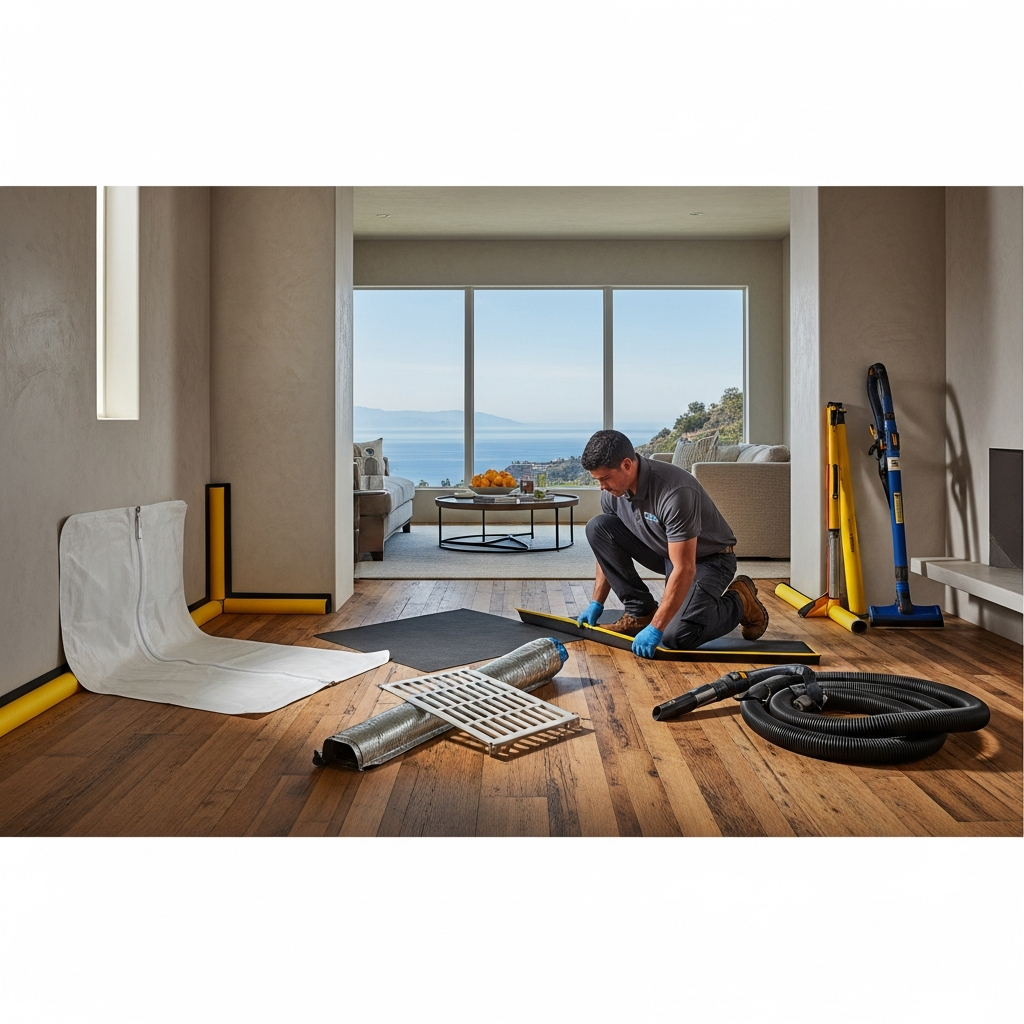
Before we dive deeper into factors, it helps to visualize the work itself, especially as it unfolds in homes that have lived through ashfall events and stubborn marine layer mornings. A seasoned crew in Malibu will plan for containment from the front door, laying down protective runners, corner guards, and zipper barriers as needed to isolate spaces. They create negative pressure with a HEPA-filtered vacuum collector sized to the duct system, ensuring that loosened particulate moves toward filtration rather than back into rooms. Agitation tools break debris loose, from whip assemblies in flexible lines to soft-bristle brushes that protect delicate internal duct surfaces. Returns and supply trunks are addressed methodically, one at a time, working from the furthest run inward. Grilles are removed, cleaned, and reinstalled without marring surrounding plaster or Venetian-finished walls.
When I explain this to homeowners in Serra Retreat, I describe it as a dance: everything moves toward the collector, and nothing escapes the choreography. If there is evidence of moisture, rust, or microbial film—common in beach-close homes where cool air meets warm humid air—additional steps may be appropriate after cleaning, but only once the source of moisture is addressed. In homes near Big Rock, where salt air and fog cling to metal, I often see oxidation inside older sheet metal that affects how carefully we brush and vacuum. In hillside homes above the Civic Center, rodent intrusion in attic runs may add a remediation dimension before cleaning even begins. Each of these realities adds shape and time to the job, which is why a one-size-fits-all quote isn’t realistic here.
Square Footage, But Smarter: Registers, Levels, and Layout
Square footage is the blunt instrument people reach for when they compare one Malibu home to another, but the true drivers are layout and the number of supply registers and returns. A compact 2,500-square-foot bungalow on Carbon Canyon with a single-story layout can be faster to service than a 1,800-square-foot tri-level perched off Encinal with four separate short duct runs and two air handlers. Ceiling height matters too. The vaulted living rooms we love for their views also mean ladders, careful handling of fixtures, and sometimes scaffolding to remove and reinstall high grilles without damage. The more architectural drama, the more time we budget simply to reach and protect the work area, which cascades into the final scope.
Then there is the question of how many systems you have. Malibu properties with guest houses, pool houses, or home studios may have multiple air handlers. Each system needs its own containment strategy and negative-air setup. Switching between systems during a single service visit involves breakdown and reassembly that adds non-cleaning time to the schedule. When you compare proposals, look for clarity around system count, supply and return counts, and whether hard-to-reach zones are included; this transparency communicates whether the proposed scope will achieve the clean you expect.
Access Challenges: Crawlspaces, Attics, and Coastal Construction
Access in Malibu is its own category. Crawlspaces can be narrow, sandy, or rocky with low clearance. Older homes with uneven additions sometimes have ductwork that passes through enclosed chases or soffits that were not designed with service in mind. Attics in mid-century homes might be too tight to navigate safely without removing sections of decking, which then requires careful replacement. Properties built into the hillside can place the air handler behind mechanical doors that open into steep grades, which affects how equipment is staged and anchored. Each complication demands more careful setup and a slower, more deliberate pace. You also want to know the crew you hire is comfortable working in these conditions without cutting corners, literally or figuratively.
Even the driveway and parking matter. In Pepperdine-adjacent neighborhoods with narrow cul-de-sacs, getting a vacuum collector close enough to the access point might require longer hose runs and additional containment to maintain suction and cleanliness. If your home is behind a shared gate, scheduling and coordination with neighbors or security can add buffer time. None of this is glamorous, but it is real, and it is part of how professionals in Malibu build their timeline and plan their day so your project finishes cleanly and predictably.
Malibu’s Air: Salt, Smoke, and Santa Anas
Indoor air here is shaped by the outside air that sneaks in through every door opening, every window crack, and every garage entry. The marine layer carries salt microcrystals that cling to surfaces. Santa Ana winds push fine dust deep into duct interiors. Wildfire seasons leave lingering ash that settles invisibly into returns, particularly in homes where the system ran during smoky days to maintain indoor comfort. When your technician evaluates your system, they will consider the local history of air quality in your micro-neighborhood. Homes in Malibu Park that were exposed to significant smoke intrusion may require more thorough agitation and filter housing attention. Beachfront condos in Malibu Colony may not have ash exposure, but they often show fine salt residue at grilles and returns that drives a more delicate brushing technique to avoid scoring metal surfaces.
Humidity is another local factor. Ducts passing through cool crawlspaces below warm living areas can become sites for condensation if the system is not balanced. Even without liquid water, higher humidity supports sticky films that capture dust and build biofilms over time. A conscientious cleaning breaks that chain, but a good contractor will also recommend small operational tweaks—like ensuring proper drain line slope, sealing obvious leaks, and verifying that the air handler is level—so that the freshly cleaned system stays clean longer.
Scope Clarity: What a Thorough Cleaning Covers
When you read a proposal in Malibu, look for language that includes supplies, returns, trunks, and the air handler cabinet. Ask how grilles are cleaned and whether the evaporator coil and blower are inspected and photographed. In many homes here, the air handler is tucked where access is tight, so visual documentation matters. Technicians should protect and clean all registers, wipe down accessible duct interiors, and ensure the negative-air environment is maintained until containment is fully removed. If sanitizing is recommended, the contractor should explain why, with an eye toward moisture sources and post-cleaning conditions. Blanket promises of “disinfection” without a reason often signal a one-size-fits-all approach rather than a Malibu-appropriate plan.
The better the scope narrative, the fewer surprises on service day. It is reassuring to see language that acknowledges your home’s realities—for example, a note about the laddering required to reach your second-story catwalk registers, or the need to coordinate with your general contractor if a soffit panel must be temporarily removed. This level of honesty shows the provider has really looked, measured, and planned.
Timing, Seasonality, and Why Malibu’s Calendar Matters
There are times of year when Malibu’s rhythms push and pull on household projects. Summer brings friends and family, rental turnovers, and open-air living; winter brings heavier surf spray and closed windows that magnify indoor air conditions. During wildfire season, many residents seek relief from ash and odor at once, and schedules compress. If your home is in a canyon neighborhood like Ramirez or Corral, plan a little extra lead time during windy weeks, and consider doing the work before the first strong offshore winds arrive in the fall. Early planning not only eases scheduling; it also helps avoid working in conditions that may reintroduce debris as soon as it is removed.
Another timing element is coordination with other trades. If you are remodeling in Malibu West or replacing floors in Trancas, schedule duct cleaning after the dustiest tasks, but before final paint touch-ups. In heritage homes, coordinate with the electrician or low-voltage technician if access panels overlap wiring or home automation gear. Thoughtful sequencing reduces repeat effort and keeps your indoor environment clean for the longest period after the work.
How Pros Build a Quote Without Guesswork
A reliable Malibu contractor will start with a site visit or a very detailed virtual review that includes walk-through videos, register counts, and access notes. They will ask for builder plans if you have them, and they will verify system type, filter size, and attic or crawlspace conditions. During the visit, they will check for condensation marks, pest droppings, rust, or past patchwork that could change the cleaning approach. All of this translates into crew size, equipment list, containment strategy, and time blocks. The end product is a narrative-based proposal that connects observed conditions to recommended steps. This doesn’t just inspire confidence; it also sets realistic expectations so that on the day of service you aren’t surprised by how much preparation is involved.
In my experience, proposals that fit Malibu homes pair a description of the work with examples from similar properties—without exaggeration or scare tactics. If someone promises a perfect outcome in an hour, be skeptical. If someone else dwells on catastrophe and insists you must act immediately without explanation, be equally cautious. The right balance is calm, clear, and specific to your home’s layout and usage.
Value Beyond the Day of Cleaning
The return on a successful cleaning shows up in quieter operation, fresher-smelling supply air, and less dust settling on surfaces. For homes near the beach, it can also slow the accumulation of sticky film that catches sand and salt. For canyon homes, it can reduce the recirculation of fine dust that seems to appear no matter how often you wipe down the stair rails. When combined with good filtration and regular filter changes, a thorough cleaning can help your system run smoothly and keep coils and blowers cleaner, which in turn supports consistent comfort.
It is also worth mentioning that many Malibu households include infants, seniors, and pets with sensitive respiratory systems. Reducing the load of accumulated particulate can make a home feel calmer and easier to breathe in, particularly after a season of strong winds or a nearby brush fire. While no cleaning is a cure-all, the difference is often visible in the simplest possible way: by how much less you are dusting the week after the service compared to the week before.
What to Ask When Comparing Providers
When you weigh one company against another, ask them to walk you through their containment plan, their agitation tools, and their approach to register removal and reinstallation. Ask how they handle delicate finishes, and whether they photograph before and after key steps so you can see the interior of your ducts and air handler. Ask about their experience in Malibu specifically: hillside access, salt air corrosion, ash remediation, and working around high-end finishes. Listen for references to neighborhoods like Escondido Beach or La Costa Beach, because familiarity with our building styles and site logistics translates to fewer surprises on the day of service.
It is also reasonable to ask about crew size and technician experience. A skilled two-person team that has worked together for years may operate more efficiently than a larger, less experienced crew. Clarify who will be onsite, who will supervise, and how communication will flow throughout the visit. Good processes look and feel calm. You want a team that takes the time to tape labels for each grille, stores screws securely, and checks that thermostats and zones are returned to your preferred settings before leaving.
Common Misconceptions About Duct Cleaning
One misconception is that a filter upgrade alone makes cleaning unnecessary. In reality, filters capture airborne particles that reach them, but they do not remove settled dust and residue that have built up over years on the interior surfaces of ducts and returns. Another misconception is that you can judge cleanliness by looking at a single register. That view shows only the edge of the system. True evaluation requires tools and techniques that reach deep into the runs and trunks. There is also confusion around sanitizers and sealants. These materials have their place in very specific circumstances, but they are not cure-alls and should never replace physical removal of debris and proper, source-focused moisture control.
Finally, people sometimes assume that all ductwork is roughly the same. In Malibu, systems vary widely: fiberglass ductboard, spiral metal, flexible ducts, and lined plenums each require specific handling. Brushing a fragile ductboard the same way you would brush smooth metal is a recipe for damage. The right team understands those differences and adjusts tools and pressure accordingly.
A Midstream Reminder as You Plan
If you are halfway through your research and feeling overwhelmed by terminology, take a breath and revisit the essentials: clear scope, Malibu-specific experience, careful containment, and respectful handling of your home. For a plain-English overview of professional standards and the steps you should expect, this resource on air duct cleaning can re-center your checklist before you request final proposals.
Preparing Your Home for a Smooth Visit
A little preparation improves outcomes without adding stress. Before your appointment, clear access to returns and supplies where practical, and let your technician know about any sensitive art, heirloom rugs, or fixtures that require extra protection. If you have pets, think about a comfortable space for them away from open doors and equipment noise. If you manage a rental or second home in Malibu, coordinate with your property manager so gate codes, parking instructions, and alarm disarm codes are all in order. Simple steps like these save time and keep the focus on the work that matters most.
On the day of service, walk the team through your priorities. Point out any rooms that feel dustier than others, or areas where you have noticed musty odors. Your lived experience is valuable information that helps target attention and confirm that the final result aligns with your goals. When the crew finishes, review photos and ask for recommended filter replacement intervals based on your system and household habits.
Aftercare: Keeping It Clean Longer
Post-cleaning, the best gift you can give your ductwork is steady, thoughtful filtration. Replace filters on schedule, choose the right MERV rating for your system so air flow is not restricted, and keep registers free of blockages. If you love to keep balcony doors open to the ocean, that is part of Malibu joy, but it also means you may want to change filters a bit more frequently during peak onshore-flow months. If you run air purifiers in bedrooms, coordinate filter changes so your indoor ecosystem works as a team rather than as a set of isolated devices.
Periodically check your returns for new signs of dust or odor, and make note of any unusual sounds from the air handler. If you live in a canyon with heavy spring pollen, consider a quick check-in with your provider just after the season as a preventative measure. The longer you live with an awareness of your home’s air pathways, the more intuitive these habits will become.
Frequently Asked Questions
How long does a typical Malibu duct cleaning take? The duration depends on the number of systems, access conditions, and your home’s layout. Many Malibu homes require a full day or more because of high ceilings, complex access, and the care needed to protect finishes and maintain containment. The best indicator is a proposal that ties time estimates to the realities of your home rather than a generic promise.
Do I need to leave the house during the work? Most residents stay home, moving between rooms as the team progresses. Containment and HEPA filtration help maintain clean conditions. If you work from home or have napping children, let the team know so they can sequence noisy steps at convenient times.
Will duct cleaning help with wildfire odors? It can, especially when combined with clean filters and attention to the air handler cabinet where odors sometimes linger. True odor resolution also depends on addressing fabrics and surfaces in the home that may have absorbed smoke. A professional can advise on a coordinated plan for best results.
Is sanitizing always necessary? No. It is appropriate in specific situations, such as after moisture intrusion or certain contamination events. Any recommendation should explain the “why” and describe the material proposed. Physical removal of debris is always the first priority.
How often should Malibu homeowners schedule cleaning? Frequency depends on your lifestyle, local conditions, and system type. Homes exposed to heavy wind and ash may benefit from more frequent attention, while tightly sealed homes with consistent filtration may wait longer. A professional who knows Malibu can suggest a sensible interval based on your circumstances.
What if my ducts are older or fragile? Many Malibu homes have legacy duct materials that require a light touch. Experienced technicians select tools that protect surfaces while still removing debris. If certain sections are too compromised for safe cleaning, your provider may recommend repairs or replacement as part of a long-term plan.
Will the service make a mess? A well-managed job is orderly from start to finish. Floor protection, corner guards, sealed vents during cleaning, and continuous negative pressure keep dust moving into filtration rather than out into living spaces. At wrap-up, your home should feel tidy, with grilles reinstalled and thermostats returned to your settings.
Your Next Step in Malibu
If you are weighing options and want a clear, Malibu-specific plan, reach out to a local team that will walk your home, explain their containment strategy, and show you before-and-after documentation without the drama. When you are ready to breathe easier and enjoy cleaner vents from Carbon Beach to Encinal Bluffs, schedule a professional visit and ask for a detailed scope tailored to your layout. To get acquainted with the essential steps and standards, explore this concise guide to air duct cleaning, then book a visit that respects your home, your time, and the way Malibu truly lives.