
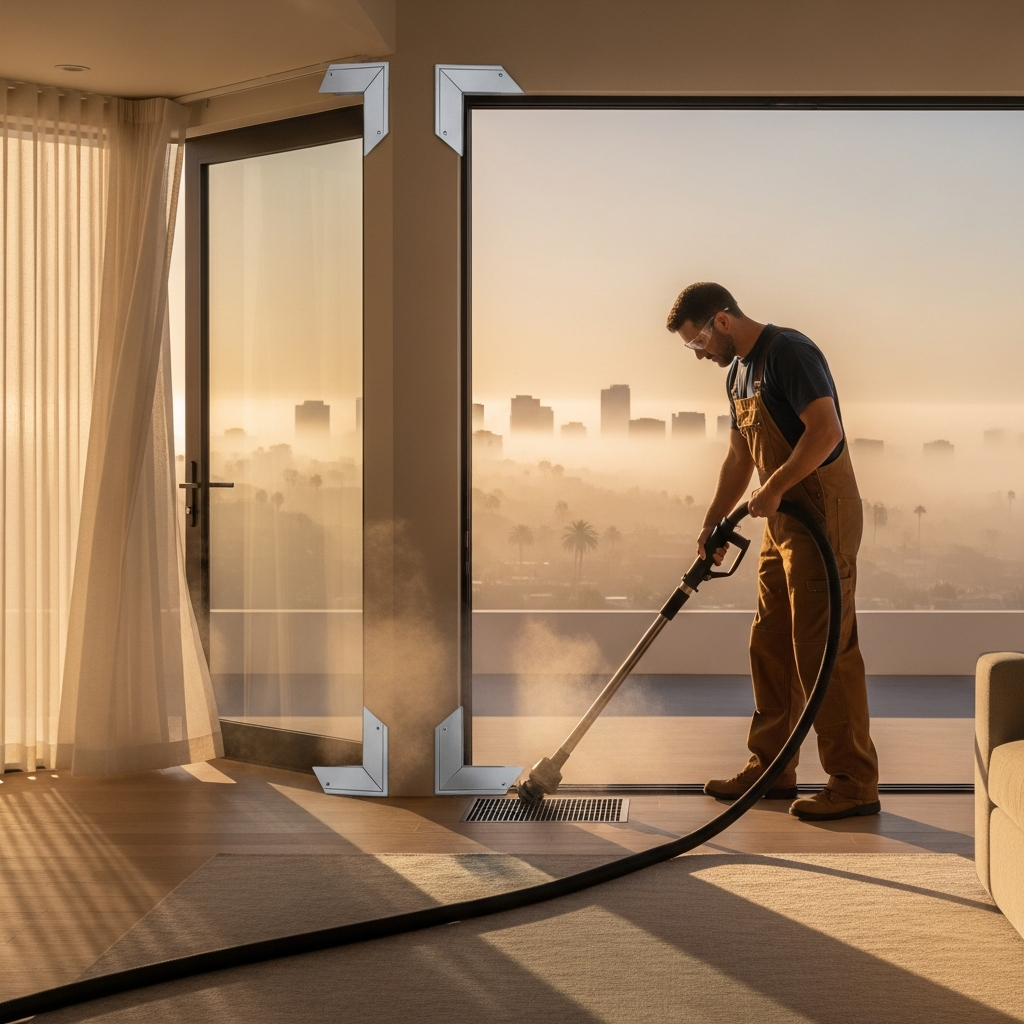
There’s a moment every year when Malibu’s sky turns a flatter, more metallic blue. The breeze shifts, the air dries, and the faintest hint of smoke rides in from the interior. Even if flames stay far from our hillsides, wildfire season arrives in our homes through particles too small to see and odors that seem to cling to fabric and memory. Over many seasons helping neighbors from Trancas to Sweetwater Mesa, I’ve seen how a clean, resilient HVAC system becomes part of a wildfire plan. It’s not dramatic—but it’s dependable. When airways inside your home are clear, your filters, coils, and fans can do their best work right when you need them most. That’s where thoughtful air duct cleaning earns its place, not as a nice-to-have, but as a quiet shield for your indoor life.
Smoke moves differently than dust
Wildfire smoke is loaded with ultrafine particles that behave more like a gas than like beach sand. They slip through tiny cracks and ride pressure changes caused by closing doors, running bath fans, or switching on a kitchen hood. Even with windows shut, a home draws some outside air from the envelope—attic, crawlspace, wall cavities—especially during Santa Ana events. Once inside, those particles carry through the return, settle just past the supply registers, and cling where temperature and humidity create tacky films.
The problem isn’t just what you smell in the moment; it’s what lingers. The first few feet of duct after each register often show the heaviest residue because air slows slightly as it enters a room. Elbows and boots hold onto more debris than straight runs. Clearing these areas thoughtfully reduces the persistent, smoky edge that can hang around for weeks even after skies clear.
Why a clean system matters during the season
Think of your HVAC like a relay team. The filter takes the first handoff, catching what it can. The blower moves air across a coil that conditions it, and ducts deliver it to where you live. If one runner is lagging, the others have to overcompensate. Dirty ducts make filters work harder and can redistribute what they just caught. In wildfire weeks, that extra strain shows up as grittier smells and more visible dust on surfaces. A pre-season cleaning streamlines the pathway so the filter can focus on what’s new from outside rather than fighting a backlog.
There’s also the question of comfort. On the hottest, driest days, you ask more of your system. Clean pathways mean the blower doesn’t need as much effort to push air to distant rooms, which can translate to steadier temperatures without the rush and hiss that sometimes accompanies high fan speeds. In that quiet, you can rest easier even when the sky says otherwise.
What a wildfire-season cleaning focuses on
Preparation begins with a look at how your home breathes. We find and seal supply registers, attach a negative-air machine to the trunk, and use agitation tools designed for your duct materials to dislodge residue. We pay special attention to the first segments after registers and to elbows where sticky films form. Returns receive extra care because that’s the gateway for outside intrusions. If you have a fresh-air intake, we verify its screen and path so you’re not pulling unfiltered air in unintentionally during smoke events.
Odor control is a concern for many. While the nose is personal, neutralizing residues inside the system helps most homeowners. If requested and appropriate, we apply an HVAC-safe deodorizer with the system off, using measured techniques to avoid overwhelming indoor spaces. We also look at filter fit and the condition of the filter rack door. A snug door prevents bypass, where air slips around the filter and carries particles directly into the fan and coil.
Malibu’s geography shapes the strategy
Homes along the bluffs and beaches receive wind differently than homes tucked into canyons. A house above Escondido Falls, sheltered by oaks, may experience quieter infiltration but hold odors longer in calm indoor air. A glass-and-steel home along Malibu Road can face gusty crosswinds that push air under sills even when windows are latched. We tailor the approach accordingly, sometimes starting with downwind rooms to stop reintroduction of particles, other times beginning at the core returns to set a clean baseline for the whole home.
Access matters too. Attic clearances shrink in older builds; modern homes hide ducts behind tight service chases. We plan tool paths that respect finishes, and we coordinate timing to avoid mid-afternoon attic heat when possible. The right work done at the right time in the right way adds up to an efficient appointment and a cleaner result.
How to live with the system during smoke
Even with windows closed, life continues. You cook, you shower, you open the door for deliveries. Each action moves air. With clean ducts, your filter becomes the star. Use it wisely by running the system steadily instead of in short bursts when outdoor air is worst. Keep interior doors slightly open to even out pressure and airflow between rooms. And if your home has a room that becomes a refuge—the nursery, a study—consider a door sweep and weatherstripping to enhance the system’s work in that space.
When you do crack a window to clear a kitchen smell or to answer the door, try to do it when outdoor air is marginally better—often mornings before winds intensify. Your nose will tell you more than an app on smoky days. A cleaning doesn’t replace those habits, but it makes each one more effective.
Life after the sky turns blue again
Once the smoke lifts, a final cleanout helps your home reset. It’s not uncommon to find lingering residue in returns and at the first turns off the trunk. Clearing that residual film prevents it from flavoring your air for another month. It also restores a sense of normalcy. Odor is emotional; removing the last traces of a stressful event helps your home feel like your home again.
Questions Malibu homeowners ask
Will duct cleaning remove smoke smell completely? For most homes, it significantly reduces it. True elimination depends on how smoke entered, how long it lingered, and whether soft furnishings absorbed odors. We target the mechanical side—ducts, returns, and nearby components—so your other cleaning efforts have less to fight.
Is this safe for my system? Yes, when done by trained technicians who tailor tools to your duct materials and protect components like the coil and blower. We use methods designed for HVAC systems, not general-purpose cleaning tools.
Can this help with allergies? Many people find relief simply because fewer particles recirculate. While no single step solves every sensitivity, cleaning ducts, improving filter fit, and managing when the system runs all add up.
How often should we schedule during fire season? A pre-season service paired with a post-event check is a strong rhythm. If a particularly intense smoke period occurred, an interim touchpoint may be wise for heavily used systems.
What about ozone machines I’ve seen online? We avoid anything that introduces irritants into your air. Our focus is source removal and neutral, HVAC-safe treatments when appropriate.
Do you provide documentation? Yes. We share before-and-after visuals so you can see changes in the places you can’t, which is especially helpful if you coordinate care from out of town.
Wildfire season asks for steady, thoughtful action rather than panic. Start with the pathways that move the air you live with all day. If you want a plan designed for Malibu’s winds, canyons, and coastal light, schedule trusted air duct cleaning before the next red flag day. Your home will feel calmer, and so will you.