
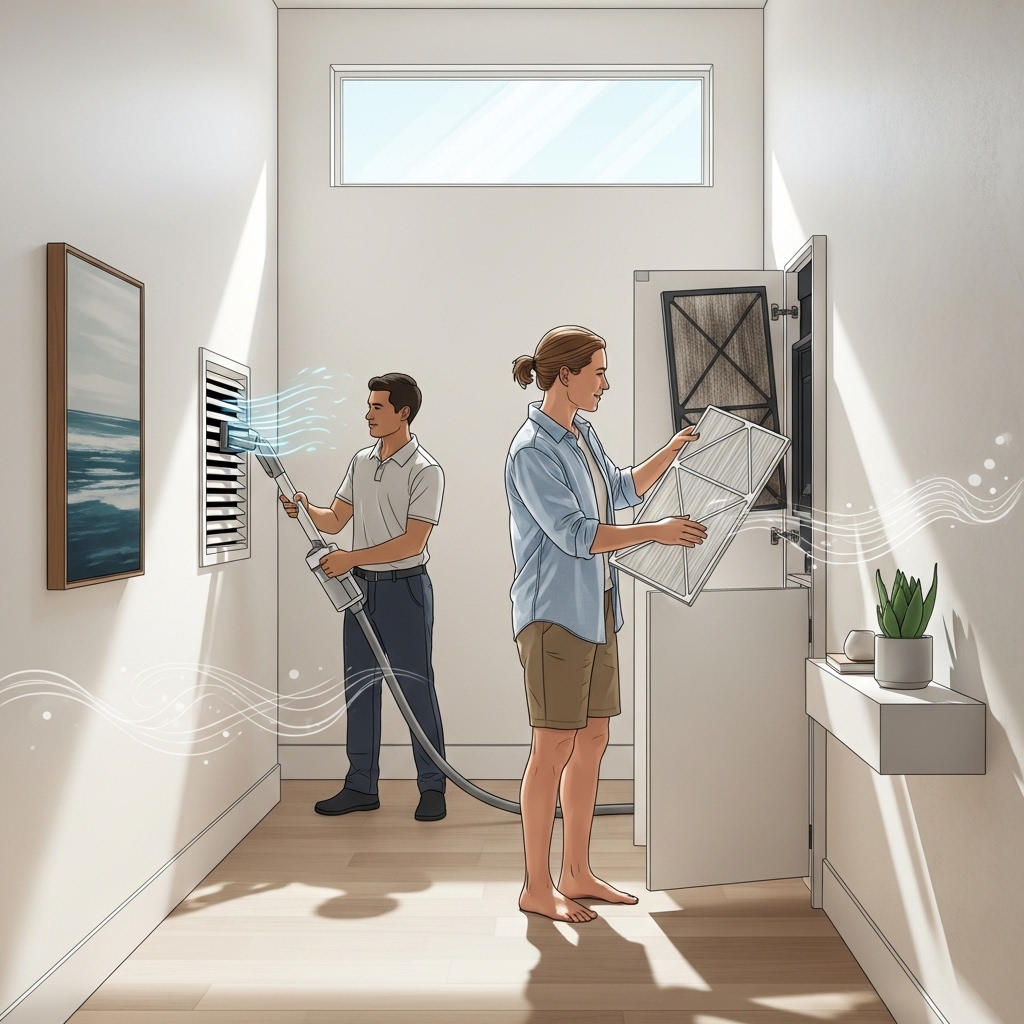
Everyday maintenance isn’t about spending your weekends with a tool bag—it’s about a few small habits, done consistently, that keep your Malibu home feeling composed. Out here, the air smells of salt one day and chaparral the next, and that variety shows up in your HVAC system if you let it. The goal is to weave simple checks into the rhythm of living so comfort stays quiet and predictable. While professional tune-ups twice a year provide the deep care your system needs, daily and weekly attention within the home adds a layer of reliability you can feel. If you prefer a clear starting point and a routine that’s easy to follow, pairing your efforts with a trusted air conditioning maintenance program helps ensure nothing gets overlooked.
Start with awareness. Notice how your home behaves at different times of day. Mornings along the coast can feel cool yet damp; afternoons warm up as sea breezes ease. Your AC should respond without drama—brief cycles that tidy up humidity when needed, then quiet, efficient cooling as the sun moves over the deck. If something feels off—air a touch stale, a room that lags in comfort—that’s your cue to give the basics a look. Most issues begin as small hints long before they become obvious.
Filters, returns, and the path of air
Air takes the easiest route. If your filter cabinet doesn’t seal, or if the return grille is dusty, air will slip around the filter and bring debris straight to the coil. A few seconds with a vacuum around the return grille every week or two keeps airflow honest. When you change filters, confirm the arrows align with airflow and the edges seat firmly. In Malibu, consider that filter intervals are a guide, not a law. Beachfront homes accumulate salt-laden particles; canyon homes pick up dust. Peek monthly at first. Over time, you’ll learn your home’s rhythm and can adjust with confidence.
Think about return placement. If your main return is near a busy room, keep the area around it clear so air moves freely. In homes with multiple returns, make sure doors are undercut or transfer pathways allow air to find its way back to the system even when rooms are closed for privacy. That little detail prevents pressure imbalances that can steal comfort from a bedroom or make a bathroom feel stuffy after a shower.
Outdoor unit awareness without the fuss
Your outdoor unit doesn’t need much from you—just a bit of space and occasional attention. Glance at it when you head out for a walk. Leaves should be cleared from the top and sides, and landscaping should be trimmed so air can move around the cabinet. In Malibu’s coastal environment, a quick look after a blustery day tells you if palm fronds or salt spray have left debris on the fins. Don’t blast it with a hose; a professional coil rinse is part of your service visits. Your role is simply to keep the surroundings tidy and avoid blocking the unit with surfboards, furniture, or bags of soil waiting for the garden.
The pad matters more than it seems. If you notice the unit settling or tilting, make a note to mention it at your next service. Level equipment runs more quietly and places less stress on refrigerant piping. Small observations like this help your technician keep the system in tune without guesswork.
Condensate: small line, big role
On foggy mornings and warm afternoons, the system condenses moisture as part of keeping the home comfortable. That water leaves through a small drain line that deserves occasional attention. You don’t need to dismantle anything—just be aware of where the line terminates and glance now and then to make sure it’s dripping when the system is running steadily on a humid day. If you notice water around the indoor unit or an unexpected shutoff, the drain could be the culprit. Mention it right away so a pro can clear it and protect ceilings and finishes.
In homes with a secondary drain pan under an attic air handler, look for a float switch along the pan’s edge. If that switch trips, it’s doing you a favor by stopping the system and preventing overflow. Let your service provider know; the fix is usually straightforward once identified. Everyday awareness turns potential headaches into simple conversations.
Thermostats that follow your life
A thermostat isn’t just a dial; it’s the translator between your intentions and the system’s behavior. Spend a few minutes aligning schedules with reality. If your evenings move outdoors in summer, have the system cool the bedrooms gently before you come in, then let it relax while the house is open to the ocean air. Geofencing can be a helpful partner if your comings and goings are irregular, but it works best when the fundamentals are right—clean filters, good airflow, and a system that responds predictably.
When you adjust settings, think in small steps. A degree or two can make a meaningful difference without provoking long run times. If you find yourself overriding schedules frequently, it’s a sign to revisit the program rather than fight it. The goal is for the system to feel like it’s reading the room, not lagging behind.
Rooms that lag behind and how to read the signs
In many Malibu homes, a back bedroom or a home office over the garage runs a little warmer. Before assuming a big fix is required, look for simpler signals. Is the supply register partially obstructed by a rug or furniture? Does the door close tight without a pathway back to a return? Are window coverings left open during the hottest stretch of the day? Everyday maintenance is often about these gentle, practical adjustments that let the system do its job without fighting the house.
When a room consistently lags even after these tweaks, note the behavior and share it at your next maintenance visit. Balancing airflow may be the answer, and that’s easier to do when your technician understands how you actually use the space.
Noise as a messenger, not a nuisance
New noises are messages. A gentle hum turning into a buzz at start-up, a soft rattle that appears when a gust hits the outdoor unit, or a whistling return that wasn’t there last month—these are clues worth sharing. Many are resolved with simple fixes: tightening a panel, securing a line set, or adjusting a register. You don’t have to diagnose; just notice. The habit of paying attention keeps minor issues from maturing into intrusive sounds that dominate an evening on the patio.
Quiet operation also improves indoor life. A calmer system makes sleep easier and conversation more pleasant. Everyday maintenance protects that quiet by ensuring the home environment around the equipment supports it—clear pathways for air, stable footing for the outdoor unit, and doors and windows that cooperate rather than compete with the system.
Wildfire smoke and coastal fog: two sides of the same coin
Malibu’s air is usually a gift, but some days ask for care. When smoke drifts from regional fires, close windows and let filtration help. During these periods, your filter will load more quickly; it’s wise to check sooner than usual. On foggy mornings, let the system run short cycles if the house feels clammy, then open up once the sun warms the day. Everyday maintenance here is about responding to conditions with small, informed choices that keep the indoor environment steady.
If your home uses a smart thermostat or has an indoor air quality sensor, watch how it responds during these events. Share observations with your technician so the next professional visit can fine-tune settings. This collaboration turns one-off lessons into lasting improvements.
The rhythm between you and your technician
Professional care twice a year forms the backbone; your everyday habits are the heartbeat between those visits. Keep a small note on your phone—dates when you changed filters, a quick log of any unusual sounds, and the times of day when comfort feels most important in your home. That light-touch tracking makes professional maintenance more precise and personal. It’s the difference between generic service and care that understands your living patterns.
Midseason is the perfect time to touch base. A planned conversation around filter loading, condensate flow, and coil condition catches the little drags on performance before they become visible. It’s also the moment to confirm that your air conditioning maintenance strategy still fits your evolving routine—summer entertaining schedule, guest stays, or work-from-home shifts that change how you occupy spaces through the day.
Making comfort feel simple
The best everyday maintenance feels light. It’s not a project; it’s a habit that disappears into the background. You step outside, give the outdoor unit a quick glance, nudge a register back to open after cleaning day, and breathe easier knowing the system will meet the afternoon with ease. Over months and years, these touches save you from interruptions and keep the home feeling composed through fog, heat, and everything in between.
FAQ
How often should I check my AC filter in Malibu?
Look monthly at first to learn your home’s rhythm. Beachfront addresses tend to load filters faster with salt-laden particles, while canyon homes contend with dust. Once you see a pattern, set a predictable interval and adjust seasonally as needed.
What’s the easiest everyday task that makes a big difference?
Keeping the return grille clean and unobstructed is high impact and takes less than a minute. Strong, clean return airflow protects the coil and improves comfort throughout the home.
Should I hose off my outdoor unit?
Skip the hose for routine care. A professional coil rinse as part of scheduled maintenance is safer for the fins and more effective. Your role is to keep the area around the unit clear and note anything unusual.
How do I handle smoky days?
Close windows, let the system circulate air through a correctly selected filter, and check that filter sooner than usual afterward. Short, more frequent cooling cycles can help process air without overcooling the house.
What everyday signs suggest I should call for service?
New noises, water where it doesn’t belong, longer run times for the same comfort, or rooms that lag despite clear registers and pathways. These are gentle prompts to bring a professional in before a small concern grows.
When you’re ready to make everyday comfort an easy habit, connect your routine to a simple plan that respects Malibu’s climate and your lifestyle. Align a couple of professional visits with light-touch attention at home, and enjoy the quiet, confident comfort that follows. For a straightforward way to begin, tap into this trusted air conditioning maintenance resource and turn small habits into lasting ease.