In Malibu, heat can arrive the way a wave does—sudden, powerful, and impossible to ignore. When your cooling quits on a sweltering afternoon or in the quiet of a restless night, it’s more than an inconvenience; it disrupts sleep, work, and family routines. Emergency service isn’t just about speed; it’s about confident decision-making in the moments when comfort feels out of reach. As a local technician who has navigated late-night calls along PCH and sunrise visits in the canyons, I understand how urgent this feels and how important it is to show up calm, prepared, and respectful of your space. The goal is simple: restore cooling swiftly and safely while keeping you informed, from the first phone call to the final checklist. In these first minutes together, we align on the symptoms, the likely causes, and a path to reliable relief for your home’s air conditioning system.
What Counts as an HVAC Emergency?
Every household has its breaking point for discomfort. In a multi-generational home with infants or older adults, the threshold is understandably lower. We consider it an emergency any time the indoor temperature rises quickly, the system is cycling off unexpectedly, unusual noises suggest mechanical failure, or water is accumulating near the air handler. Burning smells, electrical buzzing, and breakers that trip repeatedly require immediate attention. Power surges during high-demand hours can quietly damage capacitors or control boards, leaving the system unresponsive. If wildfires have affected air quality, the urgency intensifies; you need filtration and cooling to maintain a safe, livable space. Our promise in Malibu is to treat your call with the gravity it deserves and to act with the focus and care the situation requires.
From Call to Arrival: The First Ten Minutes
Speed starts with clarity. On the phone, we’ll ask a few concise questions: what the thermostat shows, whether the outdoor unit is running, any noises you noticed before the failure, and if water is present near drains or attic units. If it’s safe, we may suggest simple stabilizing steps, such as turning the system off to prevent damage or switching the fan to “on” to encourage air movement while we’re en route. Meanwhile, we map the fastest route, taking into account local chokepoints. Malibu’s geography shapes response times; we plan accordingly, and we keep you updated if there’s a detour or delay.
Onsite Triage With Purpose
When we arrive, we act methodically for a reason: a calm, repeatable process is the fastest way to a solid result. We secure power, inspect for visible hazards, and run tests that reveal the system’s true condition. A silent condenser could indicate a failed contactor or capacitor; an air handler that runs but doesn’t cool points us toward airflow or refrigerant-side issues. Water where it doesn’t belong suggests a blocked drain or frozen coil, which we handle with care to protect finishes and prevent secondary damage. Emergency doesn’t mean “guess and go”; it means verify, decide, and fix with both urgency and foresight.
Night Work and Respect for Your Home
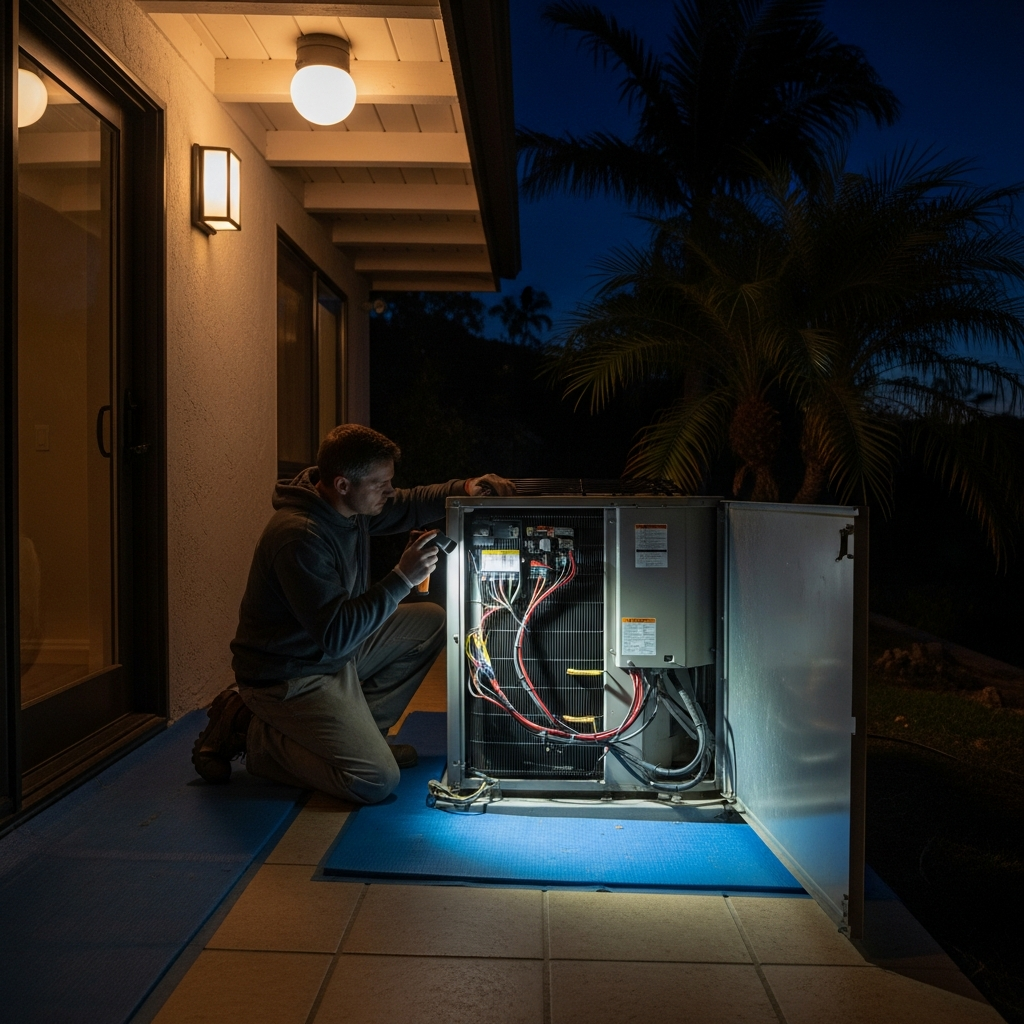
After-hours service demands an extra layer of consideration. We use soft lighting, protect floors, and keep noise down wherever possible. If your air handler is in an attic above a bedroom, we coordinate access so the household can rest while we work. We also keep an eye on neighborhood quiet hours and your preferences for gates and alarms. The aim is to solve the problem without adding stress, preserving the peace of your home even in the rush to restore cooling.
Common Emergency Scenarios in Malibu
During heat spikes, we often see dual capacitors fail under heavy load, leaving condensers silent and indoor temperatures climbing. Power quality issues can trigger nuisance trips or damage sensitive boards, especially in homes with complex automation systems. Coastal exposure accelerates wear on fan motors and outdoor electrical components, while wildfire ash can clog filters and coils overnight. We bring the parts and tools for these patterns, plus the diagnostic equipment to confirm when a deeper issue—like restricted ductwork or low refrigerant due to a small leak—demands attention beyond the immediate crisis. In every case, the first objective is to stabilize: get you cool again, protect equipment from further harm, and create a clear plan if follow-up is needed.
Keeping You Cool While We Work
Emergency service doesn’t always equal instant cold. If a blocked drain has frozen the coil into a block of ice, it may take time to thaw safely before we can restore full cooling. During that window, we help you stay comfortable with practical steps—closing blinds on sun-facing glass, using ceiling fans to move air, and partitioning unused spaces to concentrate cooling where it matters most. For families with sensitive sleepers or home offices, we’ll prioritize those rooms as soon as the system can produce chilled air again. If a short-term workaround is both safe and effective, we explain it, implement it, and set expectations for the final repair.
Communication That Builds Confidence
In an emergency, not knowing is the hardest part. That’s why we narrate the process as we go, sharing what we’re testing and what the results mean. If we reset a high-pressure switch, you’ll know what triggered it and how we’re preventing a repeat. If a part must be sourced, we show you the options and timing. We don’t bury the reality of constraints—every system and supply chain has them—but we convert those constraints into a plan you can count on. That transparency turns an emergency into a collaborative problem we solve together.
Preventing the Next 2 a.m. Call
Once cooling is back, we take a few extra minutes to discuss patterns we noticed and how to address them. Maybe your filter strategy needs to adapt during wildfire season, or the outdoor unit would benefit from gentle coil rinsing to counteract salt buildup. Perhaps a surge protector is a smart investment for your control board, or a smart thermostat can help you spot issues earlier. These aren’t lectures; they’re brief, targeted insights tailored to what your system revealed during the emergency. A few small shifts can turn chaos into predictability the next time the weather tests your home.
Mid-Visit Decisions and the Value of Local Judgment
Emergencies rarely unfold in neat chapters. A home tucked off Kanan might be battling attic heat that magnifies every small inefficiency, while a beachfront condo faces persistent humidity that stresses drains and coils. Local experience helps us make the right mid-visit calls, like staging a temporary fix overnight and returning at first light for a deeper clean that protects landscaping, or rerouting a thermostat wire to bypass a damaged run without opening finished walls after midnight. For homeowners weighing upgrades, we can also steer the discussion toward smarter air conditioning strategies that match Malibu’s climate and your comfort standards without derailing the night’s primary mission: get the cold back on.
Safety First, Always
Electrical issues, water near equipment, and confined attic spaces demand caution, especially in the dark. We use insulated tools, appropriate PPE, and safe access methods. If a situation is unsafe to complete immediately—say, a saturated ceiling or compromised platform—we stabilize the environment, protect your property, and return as soon as conditions allow. Safety isn’t a speed bump; it’s the track that lets us move quickly without mishaps.
Why Emergencies Feel Different in Malibu
Our town’s beauty comes with complexity. Coastal exposure is tough on metals and seals. Canyon winds and microclimates stress systems unevenly. Access can be challenging, and nights can be cool even after punishing afternoons, creating rapid demand swings that test equipment. Knowing these rhythms helps us plan routes, stock parts, and choose the right tactics when minutes matter. It’s why local expertise isn’t a luxury here—it’s the foundation of effective emergency service.
FAQ
Q: What can I safely try before calling in the middle of the night?
A: Ensure the thermostat is set to cool and the fan is on auto, check for a clean filter, and verify that the breaker hasn’t tripped. If something smells burned, power the system down and call—don’t attempt further troubleshooting.
Q: How do you protect my home during an emergency visit?
A: We use floor protection, careful lighting, and containment where needed. We’re mindful of sleeping family members, pets, alarms, and community quiet hours.
Q: Will you have the parts to fix my system immediately?
A: We carry a robust stock of common components and specialized tools. If a unique part is needed, we stabilize cooling when possible and source the part promptly.
Q: Can emergencies be prevented?
A: Not entirely, but seasonal maintenance, gentle coil care, surge protection, and attentive filter changes significantly reduce the odds. We’ll share specific steps tailored to your system.
Q: Is it safe to run the system if it’s icing up?
A: No. Power down to protect the compressor and avoid water damage as ice melts. We’ll diagnose airflow or refrigerant issues and restore safe operation.
Q: Do you service complex or concealed systems?
A: Yes. From rooftop condensers to hidden air handlers, we plan access and repairs with respect for architecture and schedule.
Your Comfort, Protected—Any Hour
If the temperature is rising and patience is falling, reach out now. We’ll respond with the urgency the moment deserves, communicate clearly, and restore calm to your home with a focused, proven process. When you’re ready for dependable help that respects Malibu’s unique conditions, schedule expert air conditioning support and rest easy knowing relief is on the way.