
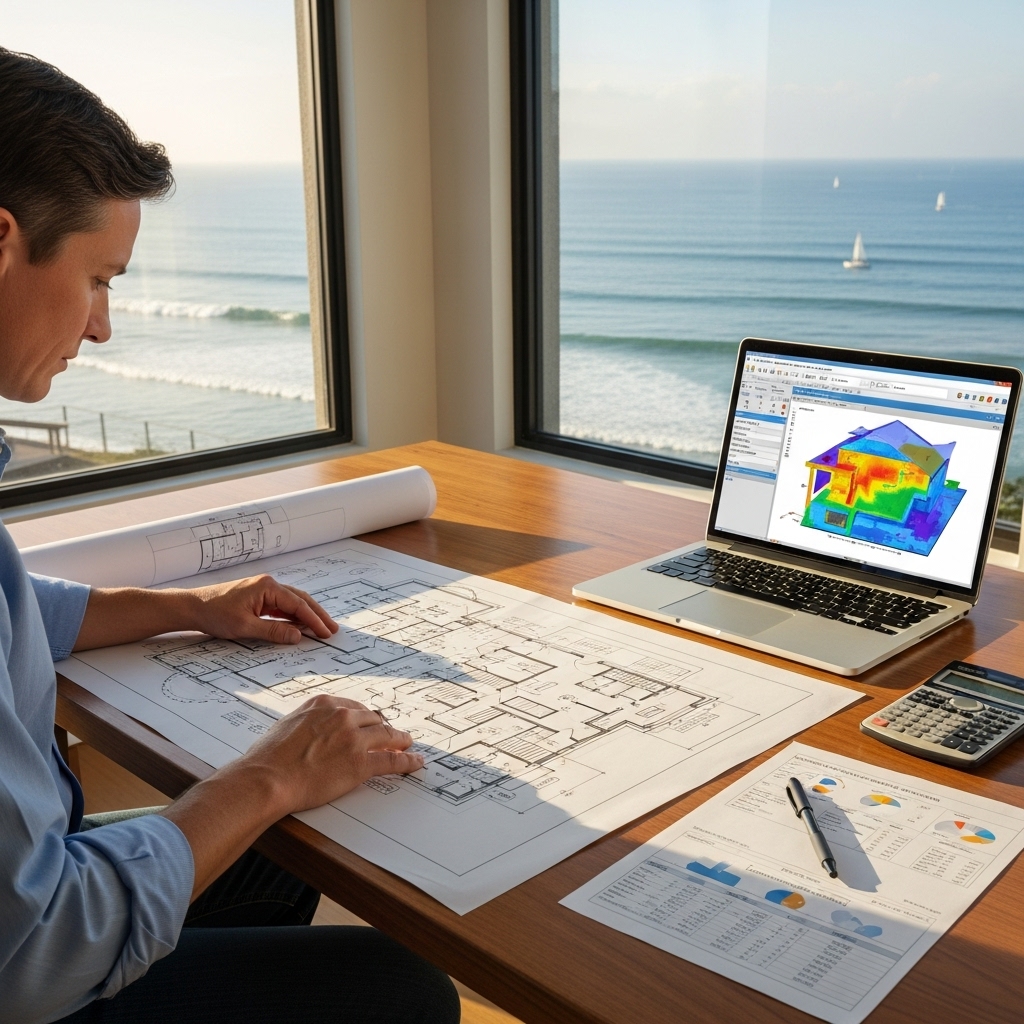
Ask three people how to size an AC in Malibu and you’ll hear three different rules of thumb. The trouble is, rules of thumb don’t live in your house. Malibu homes perch on bluffs, tuck into canyons, and open wide to ocean breezes, and each of those factors changes what “right size” means. A proper approach replaces guesswork with measurement and modeling so that the system feels effortless on cool mornings and warm afternoons alike. If you’re just beginning, it helps to get oriented with the fundamentals of air conditioning so the sizing conversation has a clear foundation.
At heart, sizing is about matching capacity to the way your home gains heat from the sun, the air, and your daily life. It considers the building envelope—insulation, windows, doors—as much as the equipment. Malibu’s climate is merciful compared to inland valleys, but its daily swings and coastal humidity introduce nuances that reward careful calculation. Oversize the system and you’ll feel short cycling, uneven humidity control, and excess noise. Undersize it and the hottest afternoons will expose the gap with long, strained runs.
Why rules of thumb fall short in Malibu
Rules like “x tons per square foot” ignore the details that dominate performance here. A canyon home shaded by oaks behaves nothing like a modern, glass-forward house with west-facing views of the water. Ceiling heights, skylights, air leakage, and even how often you open doors to the deck matter. Malibu’s microclimates can turn neighboring homes into opposites from a load perspective. That’s why a professional, room-by-room calculation outperforms generalized guesses every time.
Another blind spot in shortcuts is ductwork. A system that’s marginally sized on paper may perform beautifully if ducts are efficient, sealed, and properly balanced. The same equipment will disappoint if ducts are undersized or leaky, because what matters at the register is delivered capacity, not theoretical capacity at the coil. Good sizing looks beyond nameplates and dwells in the actual pathways that carry comfort to your rooms.
What a proper load calculation includes
A room-by-room calculation accounts for orientation, shading, window type and area, insulation levels, infiltration, internal gains from people and appliances, and design temperatures for our coastal zone. Malibu’s design day is gentler than inland areas, but morning humidity and afternoon sun on west-facing glass require respect. The calculation translates those features into sensible and latent loads—the temperature and moisture parts of the job your system must handle. From there, equipment selection and duct design follow naturally.
Topography influences exposure as well. Homes perched on bluffs may see stronger winds and greater salt exposure, while canyon homes enjoy shading but can trap warm air on still afternoons. These effects don’t change the math dramatically, but they do influence where ducts are routed, how returns are placed, and how outdoor units are oriented to avoid recirculating discharge air.
Matching equipment to the calculated load
Modern systems offer variable capacity that can track the actual load more closely than older, single-stage units. In Malibu, where conditions often hover in the mild-to-warm range, this modulation keeps cycles long and quiet, improving comfort and humidity control. The goal isn’t to buy the biggest unit; it’s to choose equipment that can ramp up on a handful of hot days and settle into efficient, low-sound operation the rest of the time.
Heat pumps are increasingly common and pair well with smart controls. They offer shoulder-season comfort without relying on resistance heat, and their outdoor units can be specified with coastal protections that extend life in salt air. Ductless options shine for rooms with challenging duct runs or architectural constraints, though whole-home balance often favors a central, ducted design when the structure allows.
Duct design: the companion to sizing
Even the best calculation stumbles if ducts can’t deliver. Supply trunks need the right size and routing to avoid pressure losses that starve distant rooms. Returns must be generous and well-placed to prevent whistling and ensure the blower isn’t working against a closed door or a narrow grille. Malibu’s open plans invite creative supply placement that avoids drafts while bathing living areas in gentle, even air. Sealing and insulating attic runs protect against heat gain that can otherwise erode capacity before it ever reaches the register.
Balancing is the finishing touch. Dampers that are set and forgotten often drift out of alignment after renovations or furniture changes. A post-installation balancing session, guided by the calculations, ensures that each room receives its share. You’ll feel the difference in how quietly and consistently the system maintains comfort from morning fog to afternoon sun.
Windows, shading, and the Malibu sun
Glass defines many Malibu homes, and it deserves special attention in sizing. West-facing windows can dominate afternoon loads, while deep overhangs or exterior shading tame them. Low-E coatings, window age, and frame type all feed into the calculation. In homes with expansive glass, strategic shading and thoughtful register placement can reduce the required capacity and improve comfort dramatically, letting equipment work smarter instead of harder.
Skylights and clerestory windows play a similar role. They bring in beautiful light but can add to cooling demand during long summer days. The calculation captures these contributions and allows the design to compensate, whether through higher-capacity supply to specific rooms or control strategies that pre-cool spaces ahead of peak sun.
Humidity, ventilation, and comfort
Malibu doesn’t suffer from the oppressive humidity of some coastal regions, but morning moisture is a real factor. Proper sizing and modulation help systems run long enough to nibble at humidity without overcooling. Ventilation strategies should harmonize with this goal. On days with poor outdoor air quality—during wildfire events, for instance—mechanical ventilation may be scaled back temporarily to reduce particulate intrusion. The load calculation and control design anticipate these scenarios so comfort doesn’t hinge on a single operating mode.
Controls that read both temperature and humidity give a fuller picture of comfort. They allow the system to adjust fan speed and run time, preventing the clammy feel that can arise from short, aggressive cooling bursts on mild, moist mornings. This is where right-sized, variable-capacity equipment shines in Malibu’s gentle, shifting climate.
Why “bigger” can feel worse
Oversized systems seem like a safety net, but they often create exactly the sensations homeowners dislike. Short cycles produce noticeable swings in temperature, drafts at start-up, and poor humidity control. Noise becomes more prominent as blowers ramp hard, and rooms far from the air handler can end up under-served because the system never settles into the steady state it was designed for. Right-sized systems, by contrast, feel unhurried and precise, maintaining an almost invisible comfort that matches the pace of life here.
With the right size, your AC works with the house rather than against it. Shading, insulation, and strategic ventilation carry more of the load, and the equipment fills in the gaps with a light touch. That partnership is what makes coastal living feel so easy on even the warmest days.
Testing and commissioning: proving the design
After installation, commissioning verifies that reality matches the model. Technicians measure airflow, check refrigerant charge, validate temperature splits, and confirm that the system meets its targets. In Malibu, where outdoor conditions can change quickly, commissioning also looks at control behavior across different times of day to ensure the system responds gracefully to the marine layer and afternoon sun. The result is a dialed-in setup that behaves as predicted, not a guess that happens to blow cold air.
Documentation matters here. A simple record of room-by-room targets and measured values becomes the reference point for future tune-ups. When a room drifts warm years later, those notes allow precise adjustments rather than wholesale guessing. It’s a small investment in future comfort.
Planning for the home you actually live in
Sizing shouldn’t ignore lifestyle. If you host frequently, cook often, or keep large sliding doors open on summer evenings, those habits shift internal gains and infiltration. Good calculations incorporate realistic use patterns so that the system never feels at odds with how you enjoy the space. The best designs anticipate variability and give you control options—like a quiet boost mode for pre-party cooling or schedules that align with evening ventilation rituals.
The Malibu ideal is an AC that disappears into the background noise of waves and conversation. Achieving that requires an honest look at both the structure and the life within it. When calculations, equipment, and ducts align, the result feels inevitable in the best way.
FAQ: Malibu AC sizing
Can’t I just use square footage to size my system? Square footage is a rough starting point at best. It ignores windows, insulation, orientation, infiltration, and lifestyle—all factors that dominate performance in Malibu. A room-by-room calculation delivers a system that fits like it was made for your home because it effectively is.
Will a larger system cool my house faster? It might drop the temperature quickly, but it can leave the air feeling clammy and create noticeable swings. Right-sized, variable-capacity equipment cools steadily and quietly, which feels better and protects finishes from humidity.
Do I need special considerations near the ocean? Outdoor equipment benefits from coastal protections and thoughtful placement to avoid recirculating discharge air. These measures don’t change capacity much, but they influence longevity and noise. Indoors, nothing replaces a solid calculation and well-designed ducts.
What about ductless systems—are they easier to size? They’re more flexible in placement, but they still require careful load assessment. Each head should match the room’s need, and oversizing a head in a small room can produce uncomfortable drafts and short cycles.
How do windows factor into the calculation? Window area, orientation, shading, and glazing type are major inputs. West-facing glass can dominate afternoon loads; shading strategies and register placement work hand in hand with equipment selection to tame those gains.
Can I improve sizing outcomes without changing equipment? Yes. Sealing and insulating ducts, improving return paths, adding shading, and tuning controls can bring a marginal system into alignment. These steps improve delivered capacity and often quiet the system as a bonus.
How do I know if my current system is oversized? Signs include short run times, frequent starts and stops, uneven humidity control, and noticeable drafts at start-up. A professional evaluation can confirm by measuring airflow, runtime patterns, and load characteristics.
What’s the role of commissioning? Commissioning proves that the installed system meets the design intent. It verifies airflow, refrigerant levels, and control behavior, ensuring that daily comfort matches the careful math that informed the design.
Set your Malibu home up for quiet, precise comfort
If you’re ready to trade guesswork for confidence, start with a room-by-room assessment that respects your home’s architecture, your habits, and Malibu’s coastal rhythm. From there, equipment and duct design fall into place, and comfort takes on that effortless quality we all recognize when it’s right. To explore systems that pair perfectly with well-calculated loads, take a look at air conditioning solutions built for our coastal climate, and enjoy a home that feels measured, calm, and consistently cool.