
Every Malibu homeowner eventually encounters the same pattern: the system that felt effortless in spring begins to labor by late summer, or a faint odor appears after a stretch of foggy mornings. Living on the coast means your air conditioner faces a steady stream of small challenges—salt in the air, canyon dust, windblown debris, and occasional smoke. Understanding the most common maintenance issues in Malibu homes will help you see problems earlier, respond faster, and keep your system cooling smoothly. With consistent air conditioning maintenance, most of these issues can be prevented or corrected before they turn into bigger headaches.
Our microclimates make Malibu special and complicated at the same time. What happens in a cliffside home isn’t what happens in a canyon property, and what you notice near the water can differ from a hillside retreat. Still, certain patterns repeat across neighborhoods, and recognizing them is the first step toward dependable comfort and healthy indoor air.
Salt and Corrosion on Outdoor Units
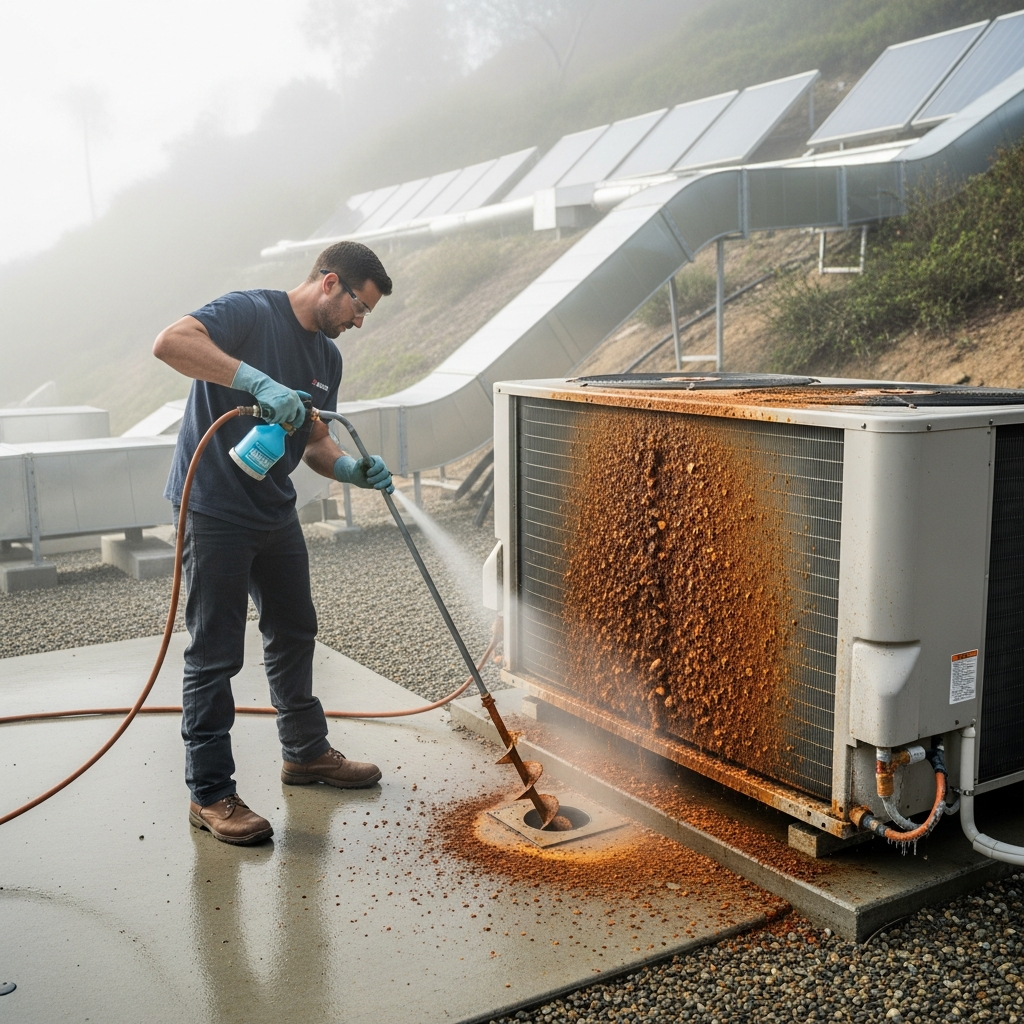
Salt-laden air settles on the condenser’s coil and cabinet, setting the stage for corrosion. At first, you might see only a thin film or chalky residue. Over time, salts bond with dust to form a stubborn coating that insulates the coil and traps heat. The unit runs longer to compensate, and you’ll likely hear the fan laboring more often. Rust at fasteners and mounting rails is another warning sign. Routine rinsing and professional coil cleaning during maintenance remove the film and restore heat transfer, helping the compressor run cooler and the system cycle off sooner.
Corrosion can also affect electrical components. Contactors may pit, terminals can loosen, and capacitors deteriorate faster in the coastal environment. A thorough maintenance visit includes testing these parts under load and replacing them before failure creates a no-cool situation on a hot afternoon.
Clogged Condensate Drains and Musty Odors
Malibu’s humidity ebbs and flows. When the air is moist, your AC pulls water from the air and drains it away. If algae or scale clogs the drain, water backs up in the pan. You might notice a musty smell near supply registers or a faint drip where it doesn’t belong. Left unchecked, this can lead to water damage and microbial growth. Maintenance clears and treats the drain line, inspects the pan for cracks, and ensures the unit is pitched correctly so water flows freely. A dry, clean evaporator coil resists biofilm, which keeps air fresher and airflow stronger.
Even when the drain isn’t fully blocked, partial restrictions can cause intermittent issues—gurgling sounds, brief odors after the system starts, or a slight reduction in airflow. That’s why pre-season maintenance is so valuable: it addresses the small problems before the long, warm stretch sets in.
Dirty Coils and Reduced Efficiency
Debris on the condenser coil outside and dust on the evaporator coil inside are among the most common Malibu issues. Dirty coils reduce the system’s ability to move heat, so it runs longer and struggles to keep up during late-day sun. You may notice warmer air than usual, especially in rooms with large windows. Professional cleaning restores the coil’s surface and includes straightening bent fins where possible to maintain smooth airflow. Indoors, a clean evaporator coil supports better dehumidification and stronger airflow, resulting in quieter, shorter cycles.
Because coastal residue can build quickly during foggy periods, mid-season checks are helpful. A light film that didn’t matter in spring can become a serious performance drag by midsummer if left alone.
Filter Issues: Too Restrictive or Too Neglected
Filters do heavy lifting in Malibu, capturing salt crystals, dust, pollen, and smoke particles. Problems appear at both extremes: filters that aren’t changed frequently enough choke airflow, while overly restrictive filters strain the blower and raise system noise. The right choice balances capture and resistance, which is why measuring pressure drop during maintenance is so important. A well-selected filter keeps the blower happy and the air clean simultaneously.
If you notice rooms cooling unevenly or a high-pitched whoosh at return grilles, it may be a sign that the filter is past its prime or mismatched to the system. Technicians can recommend a filter strategy tailored to your home’s location and habits.
Refrigerant Charge Imbalances
Too little refrigerant and the system starves; too much and pressures spike. Either way, the compressor works harder than it should. In Malibu, mild mornings can mask a charge problem that only shows up on warm afternoons when the system can’t quite keep up. Maintenance includes checking superheat and subcooling to confirm the charge is dialed in. When it is, you’ll feel the difference in faster, steadier cooling and less strain on the equipment.
Charge issues often travel with coil cleanliness and airflow problems. A holistic maintenance approach—cleaning, balancing airflow, and then verifying charge—solves the problem at the root rather than chasing symptoms.
Electrical Wear From a Coastal Environment
Salt and moisture are tough on electrical components. Capacitors weaken, contactors pit, and terminals can corrode or loosen, all of which make starts harder and reduce reliability. You might notice brief humming or clicking at startup or occasional short-cycling. Maintenance catches these issues by testing components under operating conditions. Replacing a weak capacitor or a pitted contactor before failure avoids stress on motors and preserves smooth operation through summer’s hottest days.
Technicians also check the integrity of wire insulation and ensure proper grounding—critical in homes where outdoor units sit close to sprinklers or on exposed pads that get frequent mist from the ocean breeze.
Duct Leaks and Insulation Gaps
Many Malibu homes have ductwork routed through attics or crawl spaces where heat and dust accumulate. Leaks allow cool air to escape and draw in unconditioned air, which can irritate allergies and dirty the system. You may hear a faint hiss in the attic, find certain rooms never cool quite right, or sense that the system runs longer than necessary. Maintenance often includes a quick pressure check and visual inspection to identify likely leak points. Targeted sealing and insulation improvements restore even cooling and reduce the strain on your blower.
Return-air pathways sometimes need attention as well, especially in open-plan homes where a single return must serve a large area. Adjusting grilles or adding a return can solve “stuffy room” problems and lower system noise.
Thermostat Miscalibration and Control Issues
A thermostat that reads a degree or two off can undermine comfort all day long. In Malibu’s shifting conditions, a miscalibrated thermostat might allow too much drift in the morning and overcorrect in the afternoon. Maintenance verifies thermostat accuracy, sensor placement, and schedules. Fine-tuning setpoints to anticipate late-day sun or marine-layer cooling can dramatically reduce unnecessary cycling.
For homes with smart thermostats, the trend is toward customized schedules that reflect the home’s exposure—coastal breeze, canyon shade, or hillside sun. Maintenance includes updating these schedules based on the season’s behavior.
Noise, Vibration, and Mounting Concerns
Outdoor units near decks or on hillside pads can shift slightly over time. A tilt that seems minor can affect oil return and vibration, leading to noise and premature wear. Loose mounting hardware and hard-contact lineset brackets can transmit vibration into living spaces. Maintenance checks level, anchor points, and line isolation, restoring the unit’s quiet, steady character.
Indoors, a blower cabinet that’s not fully sealed can whistle or rattle, especially when filters are restrictive. Resealing panels and balancing airflow brings the calm back to each cycle.
Frequently Asked Questions
Why does my AC smell musty after foggy mornings?
Moisture can collect on the evaporator coil and in the drain pan. If the drain is partially blocked or biofilm has formed, you’ll notice a musty odor when the system starts. Maintenance clears the drain, treats the line, and cleans the coil to eliminate the source.
How close to the ocean is “close enough” to need extra cleaning?
If you can smell or taste salt on most mornings, consider your home in the zone for more frequent condenser rinsing and professional cleanings. Even a light fog can deposit residue that builds up over weeks.
What’s the simplest sign of a dirty outdoor coil?
Longer cycles and a fan that seems louder than usual. You might also feel warmer air at registers during late afternoon. A visual check of the coil fins often reveals a dull, dusty surface instead of a clean metallic sheen.
Do higher MERV filters always help?
Higher MERV ratings capture smaller particles, but they can restrict airflow if the system isn’t designed for them. The right choice balances filtration and airflow, which is why pressure measurements during maintenance are so useful.
Why do rooms with big windows struggle to cool?
Solar gain can overwhelm airflow, especially in late-day sun. Maintenance can help by improving duct delivery, verifying charge, and adjusting schedules to pre-cool before the heat peak. In some cases, adding return capacity improves circulation and comfort.
Is mid-season maintenance necessary in Malibu?
Often, yes. Salt, wind, and smoke can undo early-season cleaning. A brief check mid-season keeps coils clean, drains clear, and controls tuned for changing conditions.
Restore Quiet, Reliable Cooling
If your home is showing any of these signs, it’s time to schedule professional care. A focused plan for air conditioning maintenance will clear drains, clean coils, balance airflow, and tune controls so your system runs smoothly through every marine layer and heat wave. Reach out today for attentive, local care that brings dependable comfort back to your Malibu home.