
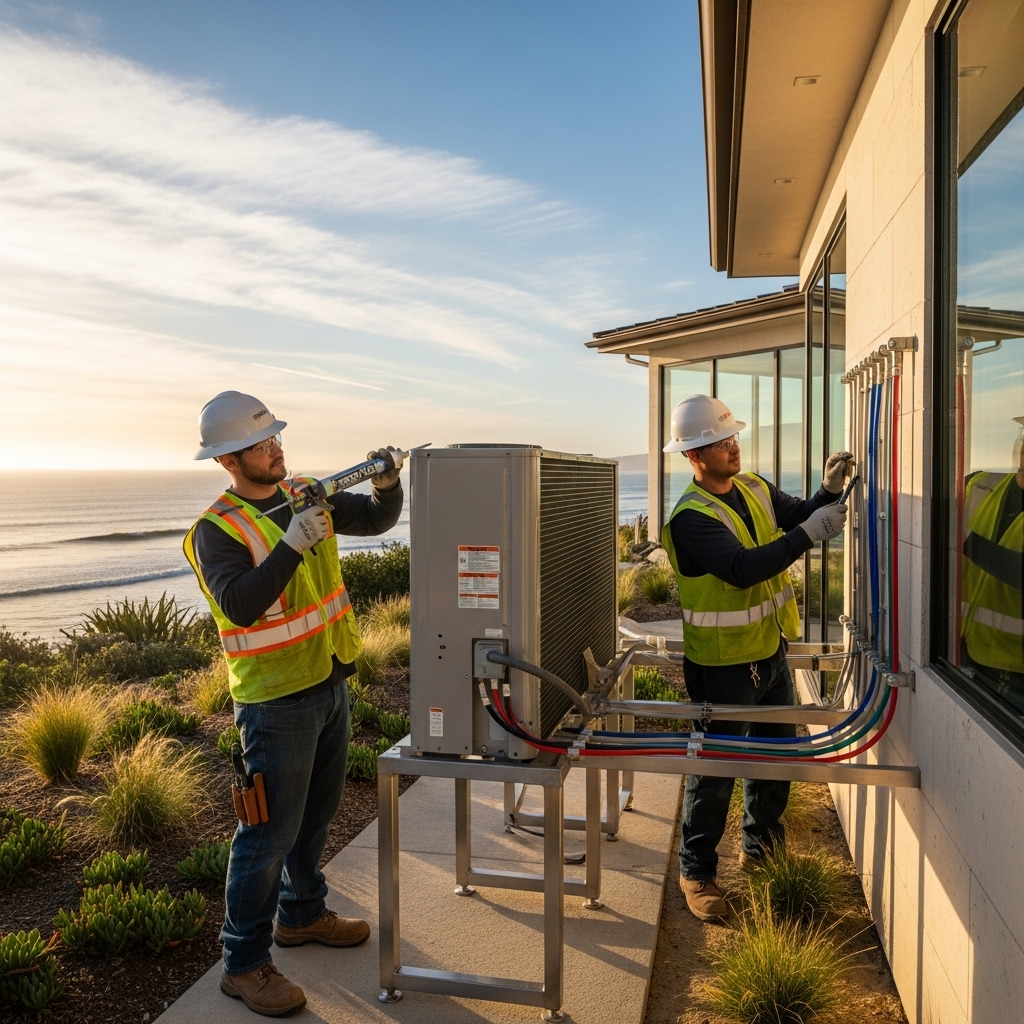
Installing for the Coast, Not Just Near It
There is a difference between a system installed near the ocean and one installed for it. In Malibu, salt air rides the breeze daily, and while you may barely notice it on your skin, metal does. Coils corrode faster, hardware pits, and outdoor units age prematurely when coastal realities are ignored. A thoughtful installation for a coastal home begins with that truth and builds every decision around it—from equipment selection and placement to line set routing and drainage. When you see a crew arrive who knows the terrain, you feel it immediately: steady communication, careful site protection, and a plan that respects your home’s architecture and the elements that shape it. The first choice you make—selecting a contractor who understands Malibu—is the foundation of a system that keeps air conditioning comfort steady without becoming a maintenance headache.
Coastal installation is as much about prevention as performance. The goal is to set up a system that resists salt intrusion, sheds water, and operates quietly. That last point matters more than you might think; sound carries differently along bluffs and courtyards, bouncing off stucco and glass. A well-designed, well-sited condenser fades into the background—you hear the birds, the surf in the distance, and little else.
Choosing Equipment With Coastal DNA
Not all condensers are created equal. For Malibu homes, corrosion-resistant cabinets, epoxy-coated coils, and stainless steel fasteners are not luxury upgrades but baseline requirements. Variable-speed compressors and fans help reduce noise and temper cycling, which is especially beneficial in neighborhoods where outdoor space is tight and reflections amplify sound. Inside, air handlers with robust drain pans and UV-resistant plastics stand up to the occasional humidity spike and long cooling seasons.
For many homes, heat pump systems are an elegant fit. They offer efficient cooling and shoulder-season heating without adding combustion equipment inside the home. In a coastal climate where winter temperatures are mild, a modern heat pump provides quiet, reliable comfort while keeping equipment counts lower. Whether you choose a traditional split system, a ducted mini-split, or a hybrid approach, the theme is consistent: materials and design choices that respect the coast.
Placement: The Art of Staying Out of Trouble
A thoughtful placement strategy extends equipment life dramatically. The closer you are to direct surf or persistent mist, the more deliberate you must be. Elevating condensers on corrosion-resistant stands keeps them out of splash and debris zones. Orienting the coil face away from prevailing winds reduces salt accumulation on the intake side. Where architecture allows, partial screening with breathable materials can shield without trapping heat or restricting service access.
Access matters just as much. In hillside homes and stacked lots, service clearances can be tight. An experienced installer maps a path before the first tool is lifted, ensuring that panels can be removed, coils can be cleaned, and components can be replaced in the future without dismantling landscaping or hardscape. It is the difference between a serene maintenance visit and a small construction project every time a part needs attention.
Line Sets, Penetrations, and Sealing
Salt intrusion does not only happen at the condenser. Poorly sealed wall penetrations invite moist, salty air into cavities, where it condenses and feeds corrosion from the inside out. Proper grommets, UV-stable sealants, and tidy, supported line set runs are essential. In Malibu’s sun, cheap insulation degrades quickly, cracking and exposing copper to direct heat and salt. A careful installation uses high-quality insulation with UV-rated jackets and shields vulnerable sections where sunlight or abrasion is unavoidable.
Where line sets must travel long distances or climb significant vertical rises, installers account for oil return and pressure drop. That means correct line sizes, gentle bends, and support intervals that keep lines from rubbing or sagging. These are quiet details—no one notices them on day one—but they show up years later in reliability and efficiency.
Ductwork, Returns, and the Way Homes Really Breathe
Coastal homes in Malibu run the stylistic gamut: glass-heavy contemporaries, low-roof mid-century gems, and remodeled cottages that hide surprises behind every wall. Ductwork must respect that diversity. In shallow roof assemblies, compact, high-efficiency ducts and careful layout minimize pressure loss. In older homes with room additions, returns are often undersized or poorly placed, leading to noise and uneven cooling. A solid installation plan includes return sizing and location as a first-class decision, not an afterthought.
Sealing ducts is not about chasing a theoretical energy number; it is about comfort and cleanliness. Leaky ducts pull salty, dusty air from attics and crawl spaces, distribute it through your home, and undermine filtration. Proper sealing, insulation, and tested airflow deliver quieter operation, better temperature stability, and cleaner indoor air—tangible benefits you feel every day.
Drainage and the Battle Against Moisture
Condensate management is deceptively simple: move water from point A to point B without incident. Along the coast, algae growth and wind-driven debris complicate that journey. Sloped, supported drains with cleanouts, correctly sized traps, and safe discharge locations are non-negotiable. Where code allows, secondary safety switches provide early warnings before a ceiling stain or wall damage appears. In multilevel homes, routing that avoids long horizontal runs reduces the chance of buildup and blockages.
Maintenance-friendly access is part of this story. If clearing a trap requires dismantling cabinetry or cutting into a soffit, it is not maintenance-friendly. Thoughtful installers leave room for service and discuss these details with homeowners before drywall closes. You reap the benefits years later when a routine visit stays routine.
Ventilation, Filtration, and Wildfire Reality
The phrase “coastal home” conjures sea breeze, but anyone who has spent a fall in Malibu knows smoke and dust can test even the best homes. An installation that ignores air quality misses half the comfort equation. High-capacity filter cabinets sized for low resistance, provisions for MERV 13 or higher filtration where appropriate, and controlled ventilation strategies prepare your home for the weeks when outdoor air is not your friend. For glass-forward designs with large exposures, modulating systems that manage humidity and temperature gently preserve finishes and keep spaces comfortable without drafts.
Smart controls add a layer of finesse, allowing pre-cooling when the marine layer lingers and scaling back during peak pricing windows if that aligns with your energy plan. The point is not gadgetry for its own sake; it is an integrated approach that aligns equipment behavior with the way the coast actually feels day to day.
Noise: Designing for Quiet
Sound is a neighborly issue as much as a comfort issue. Variable-speed outdoor units running at low capacity are the foundation of a quiet installation. Inside, correctly sized ducts and returns keep air velocities reasonable, and vibration isolation at the air handler reduces transmitted noise. Register selection and placement matter more than most realize—an undersized grille can hiss loudly even when the equipment is whisper-quiet. Experienced installers balance these factors, commissioning the system to confirm both temperature and sound performance before calling the job complete.
In tight yard setbacks, it is tempting to hide equipment behind solid walls. Without airflow, that creates a heat trap and can raise operating pressures. Perforated or louvered screens that breathe, combined with generous clearances and directional placement, achieve both aesthetics and function. The goal is visual calm and acoustic calm, together.
Permitting, Inspections, and Documentation
Malibu’s permitting process can feel intricate because it is designed around safety and stewardship. A competent installer guides you through submittals, including load calculations, equipment cut sheets, and duct testing plans. They schedule inspections to keep the project moving and meet inspectors with confidence because the work on site matches the paperwork submitted. At turnover, you receive documentation of serial numbers, warranties, and commissioned performance data. If your home is ever sold, those records accompany the property as proof that the system was installed right.
Commissioning deserves emphasis. Measuring static pressure, verifying temperature splits, checking charge by subcooling/superheat, and confirming airflow against manufacturer specs separate a proper installation from a hurried one. Numbers matter, and in a coastal environment where minor inefficiencies compound into bigger issues, they matter even more.
Future-Proofing and Electrification
Malibu homeowners are increasingly curious about electrification and how it intersects with comfort. A coastal installation can be an ideal platform for high-efficiency heat pumps that reduce reliance on combustion. Even if you are not ready to make that leap today, smart planning—adequate electrical capacity, thoughtful conduit paths, and reserved space for future components—keeps options open. If your home uses solar and storage, communications between the HVAC system and your energy management setup unlock new control strategies that preserve comfort while smoothing demand.
Future-proofing also means thinking about access. Equipment that is easy to service will be maintained more thoroughly. Components that can be replaced without demolition save both time and disruption. Small choices today—where to mount a disconnect, how to route a drain—add up to a system that is not just efficient on paper but a pleasure to live with.
Life After Installation: Maintenance With Purpose
It is easy to view maintenance as a separate topic, but along the coast, maintenance is simply phase two of installation. The same choices that made the system resilient make it easier to keep clean and tuned. Outdoor coils that are accessible and rinsed regularly fend off salt buildup. Filters sized generously protect coils while keeping airflow strong. Scheduled checkups timed to real coastal seasons—before the first heat pulse and after the driest Santa Ana—keep the system’s performance tight.
If you split time between homes, consider remote monitoring features that keep tabs on temperature, humidity, and runtime. An alert that catches a slow-draining condensate line before it trips a safety switch is the kind of quiet win that preserves both comfort and finishes. These are not theoretical benefits; they play out each season in Malibu homes that were installed with foresight.
In the middle of any coastal conversation, it is worth returning to the core: installation quality dictates how your air conditioning feels day to day. The brand name on the box matters far less than the craftsmanship, materials, and site-specific decisions woven into the job. When you get those right, you get years of silent, steady comfort.
Frequently Asked Questions
Do I need special equipment for a beachside home?
Yes. Corrosion-resistant cabinets, coated coils, stainless hardware, and UV-stable materials are essential near the ocean. These choices slow salt-related wear and extend the life of your system without compromising performance.
How close can a condenser be to the ocean?
There is no single distance that guarantees protection, but the closer you are, the more carefully you should place and shield the unit. Elevation, coil orientation, and breathable screening all help. Your installer will map prevailing winds and salt exposure at your site.
Will a variable-speed system be quieter for neighbors?
Generally, yes. Variable-speed compressors and fans run at lower speeds most of the time, which reduces noise. Combined with thoughtful placement and vibration isolation, they make a notable difference in tight neighborhoods.
Can ducted mini-splits work in Malibu’s architectural styles?
Absolutely. Compact ducted systems are versatile in low-roof and remodel conditions, and they pair well with zoning. Proper design and commissioning are key to keep airflow balanced and noise low.
What about wildfire smoke—can the system help?
With the right filtration and sealed ducts, your system can mitigate smoke particulates effectively. While it cannot make smoky air disappear completely, upgraded filters and controlled ventilation improve indoor air significantly during smoke events.
How long does installation take?
Simple replacements may be completed in a day, while complex projects with duct modifications or architectural constraints can take several days. Clear planning, staged deliveries, and coordinated inspections keep timelines predictable.
Do I need a permit for replacing my system?
Yes, permits and inspections are standard for replacements and new installations. They verify safety, performance, and code compliance, and they protect your investment if you sell the home later.
Bring Coastal Comfort Home
If you are planning a new system or replacing an aging one, choose an installation approach that respects Malibu’s ocean air, terrain, and architectural character. With careful design, quality materials, and a team that thinks ahead, your home can feel consistently cool without calling attention to the equipment. When you are ready to talk through an installation tailored to your home’s air conditioning, set up a consultation and build a plan around the coast you love.