
When neighbors swap stories about getting a new AC in Malibu, the conversation often turns to why one project felt straightforward while another became a small production involving cranes, permits, and schedule juggling. Along our coastline, the terrain, architecture, and climate conspire to make no two installations alike. You do not need a line-item tally to understand what drives the investment; you need a clear sense of the factors at play and how local conditions shape the work. Consider this your insider’s map through the choices and site realities that determine what it takes to install dependable air conditioning in a Malibu home.
Start with the basics: every successful installation begins with an accurate load calculation. This is the Manual J assessment that balances your home’s orientation, window areas, insulation levels, air leakage, and Malibu’s specific climate data. Ocean-facing glass walls, shaded canyon lots, and breezy hilltops all produce different loads even with similar square footage. Right-sizing affects comfort, sound, and durability. An oversized system short-cycles on cool marine mornings, while a small one struggles during late-summer heat and Santa Ana events.
Home Design, Access, and the Coastal Setting
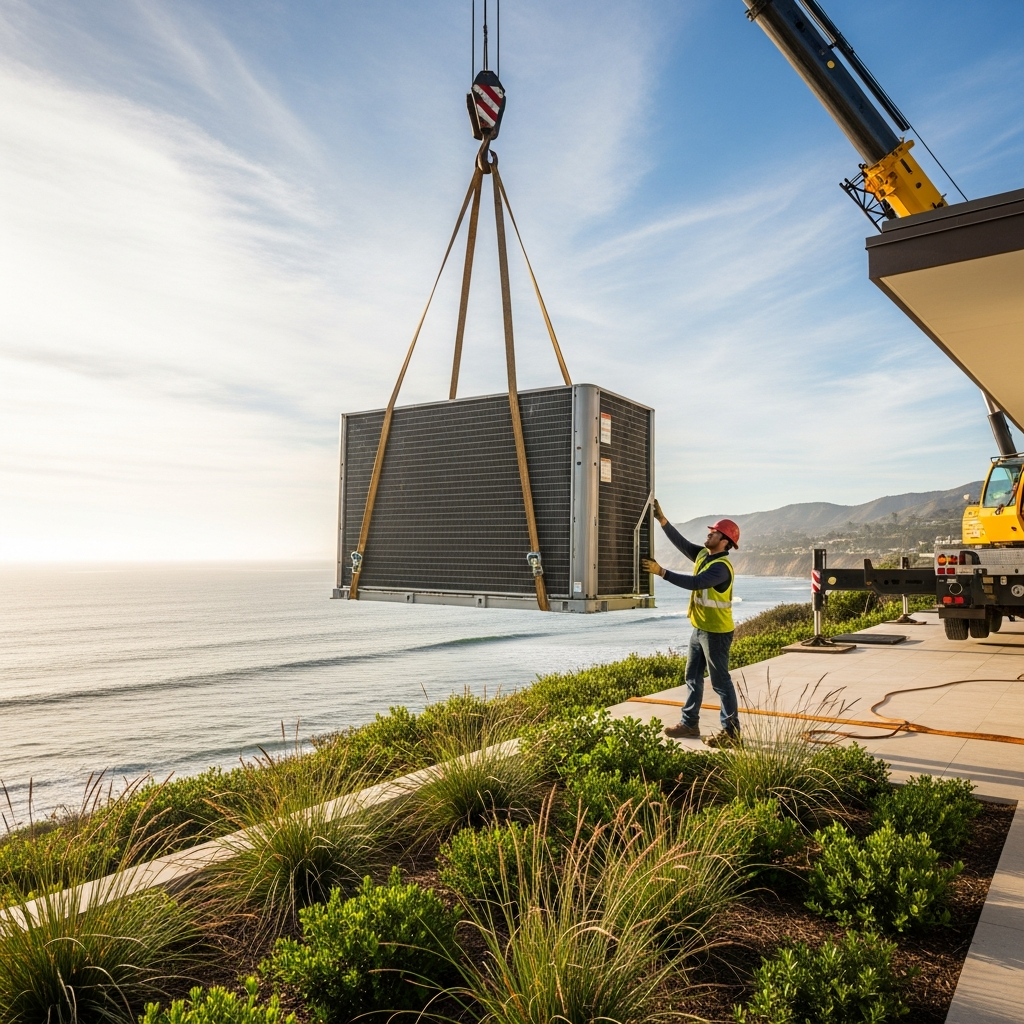
Malibu homes vary wildly—from low-slung beach cottages tucked behind lush hedges to multi-level estates clinging to canyon slopes. Access is a major determinant of project complexity. If your air handler belongs in a tight attic with snaking catwalks, or the condenser must sit on a terrace reached only by stairs, the crew will plan carefully and sometimes bring specialty equipment. On cliffside properties, cranes may be used to set units safely without risking landscaping or structure.
Proximity to the ocean also guides material choices. Along the waterfront and on windward ridges, corrosion-resistant fasteners, coastal-rated condensers, and UV-stable line-set covers are more than niceties—they are prudent investments. The extra attention to sealing penetrations against salt-laden air and to supporting equipment against persistent winds makes a tangible difference in longevity. Malibu’s salt mist ages equipment faster; the right hardware and protective measures slow that clock.
Ductwork Realities and Title 24 Expectations
Many Malibu houses have older duct systems that have soldiered on through remodels and tenant turnovers. Duct condition often proves to be the hinge point in an installation plan. Leaky or undersized ductwork undermines even premium equipment, causing noise, uneven rooms, and unnecessary run time. California’s energy code, Title 24, expects a tight, well-insulated duct system verified by testing. If your ducts need sealing, resizing, or replacement to meet that standard, addressing it at installation is the right move for comfort and compliance.
A thoughtful installer will measure static pressure, check for pinch points at truss transitions, and inspect boots at ceiling registers for gaps. In coastal homes, attics can carry subtle salt moisture that corrodes old metal collars and rusts screws. Replacing those with modern, sealed components pays back in quiet operation and even temperatures, especially in rooms that face late-afternoon sun or open to decks where doors are frequently in motion.
Electrical Capacity and Controls
Air conditioning needs dependable power. Malibu’s older homes sometimes have panels that are already full with spas, pools, and EV chargers. Part of your project scope may involve evaluating breaker space, wire runs, and disconnect placement. If a new circuit is required, routing it discreetly through finished spaces becomes an art in itself. Surge protection is also wise along the coast, where winds and utility events can produce voltage dips and spikes. Pair that with modern controls—smart thermostats tuned for humidity and schedules—to let the system work with the rhythm of marine mornings and sunny afternoons.
Noise matters in open-plan homes and peaceful canyons. Variable-speed and two-stage systems operate more quietly and maintain steadier comfort by modulating rather than cycling hard on and off. Your installer can match equipment characteristics to your expectations for sound and feel. Consider where the condenser will live relative to bedroom windows, neighbor setbacks, and prevailing winds. That decision alone shapes the day-to-day experience of the new system.
Permits, Inspections, and Coastal Nuance
Legitimate installations go through permits and inspections, and in Malibu that includes attention to placement, seismic securement, and code-driven clearances. On certain lots, hillside or coastal development standards influence where an outdoor unit can sit and how lines run. Work with a contractor who is fluent in local submittals and respectful of HOA preferences where they exist. What feels like red tape often protects your investment and your neighbors’ peace—especially when it comes to equipment visibility, sound, and proper drainage.
Inspection day is an opportunity, not an obstacle. A prepared crew will have documentation for load calculations, commissioning data, and duct testing ready. You gain assurance that your system is not just installed but tuned and proven against objective measures. In our coastal environment, verification that refrigerant charge and airflow land in the sweet spot is especially important, because salt residue and wind-blown debris will test the system later.
Heat Pumps, Efficiency Ratings, and Malibu’s Climate
Heat pumps have surged in popularity, and for good reason. Malibu’s winters are mild, and a high-performance heat pump can provide both cooling and heat with excellent energy use. Efficiency ratings like SEER2 and EER2 describe cooling performance, while HSPF2 covers heating. Higher ratings usually mean inverter-driven compressors that modulate smoothly—another win for quiet comfort. The key is a system that is balanced for your home’s envelope and lifestyle, not just a rating badge.
Because we live in a place where mornings are moist and afternoons can be warm but breezy, consider equipment that can manage humidity gently and keep temperatures even without dramatic swings. The more the system can idle at low speeds and sip energy, the less you will notice it—and the longer it is likely to last.
What to Expect on Installation Day
On the day work begins, a good crew protects floors, maps the route for equipment and lines, and confirms the final locations you have discussed. Old equipment comes out methodically, refrigerant is recovered responsibly, and the new system goes in with attention to drain slopes, insulation integrity, and vibration isolation. In coastal homes, technicians often add a few extra touches: corrosion-resistant screws, UV-stable insulation on exposed lines, and gentle bends that resist wind-induced chafing. Commissioning follows—verifying airflow, charge, and controls—so the system leaves the driveway performing as designed.
After the team is gone, you should feel steady, quiet comfort. Doors can open to the patio without shocking the system, and bedrooms should settle at night without drafts or spikes. If you detect anything odd—a hum, a hot room, a thermostat quirk—speak up early so adjustments can be made while the details are fresh for everyone involved.
Frequently Asked Questions
What drives installation complexity in Malibu more than elsewhere?
Access and exposure. Multi-level homes on slopes, limited pathways for equipment, and proximity to salt air require careful planning and protective materials. Add in local permitting standards and the desire to preserve views and quiet, and you have a project that rewards experience and foresight.
Do I need to replace my ducts when I install new AC?
Not always, but many older duct systems leak or are undersized. Testing and inspection will reveal whether sealing or resizing makes sense. Because Title 24 requires certain performance standards, addressing ducts during installation ensures your new equipment can shine and that your home benefits from even, quiet airflow.
Are heat pumps a good fit for Malibu?
Yes. With mild winters and moderate cooling loads, a well-chosen heat pump can handle both heating and cooling efficiently. Inverter-driven models deliver quiet, steady comfort and excellent humidity control, particularly helpful on marine-layer mornings.
How do I keep the new system looking and sounding discreet?
Work with your installer on condenser placement relative to windows and neighbors, use isolation pads, and consider variable-speed equipment. Thoughtful routing of line sets and drains, along with UV-stable covers that blend with the home, keeps the installation tidy and the sound profile gentle.
What kind of maintenance will my new system need on the coast?
Regular filter changes, seasonal coil care, and periodic inspections for corrosion on outdoor components. Gentle rinsing of the condenser in summer and attention to drainage help the system maintain its performance despite salt and wind.
Plan Your Best-Fit Installation
If you are weighing options or ready to move forward, start with a clear conversation about your home’s layout, exposure, and comfort goals. A locally experienced team will translate those details into a system that blends in, runs quietly, and holds up to Malibu’s unique conditions. When you are ready to map the steps, commissioning, and fine points that matter, reach out and set a time to discuss air conditioning tailored to your home’s coastal life.