
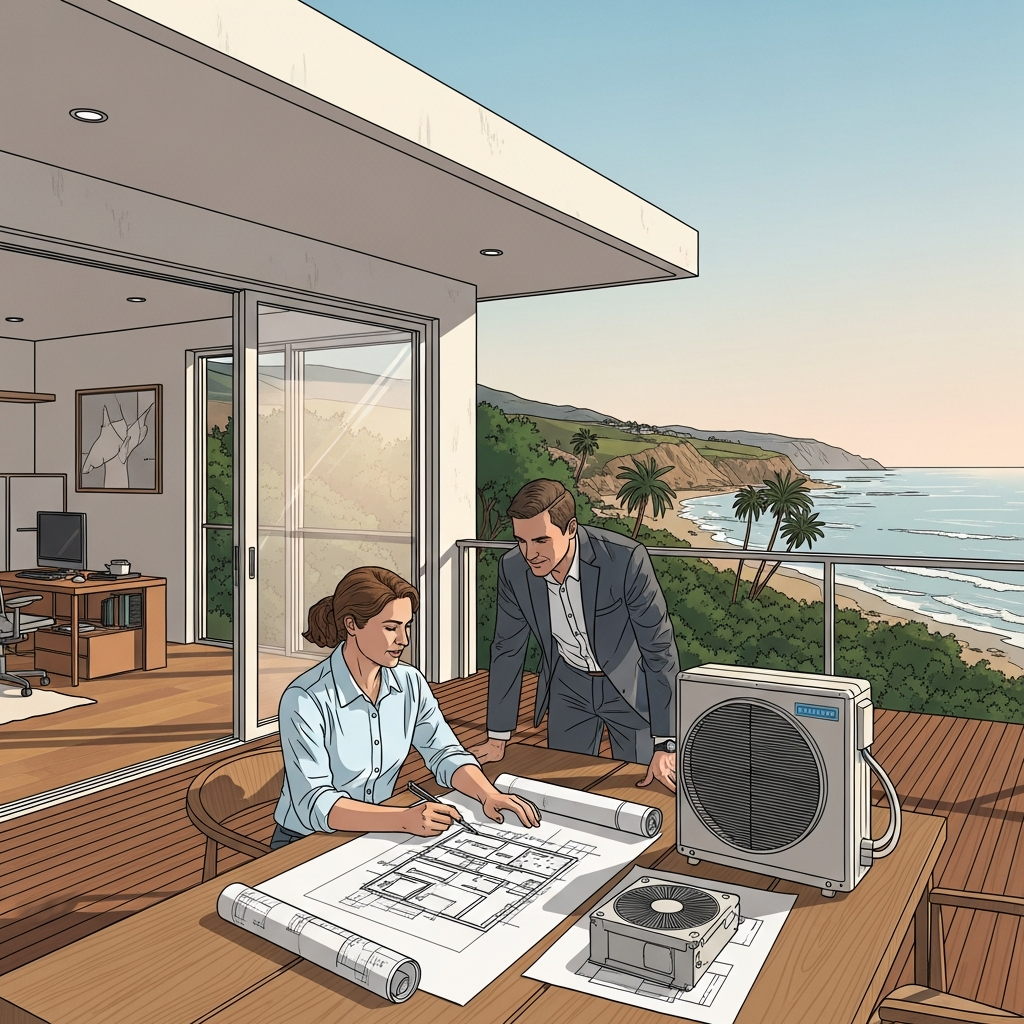
Talking about the cost of an air conditioning installation in Malibu is really a conversation about value, design, and the unique conditions our coastal city asks systems to face. The figures themselves vary widely from home to home, which is why the most useful way to think about your investment is to break it into the choices that shape comfort and longevity. In Malibu, a well-planned system does much more than drop the temperature. It settles into your lifestyle, respects your architecture, and weathers salt air, sun, and seasonal smoke without calling attention to itself.
Before we get into the factors that influence budgets, it helps to frame the goal. Your system should feel invisible most of the time—quiet, even, responsive—and it should remain that way year after year. That feeling doesn’t arrive by accident. It comes from careful design, quality components, expert installation, and a commitment to commissioning and maintenance. If you are exploring options for air conditioning installation, consider how each of these decisions affects not just the initial outlay but the delight you get in return, season after season.
Homeowners often begin with the equipment, and that makes sense. The choice between a traditional split system, a variable-speed heat pump, or a ductless configuration shapes performance and capabilities. In Malibu’s microclimates—from the breezy flats near Carbon Beach to the warmer, sheltered pockets up Malibu Canyon—systems that can modulate tend to shine. They run longer at lower output, smoothing comfort and trimming energy use while keeping sound low. Equipment tiers bring different efficiencies and features, but pairing any unit with a design tailored to your house is the single biggest lever for overall satisfaction.
Ductwork is the sleeper factor that influences both performance and the budget conversation. If your home’s ducts are undersized, leaky, or compromised by remodels, the best equipment in the world will struggle. Upgrading return paths, optimizing supply runs, sealing, and insulating ducts represent thoughtful investments because they let a right-sized system breathe. In many Malibu homes, reclaiming attic or crawlspace ductwork pays off dramatically in quieter operation and even temperatures. When planning new ducts, we look for routes that preserve architecture, minimize pressure, and blend visually, which also reduces the chance of costly revisions later.
Outdoor placement in Malibu often introduces creative problem-solving that can shape budgets. Beachfront homes battle salt air and limited side yards, while hillside properties deal with access, crane lifts, and the art of hiding equipment without sacrificing serviceability. Choosing corrosion-resistant components, adding protective coil coatings, and designing platforms or screens that keep equipment both discreet and well-ventilated are examples of site-specific decisions that influence scope. These choices guard your investment against the elements we live with every day.
The conversation about cost inevitably touches on electrical capacity and controls. Upgrading panels or running new circuits, especially in older properties, can be part of an installation plan. Smart controls and room sensors introduce nuanced comfort that matches how you use the home, often reducing runtime and wear. When these systems are integrated thoughtfully, they deliver returns that outlast the novelty of their interfaces, tuning comfort while letting your house feel like itself instead of a set of gadgets.
Malibu’s permitting and energy standards emphasize efficiency and safety. Planning for those expectations from day one prevents delays and rework. System designs that align with energy codes, focus on sealing ducts, and document airflow and equipment settings move smoothly through approvals and set your system up for long-term performance. Though paperwork might feel like a footnote, it’s woven into the project’s quality. When the final sign-off happens without drama, you feel the benefit later in quiet rooms and predictable comfort.
Another area that shapes investment—often overlooked in the rush to pick equipment—is aesthetics. Malibu’s homes are composed with care, and adding a cooling system should honor those lines. Concealing grilles, integrating linear diffusers where they make sense, and routing lines and drains invisibly all take forethought and coordination with your design team. The payoff is a system that complements art, cabinetry, and lighting instead of fighting them. Those details can subtly influence the scope of work and timeline, but they pay dividends every day you live in the space.
One of the most important budget decisions is right-sizing. Oversized units cost more to buy and more to own, cycling too quickly and failing to remove humidity effectively. Undersized units may be less expensive up front but leave parts of the home lagging on hot afternoons. The sweet spot emerges from a load calculation that respects Malibu’s orientation, sun paths, shading from mature trees, window performance, and the insulating character of stucco, stone, and glass. When a system is sized with intention, you avoid the hidden costs of discomfort and the energy penalty of constant short cycles.
Filtration and ventilation have grown in importance as our region experiences seasonal smoke and dust. Upgrading filters to capture fine particles, sealing ducts to avoid infiltration, and designing measured fresh air strategies influence scope but add enormous quality-of-life value. The budget should reflect not just cooling capacity but the clarity of the air you breathe, especially in bedrooms and living areas where you spend most of your time. When these components are matched to your fan and duct design, they work silently, preserving comfort without struggling.
Maintenance planning belongs in the initial conversation too. Coastal systems benefit from periodic coil rinses and hardware checks for corrosion. Hillside homes appreciate verifications of drainage and vibration control. Building a maintenance rhythm into the life of the system protects your investment and can be coordinated to seasonal patterns—before the heat spikes arrive or when the marine layer begins to linger. This approach can preserve performance that might otherwise drift over the years, and it helps catch small issues early, before they grow into inconvenient surprises.
If your home uses solar or battery backup, integrating HVAC strategy amplifies your returns. Smart controls can cue cooling to overlap with solar production, trimming grid demand during peak times. Batteries can bridge short outages, protecting comfort when summer heat and grid stress coincide. Even without renewables, variable-speed equipment and sensible scheduling squeeze more comfort from every watt, which translates into a calmer house and a longer-lasting system.
Renovations introduce another layer. When you plan AC during a remodel, you gain opportunities to conceal ducts seamlessly, coordinate soffits with lighting, and ensure condensate lines drain invisibly. Failing to plan can lead to patches that compromise both comfort and aesthetics. Early collaboration avoids change orders and aligns expectations among the trades, often streamlining the process in ways that feel like saving time as much as money.
In the middle of an installation, it’s common to reassess and refine. Once walls open and attic spaces reveal their secrets, smart teams re-validate assumptions, adjusting duct sizes, return locations, or sensor placements. This flexibility keeps the design honest to your home rather than forcing a plan that looked tidy on paper but missed a field reality. Mid-course corrections are not a sign of indecision; they are signs of craftsmanship that treats your home as a one-off, not a template. As you weigh your options for air conditioning installation, include room for this kind of thoughtful adaptability. It transforms the experience and the outcome.
Noise management belongs in any Malibu cost conversation because quiet is part of what we protect here. Selecting equipment known for low sound, isolating vibration, choosing duct velocities that don’t whistle, and placing outdoor units to avoid sound reflections are choices that add subtle complexity to projects but yield disproportionate daily benefits. Imagine enjoying late-night conversations on the patio without a background drone, or falling asleep without the sense that air is being pushed through the room. That tranquility is an asset worth planning for.
While the word cost can feel heavy, I like to reframe the entire process as building a comfort system that complements how you live. Every home is a series of trade-offs and priorities. Perhaps you prize minimal visual impact over maximum flexibility, or maybe you want the quietest bedroom possible even if it requires bespoke ductwork. A clear conversation about priorities structures the design and the investment so you get the qualities that matter most to you, not just a collection of components.
How should I think about budgeting for AC in Malibu without fixating on numbers?
Start with goals and constraints. Clarify how you want rooms to feel, what aesthetic standards you hold, and any site-specific realities like salt exposure or steep access. Those factors determine the level of design, equipment selection, and craftsmanship needed. Ask for a scope narrative that explains why each element is included and how it affects comfort and longevity. When you understand the why, the budget becomes a map rather than a mystery.
Are variable-speed systems worth the investment here?
Yes for many Malibu homes. Variable-speed systems excel in our moderate-to-warm climate, running quietly and steadily while matching their output to real-time needs. They reduce temperature swings, control humidity better, and often integrate seamlessly with smart controls and zoning. The daily experience of comfort and the reduced strain on components can make them an especially sound choice.
Do aesthetics really influence installation complexity?
They do, particularly in Malibu where design is integral to how homes are lived in and enjoyed. Concealing grilles, aligning diffusers with lighting, tucking line sets unobtrusively, and routing drains invisibly require coordination and time. While these efforts add complexity, they result in a system that looks as intentional as your cabinetry and finishes, which most homeowners value highly.
How do Malibu’s microclimates impact design and budget?
From fog-kissed mornings to sun-soaked afternoons, local conditions vary block to block. Choosing corrosion-resistant components near the water, planning for longer line sets in hillside homes, and designing airflow to handle hot spots all influence scope. Good design responds to those realities from the start, protecting your investment and increasing day-to-day satisfaction.
What about air quality during wildfire season?
Filtration and controlled ventilation become crucial. Systems should be paired with filters that capture fine particles without choking airflow. Duct sealing prevents unintended intake from attics or crawl spaces. Control strategies can minimize outside air during smoky periods and then refresh the house when conditions improve. These elements add immense value to comfort and health in our region.
Is it possible to phase an installation to spread out the work?
In some homes, yes. Phasing can make sense when you are remodeling in stages or when certain areas of the home need attention first. Zoning, duct work segmentation, and equipment choices can be coordinated to allow staged progress while maintaining overall design integrity. Discussing a phased plan early is key to avoiding rework later.
How do I compare proposals beyond the bottom line?
Ask each proposer to articulate the design logic: load calculations, duct strategy, noise management, corrosion mitigation, and control philosophy. Review equipment specifications alongside the plan for airflow verification and commissioning. Clarity in these areas reveals the true value behind a number and predicts how satisfied you’ll be five summers from now.
If you’re weighing options and want honest guidance grounded in Malibu’s realities, let’s talk. We can map a design that lines up with your priorities, respects your architecture, and embraces the climate we love. When you’re ready, begin with a conversation about expert air conditioning installation that treats comfort as a craft and your home as one of a kind.