
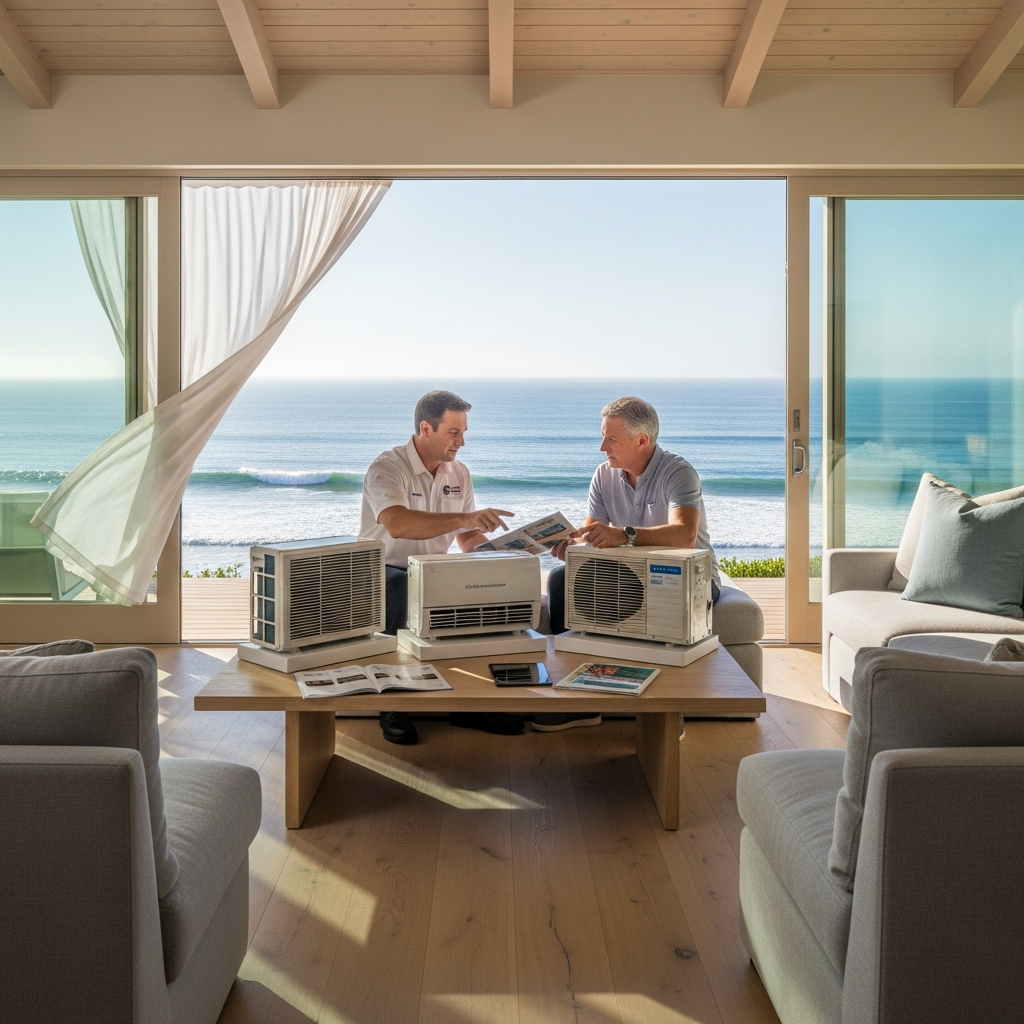
Selecting the best air conditioning unit for a Malibu home is equal parts design, local knowledge, and respect for the coast. Our microclimates swing from cool marine-layer mornings to sun-drenched afternoons that warm stucco and glass. Add canyon breezes, hillside exposures, and the particularities of older architecture, and you quickly see why a single “best” unit does not exist in the abstract. There is, however, a best system for your home’s layout, lifestyle, and location, and that is the aim. Right at the beginning, it helps to refresh the basics of air conditioning, because how a system moves heat, controls humidity, and manages airflow tells you far more about day-to-day comfort than a brochure headline ever will.
What makes Malibu different from a generic suburban setting is the combination of salt air, varied elevations, and architecture that blends indoor and outdoor living. Sliding walls that frame an ocean horizon are breathtaking, but they also invite heat and moisture the moment they open. Vaulted ceilings common in canyon homes make for striking volumes of space that must be conditioned gently. The best unit for a small bungalow off PCH is almost certainly not the best unit for a multi-level residence perched above Point Dume.
Start With the Home, Not the Box
The right system begins with load calculations that reflect how your home actually gains and loses heat over a day. Window orientation, roof materials, shading from oaks and palms, and how the marine layer lingers or burns off around noon matter more than a model name. Manual J, S, and D design standards ensure the capacity, coil, and ducting choices harmonize. Oversized equipment may cool rooms quickly but leaves humidity high and rooms uneven. Undersized equipment runs relentlessly without reaching that calm, even comfort we crave after a long day.
In practice, Malibu homeowners often benefit from variable-speed compressors. These units modulate to match the exact cooling demand, eliminating the hard starts and stops that waste energy and create temperature swings. Two-stage equipment is a fine compromise in certain budgets and spaces, offering gentler ramps and better dehumidification than single-stage alternatives. Whisper-quiet air handlers with ECM motors round out the package, keeping airflow smooth through the kind of long duct runs hillside homes frequently require.
Coastal Durability and Placement
Salt mist is real, even if you live a few streets inland from the sand. The best outdoor units for our area offer enhanced coil coatings, heavy-duty fasteners, and cabinet finishes that resist corrosion. Placement is as important as the metal itself. The farther we can site a condenser from direct onshore winds and the easier it is to rinse periodically, the longer it will look and perform like new. On complex lots, we may build a raised pad, turn the unit to shield it from prevailing breezes, or route lines to a niche protected by landscaping. Each small move buys years of performance.
Noise is another Malibu-specific concern. Even excellent equipment sounds louder when it bounces off stucco walls or a hardscape courtyard. Choosing low-sound models and orienting them away from patios and bedroom windows keeps evenings peaceful. Indoors, return grilles sized generously and ducts designed for calm airflow eliminate the “rush” that can spoil an otherwise invisible system.
Heat Pump vs. Cooling-Only
In our mild climate, a heat pump is often the best air conditioning unit because it cools in summer and offers efficient, comfortable heating when nights turn cool. Many homeowners are surprised by how quietly modern heat pumps maintain temperature, especially when paired with zoning for larger residences. If you are renovating or building new, the flexibility of a heat pump can simplify mechanical rooms and reduce the need for separate heating infrastructure. For homes that still want a gas furnace for rare cold snaps, hybrid configurations provide the best of both worlds with sophisticated controls deciding which source to use.
For smaller cottages, a ductless mini-split can be the standout winner when ducts would be awkward or invasive. The key is elegant placement of the indoor heads, line sets that blend with architecture, and careful capacity selection so the system idles at low speed most of the time. Ducted mini-splits deserve a special mention: they offer the quiet modulation of ductless equipment but feed small, hidden ducts that preserve clean lines in living spaces. Many Malibu owners fall in love with this option because it marries performance and design.
Indoor Air Quality and Malibu Realities
Wildfire smoke, dust during Santa Ana winds, and sea-breeze humidity argue for systems that can integrate improved filtration and ventilation. High-MERV media cabinets, well-planned returns, and provisions for whole-home filtration keep air fresher without spiking static pressure. Some homes benefit from energy recovery ventilators that balance fresh air with indoor comfort, particularly if you’ve tightened the envelope during a remodel. The best unit is the one that anticipates these needs rather than struggling after the fact.
Because windows and doors are often open when the ocean calls, dehumidification strategy is worth a conversation. Variable-speed units do this naturally by running longer at lower power, pulling moisture from the air while keeping temperatures steady. That means a more comfortable living room after you slide everything closed for dinner, even if sea mist rolled in an hour earlier.
Smart Controls and Quiet Confidence
Modern thermostats and system boards manage comfort behind the scenes with astonishing finesse. In Malibu, I set schedules that account for late-morning warmups and evening cool-offs. Geofencing helps when you dash out for a beach walk and return unexpectedly. Zoning larger homes prevents the classic “too cold downstairs, too warm upstairs” problem, and it keeps rarely used rooms from dictating how the rest of the house feels. The best unit isn’t always the one with the flashiest features; it’s the one whose features are aligned with how you live.
Integration with solar energy and backup power is increasingly common. Inverters tend to play nicely with home energy systems because they draw gently and steadily. If you are planning rooftop work, we can schedule condenser placement and line routing to respect future panels or mounting zones. The sooner those conversations happen, the cleaner the result.
Working With Existing Ducts
Reusing ducts can be wise when they are well-sized, insulated, and sealed. Many Malibu homes, however, have ducts that reflect the compromises of earlier renovations. Long, undersized runs or starved returns hamper even the best equipment. Before declaring a unit “the best,” test and measure. You may discover that a modest duct improvement unlocks the performance you wanted. I also pay attention to return noise at night; a quiet bedroom is often a higher priority than any efficiency metric, and the right grille or additional return can make all the difference.
The Mid-Course Check: Comfort You Can Feel
About halfway through any selection or installation process, I like to stand in the rooms you use most and talk about how you live. Morning coffee with the doors cracked open? Afternoons upstairs for homework? Dinners on the deck? Each habit informs airflow, sensor placement, and system programming. That’s also the moment to revisit how air conditioning will feel as the day changes, so you end up with comfort you notice only when it is missing—because most of the time, you shouldn’t think about it at all.
Aesthetic Harmony
Design-sensitive placements make the difference between an installation you tolerate and one you’re proud to show guests. Discreet line-set covers matched to stucco tones, indoor grills aligned with architecture, and tidy mechanical closets respect the investment you’ve made in finishes. Good HVAC disappears. Guests enjoy a glass of wine at sunset and never once remark on a grate or a hum.
Frequently Asked Questions
Q: What capacity should I choose for a Malibu home with large glass doors? A: Choose capacity based on a full load calculation that accounts for glass area, shading, and orientation. Oversizing to “be safe” backfires, leading to humidity issues and uneven rooms.
Q: Is a heat pump really the best choice here? A: In many cases, yes. Our climate suits heat pumps beautifully, and modern models deliver quiet, steady comfort while simplifying mechanical spaces. They also integrate well with zoning in larger homes.
Q: How do I keep noise down? A: Select low-sound outdoor units, orient them thoughtfully, use vibration isolation, and design ducts and returns for calm airflow. Inside, choose grills and returns that don’t whistle and place thermostats away from direct sun.
Q: Can I reuse my existing ducts? A: Often, with testing and selective improvements. Sealing leaks, resizing returns, and correcting constrictions can transform performance. When ducts are beyond redemption, compact ducted alternatives may be the smarter path.
Q: What about salt air damage? A: Choose coastal-rated equipment, apply coil coatings, rinse periodically, and site the condenser to minimize direct exposure to onshore winds. These steps extend life and preserve appearance.
Q: How do smart thermostats help day-to-day? A: They learn patterns, use geofencing, and control modulating equipment gracefully, reducing swings. Paired sensors read the rooms you use most, so temperatures reflect real life rather than a single hallway.
Your Next Step
If you are ready to match Malibu’s coastal beauty with indoor comfort that feels effortless, start with a proper assessment and a conversation about how you live. Walk your home with a knowledgeable pro, clarify what matters most—silence, air quality, elegance—and let those priorities guide equipment and design. When you want to explore options and see how modern air conditioning can be tuned to your rooms, your views, and your routines, reach out and begin the process with clarity.