
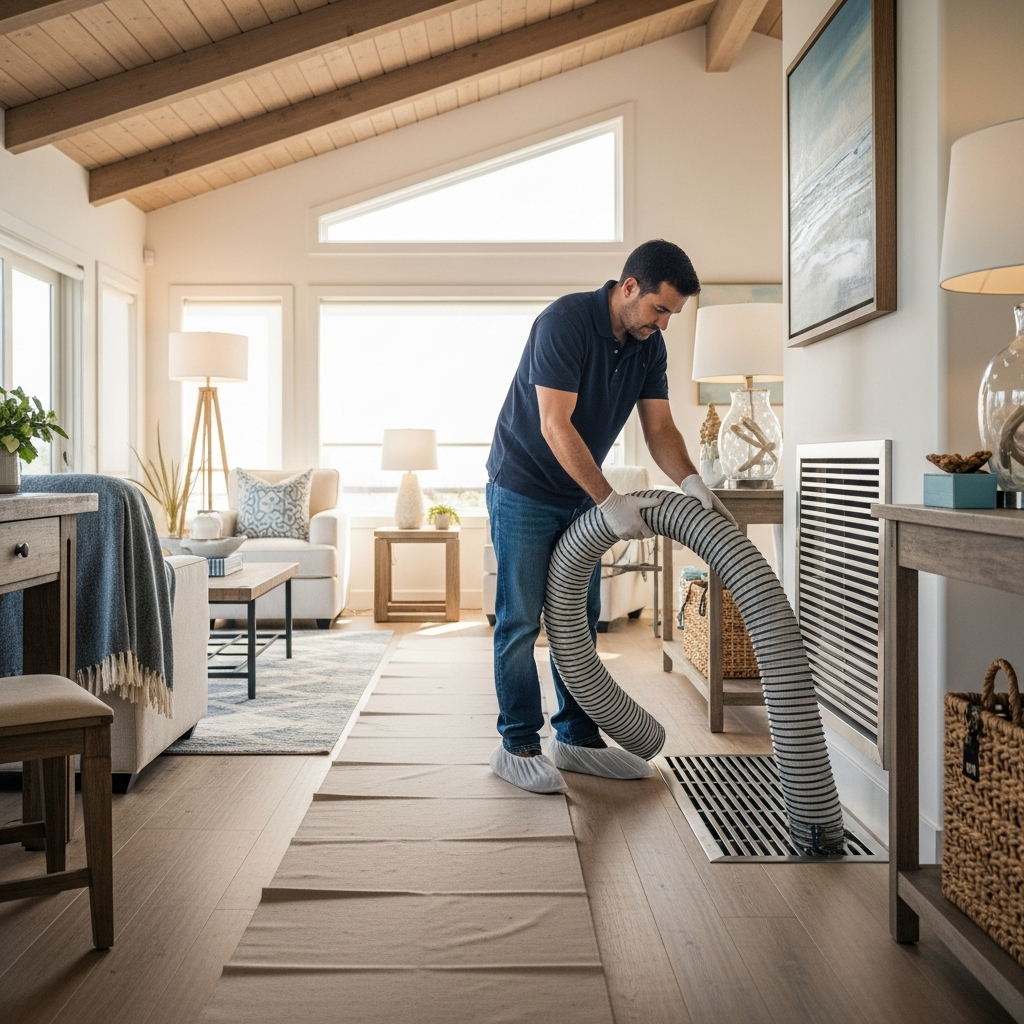
Life in Malibu has its own rhythm: fog-thick mornings that burn into blue afternoons, canyon breezes that sweep down from the Santa Monicas, and a film of salt that seems to find its way onto everything from patio furniture to windowpanes. Those same elements also work their way into the lungs of your home—the ductwork that feeds conditioned air into every room. If you have ever wondered what actually happens when you schedule a professional visit, here is exactly what to expect when a crew arrives for a thorough service in our coastal community.
Whether you live steps from the sand in Malibu Colony or up among the oaks of Corral Canyon, booking air duct cleaning starts long before a technician opens a vent. A reputable team will confirm details about your system type, the number of supply and return registers, parking access on narrow lanes, and any sensitivities in the home such as newborns, immune considerations, or delicate finishes. This gives the crew the context they need to protect your space and work efficiently.
What happens before the work begins
Expect a brief walk-through. A lead technician will introduce the team, review the scope room by room, and mark out supply and return locations. In Malibu, many systems are tucked into attics above vaulted ceilings or in mechanical closets with minimal clearance, so the crew will plan clear pathways and floor protection. You will likely see a runner of protective film or canvas drop cloths from the front door to the mechanical space, corner guards to prevent hose scuffing, and shoe covers on every technician. It is a small but important sign that they take cleanliness seriously.
The team will also discuss power needs, because negative-air equipment and HEPA vacuums draw considerable current. If your home sits on pilings near the bluff or has a detached garage with limited circuits, the lead will choose circuits that won’t interrupt refrigerators or critical electronics. They will also request your current filter size and condition, and ask when it was last replaced. This helps them anticipate airflow realities during the service.
Containment and protection inside the home
Good containment is the heart of a clean project. The crew will isolate work zones using plastic sheeting where necessary, close doors to rooms that are not being serviced, and place protective covers over furniture near registers. The HVAC system will be turned off and locked out to prevent accidental starts. In homes perched along the shoreline, where salt crystals and fine beach grit can accumulate at registers, the technicians will gently loosen faceplates and wipe surrounding surfaces before any agitation begins to keep debris from falling into the living space.
At each register, you will see a methodical process: removal of the grille, a preliminary wipe of the boot, and setup of a directional tool—often compressed air whips, soft-bristle brushes, or rotary devices, depending on whether your home has flex duct, rigid metal, or ductboard. Meanwhile, a large-capacity HEPA-filtered negative-air machine will be connected to the main trunk or plenum to put the ductwork under negative pressure. This draws loosened dust, dander, insulation fibers, and salt-laden particulates directly into sealed filtration rather than back into your rooms.
Inside the ducts: how cleaning actually happens
Once the system is under negative pressure, agitation begins. On older beach cottages retrofitted with flex duct, technicians prefer soft agitation and controlled air sweeping to avoid damaging the inner liner. In newer construction with rigid sheet metal, a contact-brush system can scrub the interior surfaces more assertively. Agitation starts at the farthest run and works back toward the trunk, ensuring debris is drawn downstream into the filtration unit. Where access is limited, the crew may create small, code-compliant service openings which are later sealed with mastic and metal patches. A conscientious team photographs each access point and the seal after closing so you have a record for future service.
Expect attention to the return side. Malibu’s canyon winds and wildfire seasons can deposit a surprising amount of soot and ash at return grilles. Technicians will remove and clean those grilles, vacuum and wipe the return boots, and then sweep returns toward the air handler. If your system allows, they may open the blower compartment for a careful vacuuming of accessible surfaces and a wipe-down of the blower blades. Some homeowners also choose a separate service for evaporator coil cleaning, but that is distinct and usually requires a different setup.
Sanitizing and deodorizing, explained
Many homeowners ask about sanitizers or deodorizers—especially after a smoke event or if there are musty odors from persistent marine layer moisture. Good providers will discuss options openly, explain active ingredients, and use only products registered for HVAC use, applied under negative pressure and in light, even passes. A responsible technician will never overspray or use overpowering fragrances that mask rather than address odors. If you are sensitive to scents, ask for a clear, ingredient-forward product sheet before any application.
Malibu-specific realities to anticipate
Our microclimate matters. Salt air can accelerate oxidation on metal registers, so you may notice slight pitting on older grilles even after a sparkling clean; that is a material condition, not residue. Homes near Zuma or Broad Beach often find a fine layer of sand within boots and at the seams of the duct liner; technicians will pay special attention to those areas and verify seals to reduce future intrusion. Up canyon, the issue is more often dust and pollen, with a seasonal layer of ash after a nearby blaze. A thorough service will address all of it, but the crew may recommend a higher-MERV filter and a steadier filter replacement routine tailored to Malibu’s rhythms.
Access and parking can affect the day’s flow. Tight driveways off Pacific Coast Highway, gates with limited clearance, or hillside homes with multiple stair flights require extra hose and careful staging. Expect the team to take their time moving equipment to prevent scuffs on plaster or wood, and to coordinate hose runs so they do not impede household routines. Good communication up front makes this uneventful.
What you can do to prepare
Before the appointment, clear a few feet around the air handler, returns, and obviously visible supplies. If you have beloved artwork or surfboards mounted close to registers, move them temporarily to avoid accidental bumps. Let the team know about sensitive alarms, sleeping children, skittish pets, or gates that auto-close. The best visits happen when homeowner and crew collaborate, especially in homes with unique Malibu layouts—open beam ceilings, split levels, or guest houses accessed by exterior staircases.
Midway through, a thoughtful crew will show you live camera views or still photos from inside the ductwork. This is the moment in the process when many owners really understand what lives in those runs: lint from a laundry closet located near a return, insulation fibers from older attic work, even a forgotten toy car that slipped past a grille decades ago. It is also a good time to ask questions about filter strategy, fan run times, and whether your system would benefit from periodic blower compartment attention. In this stage, it is natural to revisit why you scheduled professional air duct cleaning in the first place—clearer airflow, less dust on surfaces, and a system that does not recirculate the byproducts of beach living.
After the cleaning: what to expect
When the tools are down, expect a careful reassembly. Grilles are reinstalled, access points sealed, and the thermostat is turned back on. A technician may ask to run the fan for a short period to confirm airflow and listen for vibration or loose screws at registers. There should be no lingering dust clouds—good containment ensures that. You may notice a fresher neutrality to the air within hours, especially if the home had a persistent stale smell from closed-up ocean fog or seasonal smoke. Dusting frequency often drops noticeably in the first two weeks, though that result also depends on how often doors and windows are opened to take in the view.
Most providers will leave a short report with before-and-after photos and note any issues found, like crushed flex in a tight attic corner, a return grille that was undersized, or a section of ductboard that would benefit from resealing. These are practical insights you can discuss with your HVAC service provider or general contractor, especially if you are planning other renovations.
Realistic outcomes and red flags
It is important to keep expectations grounded. Duct cleaning is not a medical treatment, and it won’t cure sensitivities. It can, however, remove accumulated debris that contributes to dusty surfaces and musty smells, and it can help your system operate as intended. Be cautious about anyone promising miracles, pushing unnecessary add-ons, or refusing to show you what they are doing. In Malibu, where high-end finishes and unique architecture are common, transparency and care are nonnegotiable.
Frequently Asked Questions
How long does a typical visit take in Malibu homes?
For a single system serving an average-size home, most projects wrap within half a day to a full day. Larger estates with multiple systems, guest houses, or complicated attic access can take longer. The crew will pace the work to protect your finishes and maintain containment, which sometimes extends the timeline compared with simpler suburban layouts.
Will the process make a mess inside the house?
With professional containment, it should not. Expect floor protection, sealed access points, and HEPA filtration drawing debris away from the occupied space. When register grilles come off, the immediate area is wiped and vacuumed, and everything is put back cleanly before the crew moves on.
How often should ducts be addressed in Malibu’s coastal climate?
Many homeowners find a multi-year interval appropriate, adjusted by lifestyle. Beachfront living can introduce more fine grit, and canyon homes can see seasonal dust and ash. If you have pets, enjoy open-window living, or host frequent gatherings, you may benefit from a shorter interval. Pair that with consistent filter changes and a quick visual check of returns each season.
Is sanitizing necessary every time?
Not always. When odors are present from smoke or persistent dampness, a light, targeted application under negative pressure can help. If the air has simply felt dusty without noticeable odors, thorough mechanical cleaning is often sufficient. Discuss sensitivities and goals with your technician so the approach fits your household.
Will I need to leave the house during the visit?
Most homeowners stay. There is some noise from vacuums and air tools, but crews work methodically to keep disruptions minimal. If you work from home, ask the team to sequence noisy tasks away from your office during critical calls.
If you are ready to enjoy fresher air and a tidier system, schedule your Malibu visit with a team that treats your home like the coastal gem it is. For trusted results grounded in local know-how, explore air duct cleaning with a provider who will communicate clearly, protect your finishes, and deliver the calm, clean airflow your rooms deserve.