
Life in Malibu’s canyons is a study in contrast. Mornings can be cool and shaded beneath oaks, while afternoons blaze on sun-exposed ridges. Winds carve through saddles, carrying dust and pollen. Nights settle into profound quiet, and summer days can run warm and dry. Across those rhythms, your home’s duct system has a hard job: deliver steady comfort without complaint. When canyon homes struggle with uneven rooms, intrusive noise, or stale odors, the culprit is often the ductwork itself. Understanding common issues—and how a proper replacement resolves them—helps you reclaim the calm that canyon living promises. For many properties tucked along Latigo, Corral, or Malibu Canyon, a strategic duct replacement is the difference between chasing problems and solving them.
Canyon homes frequently combine long runs, tight crawlspaces, and complex geometry. Add wildlife intrusion risks, seasonal dust, and the occasional smoke event, and small weaknesses balloon into daily frustrations. Older flexible runs sag across open spans, sharp elbows choke airflow, and returns end up far from where air actually circulates. By the time symptoms are obvious—rooms that never catch up, a faint attic smell at a hallway register, or a constant background hiss—the system has been underperforming for years. Replacement is the opportunity to reset the design, the materials, and the workmanship to match the setting.
Long duct runs and the static pressure penalty
In the canyons, distance is destiny. Bedrooms may perch at one end of the plan while the air handler tucks into a remote closet or garage. Long, looping routes add resistance and invite heat gain or loss along the way. If those runs are undersized or cluttered with tight turns, the equipment strains, noise rises, and comfort falls. During a replacement, we simplify and right-size: shorter trunks where possible, gradual transitions, and properly supported flexible segments that keep their round shape. Reducing static pressure is like clearing a choke point on a mountain road—the whole system flows.
Balancing also improves dramatically when runs are clean and accessible. In canyon homes with pronounced sun exposure differences—cool, wooded sides facing warm, open slopes—balancing dampers allow gentle seasonal tuning. That way, you do not blast a guest room in winter just to keep a sunlit office in check by afternoon.
Crawlspace constraints and moisture management
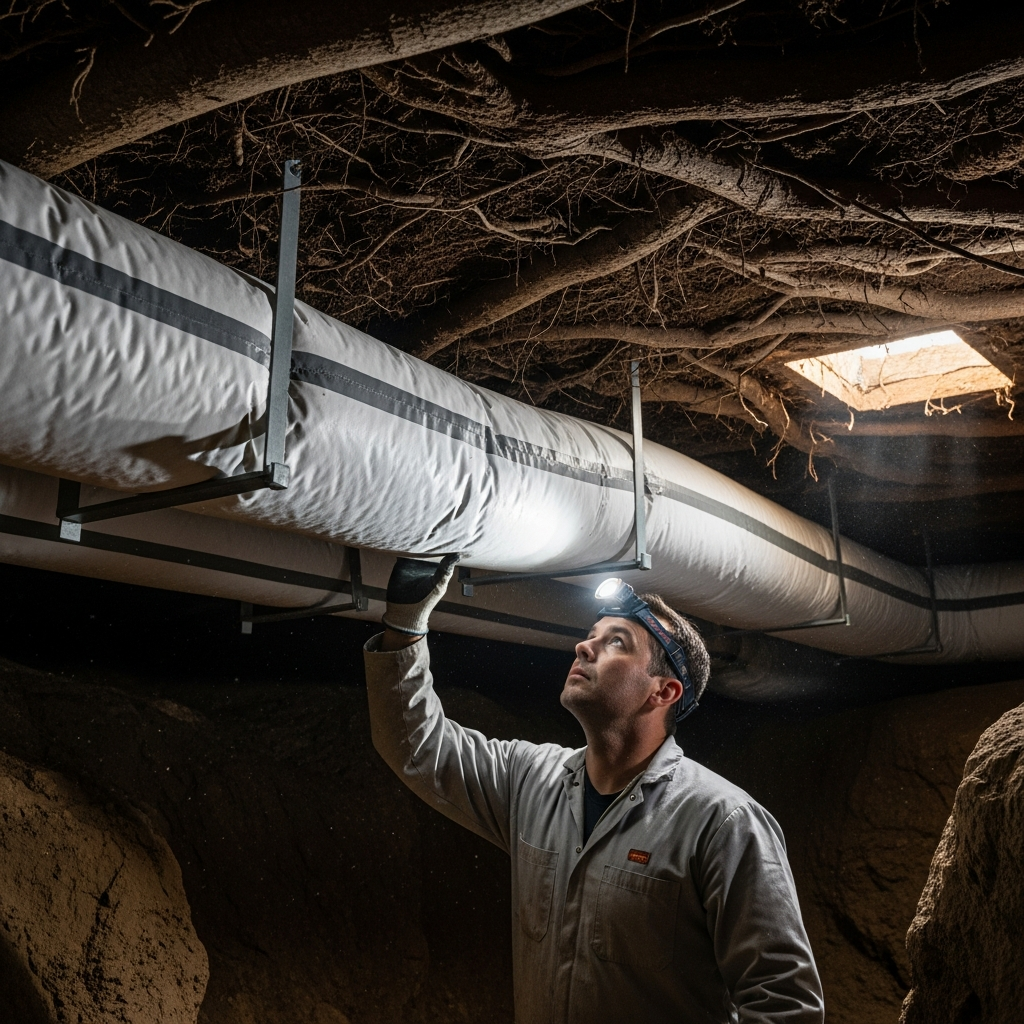
Many canyon homes rely on crawlspaces where space is tight and ground moisture can linger after winter rains. Older ducts often droop, flatten against framing, or rest too close to the soil. Moisture then degrades insulation jackets and can create musty odors that drift indoors. A proper replacement elevates ducts on durable stands, uses wide supports to protect insulation, and maintains clearances for access and drying. Continuous vapor barriers and high R-value jackets fend off condensation on cool mornings, preserving both performance and indoor freshness.
We also pay attention to return paths. Crawlspaces can harbor dust and organic odors if returns are poorly sealed or routed through leaky chases. Relocating or resizing returns—and sealing all penetrations—keeps the system from pulling air from places you would rather it did not.
Wildlife and intrusion points
Canyon life means sharing the neighborhood with resourceful critters. Rodents love warm, protected duct runs, and any small gap becomes a welcome mat. Chewed insulation, gnawed flex, and contaminated sections are common finds in older systems. During replacement, we close those invitations by sealing penetrations, using robust collars and boots, and choosing materials that resist easy damage. Just as important is keeping ducts elevated and clear of pathways where animals travel. The result is both better airflow and a cleaner, healthier system.
Dust, pollen, and canyon winds
When winds lift dust off canyon floors and shake pollen loose from the oaks, infiltration becomes a comfort and health issue. Leaky ducts draw that debris in from attics and crawlspaces, then distribute it through living areas. Replacement tackles this on two fronts: better sealing and smarter return placement. With tight joints and accessible filtration, you can close windows on blustery days and trust the system to maintain clean air without overworking. You will notice it on surfaces and in how your home smells—clean without the faint earthiness that sometimes lingers in canyon houses.
Noise where you least want it
Quiet is part of the canyon charm, so HVAC noise is especially intrusive. Hiss from undersized runs, rumble from abrupt transitions, and droning returns near bedrooms all chip away at the calm. During replacement, we treat acoustics as a design priority. Larger, slower pathways, smoother transitions, and strategic register placement steady the soundscape. The difference is striking at night, when registers whisper and the system’s presence fades into the canyon stillness.
Seismic realities and sturdy supports
While we do not talk about it every day, seismic resilience matters. Ducts that are loosely supported or perched on improvised stands can shift during tremors, creating new kinks and leaks. Canyon homes with long spans across framing are especially vulnerable. Modern replacements use wide, secure supports that protect insulation, maintain alignment, and keep runs from rubbing against wood or metal. Those details preserve performance not just on day one, but after the ground reminds us who is in charge.
Mid-project checkpoints that forecast success
In a canyon replacement, there is a moment when chaos organizes: flex runs stand round and supported, trunks align without odd jogs, and every joint is sealed with care. That is your sign of a system that will behave. It is also when we double-check return placement, confirm access for filter changes, and label balancing dampers so future adjustments are a two-minute task. Capturing those wins midstream prevents call-backs and locks in quiet, efficient operation.
Smoke days and the closed-window option
When smoke drifts through the canyons, the choice to close up matters. Tight ducts and well-planned returns turn that choice into a protective bubble. Air recirculates through filtration instead of drawing in particulates from leaky spaces, and the system maintains temperature without turning loud or frantic. It is a subtle form of resilience that you appreciate exactly when you need it.
Commissioning: measure, do not guess
Guesswork is the enemy of comfort. Commissioning at the end of a replacement—verifying static pressure, airflow, and temperature splits—confirms that the design intent made it from paper to the real world. In canyon homes with long runs and varied exposures, that proof matters. It is how we know the upstairs room on the sunny ridge will match the cool den tucked into the trees, without leaning on aggressive thermostat swings.
Frequently asked questions
Why are my canyon bedrooms always warmer than the main level?
Long runs to upper levels, sun exposure, and undersized returns are common culprits. Replacement simplifies routes, increases return capacity, and balances dampers for seasonal tuning.
Will new ducts help with the dusty smell after windy days?
Yes. Tight joints and smarter return placement reduce infiltration from dusty attics and crawlspaces, keeping indoor air cleaner on blustery days.
How do you keep animals out of the ducts?
We seal penetrations, use robust collars and boots, elevate runs off common paths, and select materials that resist easy chewing or tearing. Good sealing also removes the air leaks that attract pests.
Is crawlspace moisture a dealbreaker?
Not at all. Elevating ducts, using proper stands and wide supports, and ensuring continuous vapor barriers protect jackets from moisture. We also maintain clearances for airflow and drying.
Will the work be loud or disruptive?
We phase installations to protect quiet hours and coordinate room access. Most homeowners remain in place during the project, with daily updates to plan around noise-sensitive moments.
Do you verify performance at the end?
Yes. Commissioning—measuring static pressure, airflow, and temperature splits—is standard. It ensures the system delivers the comfort promised in the design.
Make canyon comfort the everyday norm
If the canyons have gifted you quiet nights but your home’s airflow still argues during the day, it is time to reset the system to match the terrain. A careful redesign and replacement address distance, dust, wildlife, and seismic realities in one coordinated move. Connect with a local specialist who understands the twists of canyon weather and architecture, and explore your best path to balanced comfort. When you are ready to breathe easier and hear less from the vents, schedule a visit and discuss duct replacement with a plan tailored to your home. The canyons will keep their drama; your indoor air will not.