
Efficiency matters even when the ocean is your backyard
Malibu homes walk a unique line between open-air living and precision comfort. Giant sliders erase the boundary between deck and living room, while a well-tuned HVAC system quietly keeps indoor conditions steady as fog rolls in or the sun breaks through. In this delicate dance, the state of your ductwork is a prime mover. The cleaner and smoother the interior pathway, the less effort required to distribute conditioned air. That simple truth is powering a wave of innovations in how ducts are cleaned, verified, and maintained. For Malibu homeowners, these trends translate into quieter rooms, steadier temperatures, and systems that work with the coast instead of against it. And it all starts with a renewed focus on the fundamentals of air duct cleaning adapted for our seaside climate.
In recent years, what used to be a fairly straightforward service has matured into a performance-minded process. Cleaning is no longer only about removing dust you can see at the registers; it’s about restoring airflow profiles, balancing pressure, and making sure every branch line contributes its fair share to comfort. The result is efficiency you can feel and sometimes even hear, in the form of fewer hisses at supply vents and smoother blower ramps. Homeowners are asking better questions, and service providers have stepped up with better tools and clearer verification.
From simple vacuums to controlled negative pressure systems
Source removal has always been the gold standard, but the way teams create negative pressure and manage containment has improved. Modern equipment maintains a consistent draw through the duct network, while agitation tools—soft brushes, air whips, and contact mechanisms matched to duct material—loosen debris for extraction without sending it back into the home. This shift matters for performance because a steady negative pressure keeps particulates moving outward until the pathway is clear. In Malibu’s humidity, where salt can bind to dust and turn into a tenacious film, the pairing of the right agitation with even pull is what separates a cosmetic cleanup from a true reset.
Technicians now tailor their approach to the architecture of the system. Long trunk lines in hillside homes, complex branching in renovated cottages, and underfloor runs in oceanfront properties each benefit from a layout-specific plan. The days of a one-size-fits-all pass are fading, replaced by thoughtful staging and zoned cleaning that maintains control over how and where material exits. Efficiency gains arrive when the entire network, not just the first few feet behind a grille, returns to a low-friction state.
Verification: measuring what you can’t see
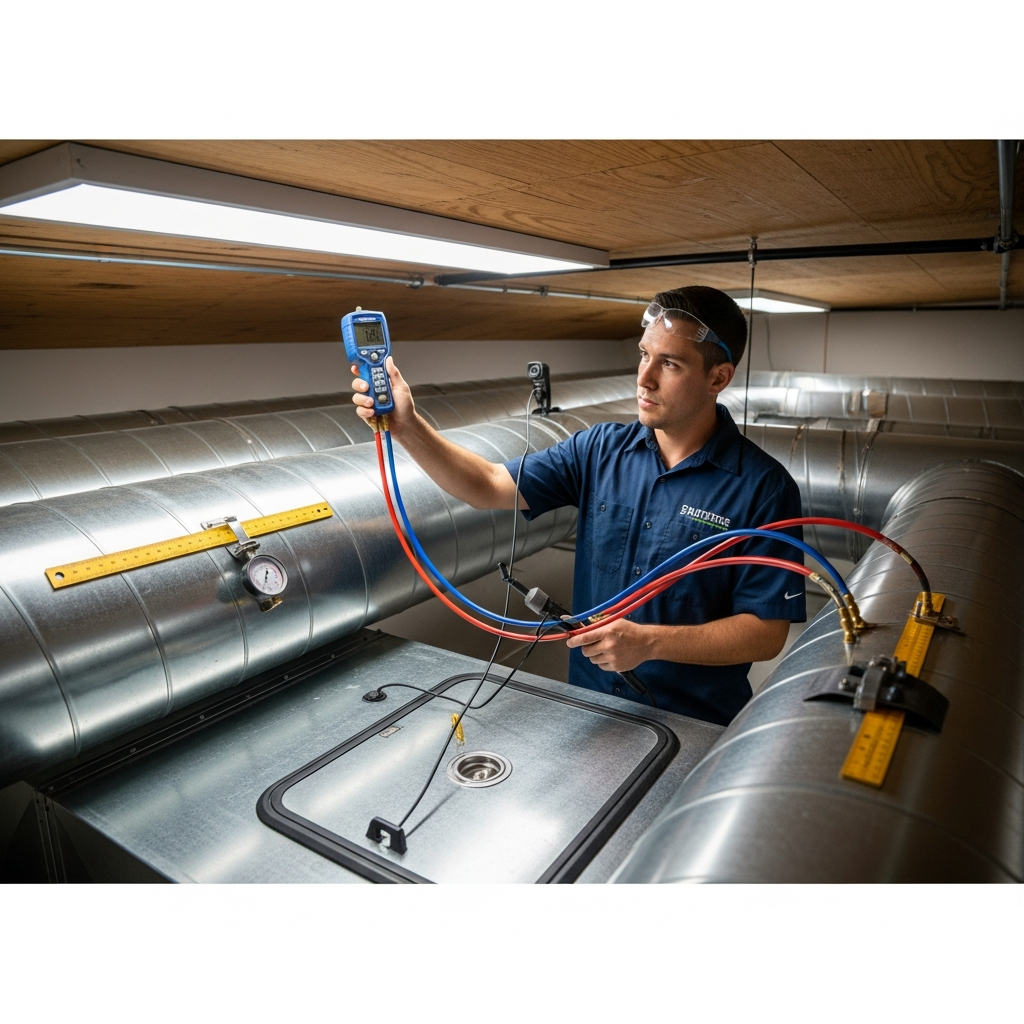
One of the biggest trends enhancing efficiency is better verification. Rather than rely solely on before-and-after photos at registers, many teams now document static pressure, airflow at supply diffusers, and even temperature split before and after service. While these are not dramatic transformations in every case, small improvements add up. A modest drop in static pressure can shave effort off the blower’s workload, which means the same comfort at lower strain. In coastal conditions that rise and fall within a single afternoon, that responsiveness helps rooms avoid the yo-yo effect between too cool and too warm.
Another verification tool is on-the-spot video inspection. Small cameras confirm that interior surfaces are actually clean, not merely stirred. This has proven invaluable in Malibu homes with unique duct materials or older systems that have seen multiple remodels. When you can see smooth surfaces and clear turning vanes, you know air has the best chance to glide, not tumble, through the network. Even homeowners averse to technical deep dives appreciate the clarity: evidence that the work delivered what it promised.
Seal and shield: protecting the gains
Cleaning is the reset; sealing is the security deposit on your investment in efficiency. Leaky seams and transitions invite unfiltered attic or crawlspace air into the system, raising the particulate load and forcing the blower to push against losses. Newer sealing methods, including careful mastic application and targeted gasket replacement, prevent that backsliding. In Malibu’s coastal atmosphere, where salt air can encourage small gaps to grow over time, attending to these points immediately after a cleaning extends the smooth-airflow window dramatically.
Some homeowners also choose to add passive protections at registers—simple, well-fitting registers that reduce turbulence and avoid the noisy chuffing that wastes energy. The trend here is subtle: fewer gimmicks, more attention to clean geometry and proper balancing. When air arrives with less interruption, rooms even out without overcompensating elsewhere in the system, and that’s efficiency at the scale you can feel.
Filtration that complements, not competes
After the duct interior is restored, filters can do their work without creating unnecessary resistance. A trend worth noting is the right-sizing of filtration media to the blower’s capabilities. Rather than defaulting to the highest-rated filter, teams are helping homeowners choose solutions that capture the particles most relevant to Malibu—salt, pollen, and occasional smoke—without strangling airflow. The result is a quieter system that still reduces dust on surfaces and in the air you breathe.
Filter fit has earned more attention, too. A filter that doesn’t seat properly might as well be a window left ajar on a windy day. Technicians are taking the extra minute to correct frames, improve door seals, and ensure return paths don’t bypass the filter entirely. In homes where allergies are a concern, this thoughtful tuning is often as impactful as the cleaning itself because it prevents the rapid reloading of newly refreshed ducts.
Eco-conscious methods for a coastal community
Malibu residents care deeply about the environment beyond their windows. The industry has responded with practices that minimize waste and avoid harsh chemicals in occupied spaces. Mechanical removal remains the backbone, with careful containment and disposal of extracted material. Where sanitizing is appropriate, the focus is on targeted application and thorough ventilation rather than blanket fogging. These choices align with the values of a community that treasures clean surf and protected canyons and also keep indoor spaces feeling naturally fresh instead of artificially scented.
Efficiency, in this context, includes more than energy. It’s about doing just enough of the right things and none of the unnecessary ones, so you get lasting results without excess. The elegance of this approach suits Malibu architecture, where systems are often tucked into tight corners and closets that don’t invite heavy-handed interventions.
Design-forward homes demand delicate tactics
Homes designed to capture a view often complicate the mechanical systems that make them livable. Concealed returns, custom registers, and long, narrow chases are common. Current cleaning trends meet this challenge with softer brushes, inflatable duct balls for isolation, and meticulously staged access panels that return the home to pristine condition afterward. Performance gains are still the goal, but the path respects finishes and original design intent. That attention to detail is especially important in oceanfront homes where salt-stiffened dust can accumulate behind intricate woodwork and built-in cabinetry.
With the right plan, even a home with artistic vents and hidden returns can transition from a slightly labored feel to a breezy calm. Owners report that AC ramps are less dramatic, heat distributes more evenly on cool winter mornings, and the entire space sounds less like a machine and more like a sanctuary. Those tactile changes matter as much as any line item on a spec sheet.
Scheduling around Malibu’s rhythms
Timing still plays a role in how effectively a cleaning improves efficiency. Many residents book service near the end of summer, after salt and sand have had their long season in the spotlight and before the dry winds. Others prefer spring, when the home shakes off marine layer heaviness and preps for months of open doors. Matching the service window to your lifestyle—big family gatherings, frequent guests, home office hours—ensures you experience the gains right when they’ll be most appreciated.
Once finished, small maintenance steps protect your improvements. Replace filters on schedule, keep returns free of obstruction, and give your system a break when the weather offers it. Malibu often gifts us afternoons where natural ventilation does much of the work; use those moments to let mechanical systems rest, and they’ll be ready to perform quietly and efficiently when the next temperature swing arrives.
Midway marker: why the reset works
Ultimately, the efficiency boost comes from removing the silent drag you rarely see. When the interior of your ducts is smooth and free of residue, air moves like a surfer on a clean line—minimal chop, no surprise stalls. That’s why the reset of professional air duct cleaning sits at the center of today’s performance-minded approach. Everything you do afterward—sealing, balancing, right-sized filtration—builds on that foundation and keeps the system from slipping back into sluggish habits.
Common questions about efficiency gains
Q: Will cleaning alone fix uneven rooms? A: Not always, but it often improves the situation by reducing friction. Pairing cleaning with balancing and a quick check for duct leaks yields the most consistent results.
Q: Can I expect my system to run less? A: Many homeowners notice steadier cycles and fewer dramatic on-off swings. Whether total run time falls depends on weather and thermostat habits, but comfort typically improves right away.
Q: Is this worthwhile for newer homes? A: Yes. Construction dust and sawdust frequently end up in ductwork during the build. Clearing that out and verifying sealing can unlock performance even in systems only a few years old.
Q: Do high-MERV filters make cleaning unnecessary? A: No. Filters catch a lot, but not everything, and they don’t remove residue that has already adhered to interior surfaces. Cleaning and filtration work best as a team.
Q: Will the process disrupt my home? A: A professional team will stage equipment outside, protect walkways, and work methodically room by room. Most homes are back to normal the same day, with the immediate difference most noticeable in sound and feel.
Q: How will I know if efficiency actually improved? A: You can track static pressure and airflow measurements provided by your technician, but your senses will chime in too. Quieter vents, faster pull-down on hot afternoons, and a general feeling of lightness are common signs.
The Malibu way to a smoother, quieter home
Efficiency isn’t about shaving every watt; it’s about living better in a place defined by the elements. When your ducts are clean and your system is tuned, the home responds gracefully to morning fog, midday sun, and evening breezes. If you’re ready to feel that difference—less turbulence, more calm—start by scheduling trusted Malibu air duct cleaning and build from there. Your home will reward you with the kind of effortless comfort that matches the view outside your windows.