
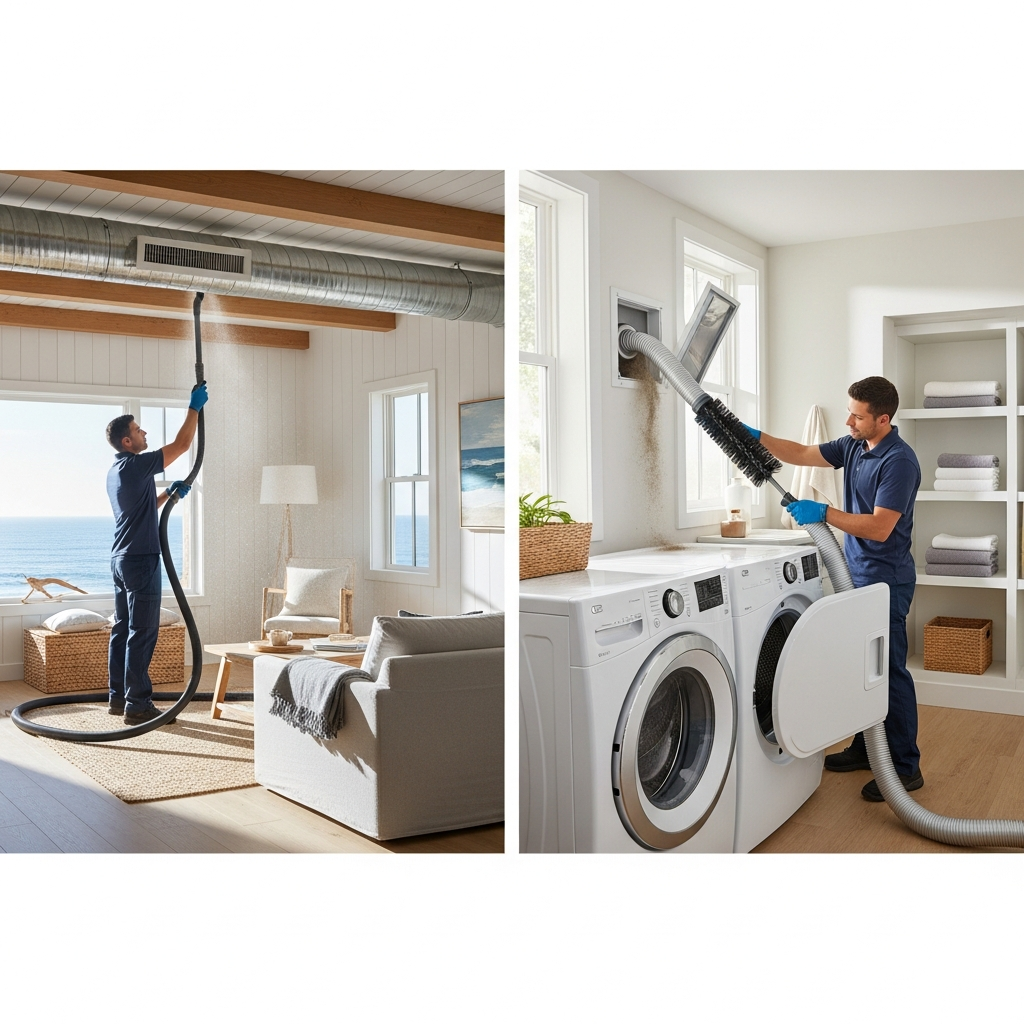
In Malibu, where ocean breezes carry fine sand and families cycle through beach towels and workout gear year-round, two home services often get mentioned in the same breath: air duct cleaning and dryer vent cleaning. They both deal with airflow you can’t see, and both can affect daily comfort. But they are not the same, and understanding the differences helps you choose the right service at the right time. If you’re sorting out whether to prioritize air duct cleaning or dryer vent cleaning for your Malibu home, a clear comparison puts you in charge of your home’s health and safety.
Think of your HVAC ducts as the home’s circulatory system for conditioned air. They deliver cooled or heated air to rooms and draw indoor air back through returns to be filtered and conditioned again. Over months and years, dust, dander, fine sand, pollen, and—during wildfire seasons—smoke residue accumulate in those passages. That buildup can reduce airflow, carry odors, and add a persistent haze to indoor air. Cleaning the ductwork focuses on clearing those pathways so air moves freely and your system doesn’t recirculate yesterday’s dust.
Dryer vents handle a different challenge: lint. Every load of laundry sheds fibers, and while the dryer’s lint screen catches much of it, a surprising amount escapes into the vent line. Malibu households often wash bulky towels and beachwear that produce lots of lint. If that lint settles and compacts, the vent becomes a bottleneck. Clothes take longer to dry, the dryer runs hotter, and, in worst cases, the lint becomes a fuel source inside the vent. That’s why dryer vent cleaning is about both performance and safety—removing highly flammable buildup from a confined, often hidden pathway.
The signs that each service is due are distinct. For air ducts, watch for dust that returns quickly to surfaces after cleaning, a stale or musty smell at system startup, and uneven airflow between rooms. For dryer vents, pay attention to longer dry cycles, unusually warm laundry rooms, a dryer exterior that feels hot to the touch, and a burning or musty smell during operation. If the exterior vent flap barely opens when the dryer runs or you see lint collecting around it, the vent is likely restricted.
Access and layout differ, too. HVAC ducts may run through attics, under floors, and inside walls, branching to reach every register. Cleaning them relies on creating negative pressure and working each branch with agitation tools that dislodge debris. Dryer vents, on the other hand, usually run a shorter, straighter path to an exterior termination, though in many Malibu homes they snake vertically to a roof cap or traverse long distances to reach an exterior wall. Roof-terminated vents require careful safety planning and specific tools to push or pull lint through turns without damaging the duct.
Timing and frequency reflect the roles each system plays. Duct cleaning schedules respond to lifestyle, location, and events like remodeling or wildfire smoke exposure. Some homes benefit from inspections every year or two, with full cleanings as needed. Dryer vents typically need more frequent attention, especially for families that do multiple loads daily or dry bulky textiles. A restricted dryer vent wastes energy, wears out appliances faster, and poses a safety risk, so it’s wise to treat vent cleaning as a routine part of home care.
Outcomes also differ. After air duct cleaning, homeowners often notice fresher-smelling rooms, less dust on furniture, and more balanced airflow. Post dryer vent cleaning, they notice shorter cycles, better drying results on the first pass, and cooler laundry rooms. Both services aim for efficiency and comfort, but dryer vent cleaning carries an additional benefit of reducing a known household fire hazard.
Malibu’s environment lends some specifics to the conversation. Beachside homes contend with salt moisture that can leave a light film on metal registers and, over time, on components near the air handler. That film blends with dust inside the ducts and becomes a subtle source of odor when air moves. Canyon and hillside homes see more windborne debris and pollen in ducts. In laundry rooms, sand-laden towels and athletic gear leave lint heavier than you might expect, and when families return en masse after weekend activities, dryers often run back-to-back, pushing the vent system hard. Add longer vent runs common in multi-level homes, and you’ve got a recipe for frequent dryer vent attention.
Preparation for each service looks a little different. For duct cleaning, clear access to registers and returns, share parking details and gate codes, and map out rooms where delicate finishes or artwork merit extra protection. For dryer vent cleaning, clear the path to the dryer, ensure the roof or exterior termination point is accessible if needed, and let the technician know if you’ve noticed birds nesting near the cap or if the flap sticks. In coastal neighborhoods, vent caps can corrode over time, so the exterior termination may merit inspection for proper function.
Homeowners sometimes ask if they can tackle either job themselves. Surface cleaning around registers and replacing filters are absolutely homeowner-friendly tasks. But the interiors of ducts and the full length of a dryer vent require tools and techniques designed to capture and remove debris safely. Improvised approaches risk pushing lint deeper into a vent or releasing dust from ducts into living spaces. Professionals use negative-pressure collection for ducts and rotary or air-driven tools for vents to keep debris controlled from start to finish.
In some cases, scheduling both services together makes sense. If you’re wrapping up a remodel, turning over a vacation rental for peak season, or noticing multiple indoor air and laundry performance issues at once, coordinating appointments streamlines access and leaves the home comprehensively refreshed. Otherwise, decide based on symptoms: odors and dust point toward duct cleaning; slow-drying loads and hot laundry spaces point toward vent cleaning.
Expect different documentation, too. After duct cleaning, a good provider shares photos of interior ducts before and after agitation, plus notes on the return path and blower compartment area. After dryer vent cleaning, you may receive photos of lint removed, images of the vent termination, and, when measurable, a before-and-after assessment of airflow at the exterior cap. Both summaries help you plan the next service and spot patterns unique to your home.
Safety considerations vary. Duct cleaning teams are trained to protect finishes, manage negative pressure, and move safely through attics or crawlspaces. Dryer vent cleaning may require ladder work, roof safety protocols, and attention to gas or electrical connections when moving the appliance. Either way, a provider experienced in Malibu understands the terrain—steep driveways, coastal corrosion, limited parking—and plans accordingly.
Maintenance between services is straightforward. For ducts, change filters on schedule and keep returns unblocked by furniture and drapes. Vacuum registers lightly during routine cleaning. For dryer vents, clean the lint screen after every load, avoid overloading the dryer, and listen for changes in sound that can indicate restricted airflow. If your exterior vent cap is near ground level, glance at it periodically to confirm the flap moves freely and no lint clumps are visible.
As homes evolve—new windows, a reconfigured laundry room, a switch to a higher-capacity washer or dryer—the balance of attention may shift. A more powerful dryer can push lint farther into long vent runs, while tighter windows can change how often you run your HVAC system. Revisit your service cadence after these updates to keep everything aligned.
Choosing a provider for either service should come down to transparency and respect for your space. Ask how they protect floors and finishes, what tools they use for your specific duct or vent material, and how they document results. Malibu homes often mix modern lines with natural elements, and a careful approach honors both the design and the underlying systems that make day-to-day living effortless.
Midway through weighing your options, it’s helpful to refocus on your goals. If clean, balanced indoor air and fewer dusty surfaces top the list, professional air duct cleaning will likely be the priority. If laundry takes longer than it used to and the dryer feels hotter than normal, move dryer vent cleaning to the front of the line. Either way, timing your choice around Malibu’s seasons—after windy spells, before peak summer guests, or following a remodeling project—makes results last.
In the end, both services support a calm, well-run home. Clean ducts harmonize the feel of your living spaces, while a clear dryer vent makes everyday tasks quicker and safer. With a thoughtful eye on symptoms and a preference for evidence-backed planning, you’ll keep both systems working as intended, in rhythm with the coast just outside your door.
How can I tell whether I need duct cleaning or dryer vent cleaning first?
Look at symptoms. Persistent dust, odors at system startup, and uneven room airflow point toward duct cleaning. Long dry cycles, hot laundry rooms, and lint around the exterior vent suggest the dryer vent is restricted. Address the most pressing signs first, then schedule the other service as needed.
Are these services performed the same way?
No. Duct cleaning uses negative-pressure collection and branch-by-branch agitation to capture dust and debris through the HVAC network. Dryer vent cleaning uses rotary brushes or air tools to pull or push lint through the vent to a controlled collection point, with special attention to elbows, long vertical runs, and the vent cap.
Is one service more urgent for safety?
Dryer vent cleaning carries a direct safety component because lint is flammable and trapped heat can stress the appliance. While duct cleaning improves comfort and indoor air quality, a clogged dryer vent deserves quicker attention to reduce fire risk and restore drying performance.
How often should each service be done?
For ducts, inspect regularly and clean as needed based on use, pets, and local conditions such as wildfire smoke and canyon winds. For dryer vents, many households benefit from annual attention, and heavy-use homes may need it more often. Let performance and inspection photos guide the schedule.
Can I schedule both services on the same day?
Yes, many homeowners coordinate both to minimize disruption. Be sure to share access details, roof or exterior vent locations, and any scheduling constraints so the team can plan an efficient sequence for your home.
What should I do between services to maintain results?
For ducts, change filters on time and keep returns unobstructed. For dryer vents, clean the lint screen after every load and check the exterior cap periodically to ensure it opens freely. Staying consistent with these habits preserves the benefits of each service.
Bring balance and safety to your Malibu home
If cleaner air and a safer, smoother-running laundry routine are on your list, schedule professional air duct cleaning alongside a plan for regular dryer vent care. With the right timing and a team that understands Malibu’s coastal rhythm, you’ll feel the difference every day.