
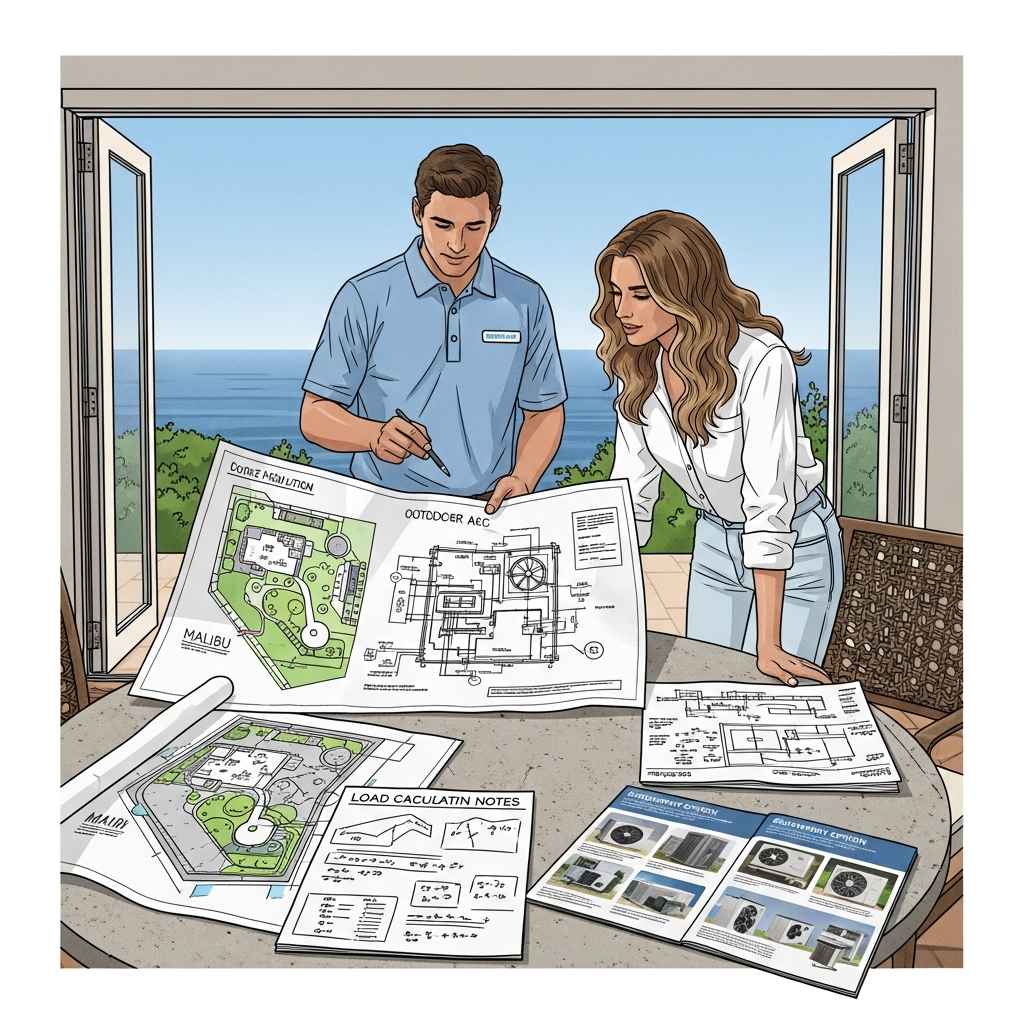
Asking what an installation will cost in Malibu is a natural, practical question, yet the smartest path to a satisfying project begins with understanding the forces that shape that number rather than fixating on a figure. Along our coastline, no two homes present the same canvas. One family’s beach cottage breathes the marine layer all day, while a hillside estate collects sun from dawn to dusk and greets canyon winds in the evening. The craft of a meaningful estimate is to translate the home’s story—its exposure, its materials, its lived patterns—into a design that performs gracefully for years. When neighbors ask where to start, I recommend first defining outcomes: quiet comfort, corrosion resistance, and control that follows the rhythm of the coast. With those goals in view, the process of scoping your air conditioning project becomes clearer and far more reliable than chasing generic numbers.
Site conditions are the foundation of any estimate
Every estimate begins with a site walk that reads the home like a map. We look at setbacks and ocean exposure for the outdoor unit, structural options for duct routing, electrical capacity, and the way occupants move through the space. In Malibu, placement often requires balancing airflow with aesthetics to protect views and community character. Hillside lots sometimes call for seismic bracing and carefully planned access for installation day. Beach-adjacent properties may benefit from sheltered locations that reduce direct salt spray. These realities inform material choices, labor planning, and the protective measures that sustain performance over time.
Load calculations and Malibu’s microclimates
A proper estimate never guesses at size. We measure windows, shading, insulation levels, ceiling heights, and room orientations, then model how the home gains and sheds heat through the day. Malibu’s microclimates complicate the picture—marine layer mornings, bright reflective afternoons, and inland surges of warmth. That is exactly why variable-capacity systems often rise to the top of proposed options. They can idle quietly when conditions are gentle and step smoothly into warmth when needed. Matching this flexibility to your home’s profile is central to a design that feels considered rather than generic.
Equipment options and coastal durability
Coastal-rated systems with protective coil coatings, stainless or non-ferrous hardware, and UV-stable components hold up better along the shore. Those features are easy to overlook in a basic scope, yet they pay dividends by resisting the slow march of salt and moisture. When we prepare an estimate, we spell out these protections and how they integrate with the rest of the design, because owners deserve to know not just what keeps them cool on day one, but also what keeps them confident in year seven.
Ductwork realities: repair, rework, or replace
Ducts are often the underappreciated star of comfort. A house can have a brilliant outdoor unit and still underperform if air cannot travel smoothly. During the estimate phase, we evaluate existing ducts for leaks, kinks, and capacity. Sometimes a few strategic changes—reworking a tight return, smoothing a transition, recalibrating register sizes—restore balance. Other times, sections need replacing to meet the airflow a modern system expects. These decisions directly influence labor scope and schedule, and they also determine the day-to-day feel of the finished installation.
Placement choices: views, noise, and wind
Malibu homes thrive on quiet and views. Estimates account for placement that preserves both while protecting the system from wind-borne salts. We explore leeward locations that breathe well, verify clearances that keep neighbors at ease, and consider sound paths to decks and bedrooms. The right pad, a thoughtful line-set route, and secure mounting reduce vibration and preserve the gentle soundscape that belongs to the coast. Each of these details finds its way into the estimate because each one shapes how the system will live with you.
Electrical readiness and smart control integration
We confirm panel capacity, breaker requirements, and dedicated circuits so there are no surprises once work begins. If upgrades or relocations are prudent, we map them with neat conduit runs that complement the home’s architecture. For controls, we align on how you prefer to live—doors open on cool mornings, quiet afternoons for remote work, guests on weekends—and specify thermostats and sensors that adapt gently. Smart controls can minimize runtime through learning and remote adjustments, especially useful when Malibu traffic shifts your plans at the last minute.
Permitting, Title 24, and verification
A reliable estimate includes the time and steps for local permitting and any required verifications. California’s energy standards ensure systems meet efficiency and performance baselines. We plan for airflow measurements, refrigerant charge checks, and documentation that proves the design performs as promised. Clear, complete paperwork expedites inspections and protects resale value—a detail often appreciated years later.
Installation access and logistics
Some Malibu projects are straightforward; others require choreography. Steep driveways, narrow side yards, roof access, and delicate finishes steer how crews stage equipment and tools. We outline protection for floors and walls, timing for power-off windows, and safe paths for removing old equipment. Good logistics compress disruption and keep the jobsite calm, turning a potentially hectic experience into a well-paced few days that feel respectful of your time and home.
Corrosion mitigation as a line item, not an afterthought
Inland estimates often ignore salt altogether. Here, corrosion mitigation deserves its own space on the scope. We include protective stands where needed, wind baffles for oceanfront exposure, UV-stable insulation, and hardware selections meant to face the elements. We also plan for post-install rinsing and early check-ins to establish system baselines. These measures are not cosmetic; they are the guardrails that keep performance high when the breeze is doing what it does.
Optional enhancements that elevate comfort
During the estimate conversation, we explore enhancements that match your goals. Zoning allows gentler, targeted comfort for rooms that experience different sun and wind patterns. Filtration and ventilation upgrades prepare the home for smoky days or high-guest seasons. Sound attenuation measures preserve the ocean’s hush. Indoors, register styles and locations influence how the air feels on skin—subtle differences that add up to a home that feels composed rather than simply cool.
Mid-process clarity: the value of transparent scope
Halfway through building an estimate, many owners find the path clarifies. The conversation shifts from an abstract number to a design that serves the way they live. That is the moment to ask questions, compare options, and align on what matters most. A transparent scope turns your air conditioning installation into a collaboration rather than a transaction, and the finished result usually reflects that care.
What makes estimates vary between homes
Two neighbors can pursue similar comfort goals and see different scopes because their homes tell different stories. Window area and orientation, structural pathways for ducts, levels of coastal exposure, and desired sound profiles all push the design in unique directions. Square footage is only the headline; comfort is in the fine print. When we lay out an estimate, we explain these drivers so the numbers are not mysteries but reflections of deliberate choices.
Timeline expectations and communication
Accurate timelines grow from clear scope. We discuss lead times for coastal-rated equipment, preparation steps for electrical work, and the cadence of installation tasks. Communication is not a courtesy; it is a tool. Knowing when crews will arrive, when your power will be off, and when you can expect first cool air turns a complex job into a well-planned experience that respects your routines and commitments.
Post-install follow-through
The story does not end at startup. We schedule a follow-up visit to recheck pressures, verify airflow, and ensure controls feel intuitive. Early data points—temperatures, static pressure, and run profiles—become the baseline for maintenance and tune-ups. This follow-through is part of the estimate because it is part of the value: a system that performs as designed long after the truck pulls away.
Frequently asked questions
Q: What information should I have ready for an accurate estimate?
A: Floor plans if available, notes on rooms that feel warm or cool, and a sense of how you use the home—doors open, guest frequency, work-from-home habits. Photos of equipment locations and access paths also help.
Q: How do Malibu’s coastal conditions influence design choices?
A: Salt, humidity, and wind exposure push us toward corrosion-resistant materials, careful equipment placement, and airflow strategies that stay quiet and steady as conditions change through the day.
Q: Will I need ductwork changes?
A: Many homes benefit from targeted duct improvements that unlock comfort and quiet. We evaluate existing runs and propose repairs or replacements that support modern variable-capacity systems.
Q: Can I preserve views and still protect the outdoor unit?
A: Yes. We look for leeward positions and subtle screening that allow free airflow. The aim is to preserve the soundscape and views while guarding against direct salt spray.
Q: What happens after installation?
A: We commission the system thoroughly, confirm performance, and schedule a follow-up to verify everything is settling in as planned. You will also receive guidance on care routines tailored to your location.
Ready to scope a project that fits your home and lifestyle?
If you would like clarity grounded in Malibu’s realities, let us walk your property, discuss your goals, and craft a design that will feel right on day one and year seven. When you are ready to explore options and map a plan, we will help you navigate choices and set a course toward reliable, quiet comfort with modern air conditioning that respects the coast.