
The ocean gives Malibu its magic, but anyone who tends a home here knows that the same salt air that paints sunsets also goes to work on metal, fins, and fan blades. Over time, a fine film settles on the outdoor coil, cabinet seams show specks of corrosion, and even indoor components can collect residues carried in from breezy afternoons. Professional cleaning tailored to the coast is not an occasional luxury; it is the quiet maintenance that keeps comfort steady, energy use low, and equipment strong year after year. When I meet homeowners along Broad Beach or tucked into the canyons, our first conversation usually starts with how the system has felt lately—longer cycles, a hint of odor, a note of strain. Cleaning is our way of erasing the season’s fingerprints so your air conditioning can breathe freely again.
Why salt air changes the cleaning playbook
Salt behaves differently than typical dust. It dissolves in moisture, wicks into seams, and accelerates oxidation if left in place. On outdoor coils, even a thin salt glaze reduces the fin’s ability to transfer heat, forcing compressors to work harder. Indoors, airborne residues can mingle with condensation on the evaporator coil, narrowing the paths air must take and adding a faint mustiness that never feels fresh. A good cleaning plan recognizes these patterns. We emphasize gentle rinsing to remove salts without driving minerals deeper, selective use of coil cleaners that protect protective coatings, and patient drying so surfaces are clean, not just wet.
Starting with inspection and airflow
Before water touches the unit, we listen and look. Is there a new rattle, a soft whine, or a shift in vibration that suggests debris lodged near the fan? Are the fins matted with coastal dust that looks innocuous but seals like paper when wet? Is the line-set insulation cracked from sun exposure, inviting moisture? We measure temperature split and static pressure to see how restricted the system is, then plan the cleaning approach. These clues ensure we target the right places and avoid causing damage by rinsing the wrong way.
Outdoor coil cleaning: gentle is powerful
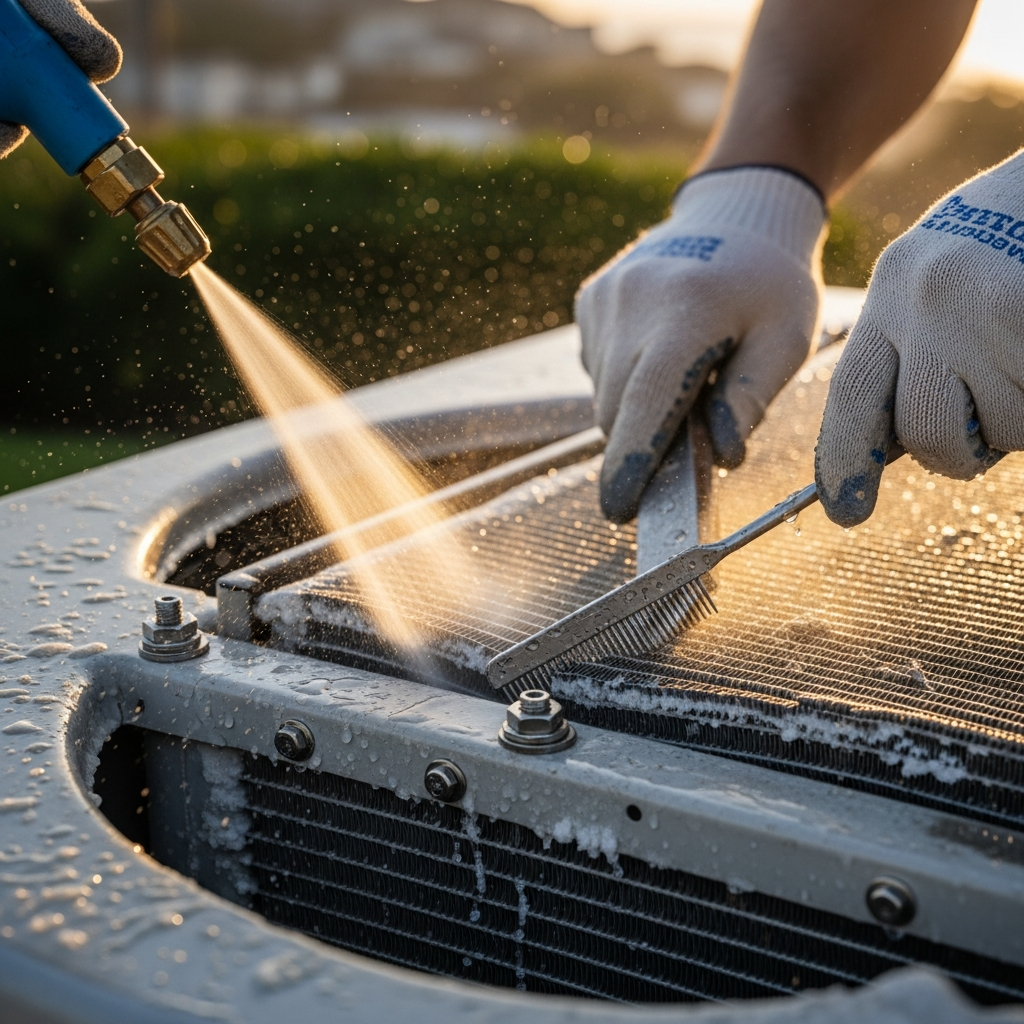
With power safely isolated and panels removed, we begin with a low-pressure, high-volume rinse from the inside out. This flushes debris in the natural direction of airflow and prevents packing gunk deeper into the fins. In salt-heavy zones, we may follow with a mild, manufacturer-approved cleaner that loosens stubborn film without stripping protective coatings. Fin combs straighten gently where damage has compressed air passages. We take care with electrical compartments, ensuring gaskets are intact and that any rinse water flows away from sensitive components. When the cabinet dries, we lightly inspect seams and fasteners for early corrosion and touch up where appropriate to slow progress.
Indoor coil and blower: the quiet heart of clean comfort
Indoor coils rarely get the attention they deserve. On the coast, they carry the story of open doors, cooking, candles, and coastal particulates that sneak in each day. We access the coil carefully, photograph condition for your records, and remove build-up with methods designed for your unit’s materials. The blower wheel often tells its own tale; a film of residue on the blades reduces their ability to move air efficiently. Cleaning the wheel and housing can return a familiar hush to the system, the kind of quiet that says everything is moving the way it should.
Condensate management: where salt and water meet
As the indoor coil cools, it condenses moisture that carries dissolved salts and indoor residues. The drain pan and trap become the front line for keeping that moisture moving. We clear the trap, flush the line, and check pitch so water does not linger. In Malibu’s damp mornings, a small pool can become a nuisance leak if ignored. We also verify that any safety switches are responsive, because catching an overflow early is the difference between a minor adjustment and an unwelcome ceiling stain.
Protective rinsing schedules for oceanfront homes
For homes steps from the break, routine freshwater rinsing is the simplest, most effective habit you can adopt. The key is light pressure and consistency. We coach homeowners on technique if they want to maintain between visits, emphasizing the right angles, the value of sunrise or early evening rinses when sun is gentler, and the patience to let the cabinet dry. During professional cleanings, we go deeper, removing panels, lifting trapped debris, and confirming that each pass of water carries salts away rather than in.
The role of coatings and materials
Many coastal-rated systems arrive with factory-applied coatings on the outdoor coil. Cleanings must respect these films. Harsh chemicals and vigorous brushing can compromise protection, ironically speeding the very corrosion we are trying to slow. We select cleaners tested against those coatings and apply with soft spray patterns. Stainless hardware, UV-stable insulation, and well-sealed electrical entries also pay dividends because cleanings can be thorough without fear of water intrusion. Where we spot wear, we recommend timely replacements so the next cleaning is as safe and effective as the first.
Odor control and indoor freshness
A home by the sea should smell like fresh air, not damp machinery. After coil and blower cleaning, we evaluate duct interiors and return chases for dust nests that trap coastal humidity and hold odor. We do not chase perfumes or cover scents. Instead, we restore airflow, encourage proper coil drying with post-cycle fan strategies when appropriate, and calibrate ventilation so you can enjoy ocean breezes without pulling in more moisture than your system can comfortably handle. The result is a subtle cleanliness—the kind you notice only by its absence when it is gone.
Documentation that matters over time
Each cleaning visit adds a chapter to your system’s record. We log static pressure, coil condition, refrigerant charge as observed under typical operation, and photos of any areas where corrosion starts. Over the seasons, this record becomes a guide, telling us which corners need extra attention and which adjustments made the biggest difference. In coastal environments, trends matter as much as snapshots. We use them to time deeper cleanings and small part replacements before they become comfort disruptions.
Mid-season tune and the power of breathing room
There is a moment after a proper cleaning when the system exhales and the home follows. Air moves with less effort, temperatures even out, and the hum of the outdoor unit fades into the background. We often schedule a quick mid-season check for oceanfront properties to extend that feeling, especially during long, foggy stretches. Think of it as giving your air conditioning just enough breathing room to carry you through the busier weeks without strain.
What homeowners can do between visits
While professional cleanings dive into areas best handled with the right tools and training, small habits help. Keep vegetation trimmed to maintain clear airflow, avoid chemical sprays near the unit that can draw onto the coil, and be mindful of decorative screens that look open but choke air at certain wind angles. Indoors, change filters on schedule and consider the rhythm of open-door living; on days you welcome the breeze, your system will welcome a fresh filter sooner.
Quiet results you can feel
After a thorough cleaning, comfort returns in familiar ways. Rooms settle into steady temperatures. The system starts and runs without the strained edge that crept in over months. Registers feel crisp, not drafty, and the house smells gently clean. These are subtle wins that add up to the Malibu lifestyle you expect: windows open when you want them open, cooling available when you need it, and the machinery of comfort staying out of the spotlight.
Frequently asked questions
Q: How often should I schedule professional coil cleaning near the ocean?
A: For oceanfront or first-row homes, a professional cleaning once or twice per year paired with regular freshwater rinses maintains performance. Homes a bit inland can often thrive with annual professional service, adjusted for how open you keep the house.
Q: Will cleaning void my equipment warranty?
A: Proper cleaning that follows manufacturer guidance and uses approved products supports warranty intent. Documentation of care can be helpful if warranty questions arise.
Q: Can I pressure wash the outdoor coil?
A: High-pressure washing can fold fins and trap minerals deeper in the coil. Low-pressure, high-volume rinsing from the inside out is safer and more effective.
Q: My system smells musty after running. Will cleaning help?
A: Yes. Cleaning the indoor coil, blower, and drain components removes residues that hold moisture and odor. We also adjust fan settings to promote coil drying and recommend filter strategies that keep indoor air fresher.
Q: Do protective coil coatings mean I never need cleaning?
A: Coatings slow corrosion but do not stop salt and dust from collecting. Gentle, consistent cleaning preserves the coatings and the performance they protect.
Ready for a fresher, easier-breathing home?
If salt and seasons have left your system a bit weary, a coastal-focused cleaning can restore quiet confidence and steady comfort. Let us help your home feel crisp, calm, and ready for long afternoons by the sea. When you are ready to give your air conditioning the care Malibu demands, we are here with a gentle, thorough approach that honors both the equipment and the coast.