
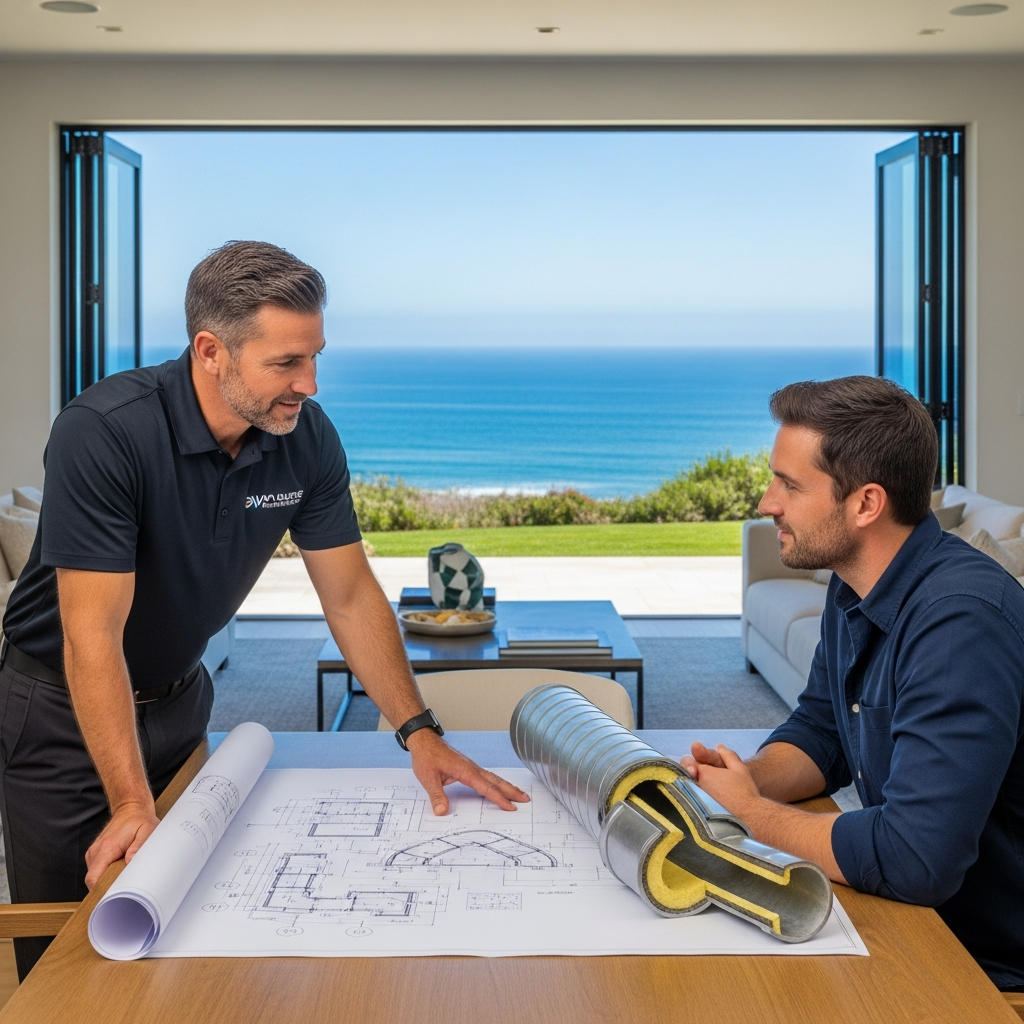
Explaining what truly shapes the investment for air duct replacement in Malibu means looking well beyond any single number. The goal is not to chase a figure but to understand why one home requires a different approach than another only a few blocks away. Our coastline, with its marine layer mornings, sunlit afternoons, and canyon breezes, makes comfort a moving target. When neighbors ask how to plan intelligently, I suggest starting with a clear sense of how layout, materials, access, and craftsmanship interact. With that foundation, resources that outline best practices for duct replacement become far more useful, giving you language to compare proposals and the confidence to choose a design that suits your home.
Think of ductwork as the home’s circulatory system. If the pathways are narrow, kinked, or leaky, the entire body works harder. If they are thoughtfully sized, gently routed, and well sealed, the home breathes smoothly. Malibu’s diverse housing stock—from beachfront cottages to hillside estates—adds complexity because each structure offers different pathways and obstacles. Attics range from wide and walkable to shallow and intricate, and crawlspaces can be straightforward or a maze. These variables do not just change the labor picture; they alter how the final system will feel day to day.
Malibu’s Climate and Architecture
The ocean is both a gift and a design constraint. Salt air and humidity must be managed, and materials should be selected for resilience and quiet performance. During foggy mornings, attics can be damp; by early afternoon, radiant heat can push temperatures much higher under the roof deck. Duct insulation, sealing compounds, and hangers need to accommodate these swings to keep the system stable and dry. Architecture compounds the challenge: mid-century designs with low slopes, Spanish-style homes with intricate framing, and contemporary builds with long, open volumes all call for different strategies.
In practice, that means the very definition of “good value” changes with the property. A straightforward trunk-and-branch layout with ample attic room can focus on airflow smoothness and return sizing. A tight, low attic may prioritize flexible routing, meticulous strapping, and advanced sealing to reduce turbulence and maintain performance in a constrained space. The shared goal remains the same—quiet, even comfort with reliable efficiency—but the path reflects the structure.
Materials and Insulation: Choosing the Right Mix
There is no one-size-fits-all material for ducts. Sheet metal’s durability and low internal friction make it excellent for longer trunks, while flexible duct excels in navigating tight corners and irregular runs to bedrooms or offices. Duct board, when appropriately used, can integrate insulation with smooth internal surfaces. The ideal combination in Malibu pairs airflow stability with insulation levels that limit energy loss and mitigate condensation risk. When a design honors both the path the air must take and the temperature conditions around that path, the system rewards you with quiet consistency.
Insulation quality and thickness matter just as much as the material inside. Attics exposed to bright sun can make poorly wrapped ducts bleed conditioned air and invite condensation during cool evenings. A well-insulated system resists these forces, keeps air at the right temperature, and supports the equipment in operating without strain. It is a reinforcement that pays off quietly—no dramatic headlines, just comfortable rooms and lower workload on the blower and compressor over time.
Sealing, Supports, and Leak Prevention
The difference between a merely new system and a truly well-performing one is often the thoroughness of sealing and the integrity of supports. Joints, boots, and plenums should be sealed with the right mastics and tapes, and fasteners should be used where required for a mechanically sound bond. Proper hangers prevent sagging that increases resistance and noise. In Malibu, where winds push through canyons and subtle building movement is common, these precautions protect against premature wear. What you cannot see after the job is done is exactly what preserves performance for years to come.
Leakage is particularly costly in coastal homes because attics can be humid or very warm depending on the hour. Each unsealed seam becomes a path for energy to escape and moisture to intrude. Modern testing methods can measure leakage and static pressure, giving you objective confirmation that the design on paper matches the system in your home. That test data becomes a valuable baseline for future service visits, ensuring that your ducts remain as tight and smooth as the day they were installed.
Airflow, Returns, and Comfort
Comfort is achieved when each room receives the right amount of air at the right speed, without drafts or dead zones. Supply registers should be selected and placed to bathe the room in gentle, even air, while returns quietly draw air back without whistling or inducing door slams. If you have ever experienced a hallway that roars or a bedroom that never quite cools, you have experienced the symptoms of poor duct design. The fix is not guesswork; it is thoughtful sizing, careful control of velocity, and balanced dampers set with measurements rather than hunches.
Homes that entertain often, or that include home studios and offices, may require special attention to zoning or distribution. These spaces can build heat quickly or demand quieter operation during recordings and meetings. Incorporating those needs at the design stage prevents frustration later. In Malibu, where days can begin with sweaters and end with open patio doors, a flexible system that balances well across a range of conditions pays dividends in comfort and peace.
Permits and Local Standards
California’s energy codes shape duct design and replacement, and Malibu’s inspectors look for specific details such as insulation levels, sealing effectiveness, and adherence to equipment sizing principles. Far from being red tape, these rules steer projects toward safer, more efficient outcomes. During planning, a contractor should be able to explain permit steps, anticipated inspections, and how they will document compliance. That clarity is part of the value you receive; it reduces surprises and aligns expectations so the project proceeds smoothly.
Inspections also create a natural milestone for homeowner involvement. It is the right moment to confirm how filters will be accessed, whether a return needs an acoustic liner for quiet, or how a particular register will sit relative to a ceiling feature. The better these checkpoints are used, the more refined and satisfying the final experience will be.
Access and Construction Nuances
Access shapes the pace and method of installation. Older homes sometimes hide complications above ceilings or within walls: legacy wiring, braced skylight wells, or low-slope framing that narrows passageways. Properties near the ocean might require extra measures to protect tools and materials from corrosion over time. In hillside areas, steep driveways and limited staging space can influence logistics. High-quality crews treat these realities as a normal part of the job, planning routes and protection so that dust is contained and interiors remain respected throughout.
For homeowners, the best sign that access is being handled well is how organized the job feels. Materials should be staged neatly, daily goals communicated in simple terms, and progress photographed where it helps you visualize what is being accomplished. A clean, methodical process yields clean, methodical results in the ducts themselves.
Noise Management and Aesthetics
Few things undermine a serene Malibu home like persistent HVAC noise. The design should minimize velocity where possible, use gentle fittings, and select registers that diffuse air without creating a harsh jet. Returns deserve just as much attention; oversized returns lower resistance and help the blower hum rather than roar. In renovations where soffits or exposed ceilings are in play, discreet solutions can hide necessary changes while enhancing the home’s look. The best work fades into the background visually and acoustically, leaving only comfort behind.
In homes that mix old and new architecture, the aesthetic conversation can be as important as the performance one. Preserving distinctive lines while carving out space for proper ducts often requires creative problem-solving. When you review proposals, look for evidence that the team has thought through these intersections between engineering and design.
Mid-Project Choices and Quality Control
It is normal for thoughtful teams to recommend adjustments during installation. Perhaps a bend would be quieter if stretched into a longer radius, or a return would benefit from a change in grille style. These are not red flags; they are signs that the crew is optimizing in real time. The key is communication supported by measurements. If a suggestion is paired with expected gains in static pressure or noise reduction, you can decide with confidence.
If you are researching while a project is underway, you may find it helpful to revisit practical overviews of air duct replacement so your on-site decisions align with proven practices. Projects go best when homeowners and installers share a common vocabulary and intent, especially in homes as individualized as those in Malibu.
After Completion: Living With a Better System
Give yourself time to experience the full range of conditions. Note how bedrooms feel with doors closed at night versus open in the morning. Pay attention to whether the living room ever develops a stubborn hot spot during sunny afternoons. A good team will schedule a follow-up to review these impressions and make small balancing tweaks. Filters should be easy to access, and any documentation from testing should be kept for your records. With these pieces in place, you will enjoy a system that quietly supports your life rather than demanding attention.
Long-term, simple habits protect your investment: keeping storage clear of attic ducts, maintaining insulation integrity after any electrician visits, and noting any unusual sounds early. Malibu’s environment is gentle most days but challenging on others; a system designed and installed with care will adapt gracefully across seasons.
Frequently Asked Questions
Why does one Malibu home’s duct project differ so much from another’s?
Differences in architecture, access, and microclimate create unique routes and material needs. A low-slope roof or tight crawlspace often requires flexible solutions and extra sealing, while a spacious attic may favor longer metal trunks for quiet stability. These variables, not just length, define the design and the effort required.
How important is duct sealing compared to the choice of materials?
Both matter, but sealing is foundational. Even premium materials underperform if joints leak. Proper mastics, tapes, and mechanical fasteners, combined with smart supports to maintain duct shape, protect against energy loss, moisture intrusion, and noise. Testing after installation verifies that the design intent was achieved.
Can new ducts make my home quieter?
Yes. Reducing air velocity, smoothing turns, enlarging returns, and selecting the right registers all lower turbulence and resonance. Many homeowners are surprised by how much a precise duct design can soften background noise, especially at night when the home is still and small sounds carry.
Do I need to replace all ductwork at once?
Not necessarily. A thorough assessment may reveal that targeted sections combined with sealing and balancing will meet your goals. However, blending very old and new sections sometimes limits performance gains. Your contractor should present clear options that explain how each approach will feel in daily use.
How do Malibu’s building codes affect my project?
Codes emphasize insulation, leakage limits, and safe, efficient operation. Inspections validate these elements and protect you from shortcuts that could compromise comfort or reliability. A contractor who discusses code requirements and provides documentation gives you transparency and a stronger final result.
What maintenance should I plan after installation?
Maintain filter changes on schedule, keep access paths clear, and report any unusual sounds or temperature swings early. If the attic is used for storage or receives new lighting, protect duct insulation and supports. A brief seasonal check-in helps the system stay as tight and smooth as day one.
Let’s Bring Clarity to Your Malibu Project
If you are ready to translate best practices into a home that feels calm and consistent in every room, connect with a team that treats design, sealing, and balancing as inseparable parts of the work. Review practical guidance on duct replacement, then schedule a home assessment tailored to Malibu’s climate and your architecture. A thoughtful plan now yields years of quiet comfort and dependable performance.