Spend a few seasons in Malibu, and you begin to understand how our coastal rhythm shapes the way homes cool. Morning marine layers soften the sun, afternoons warm quickly, and evenings bring back a gentle breeze. Air conditioning here doesn’t follow a single script—it adapts, day after day. In recent years, a new set of maintenance trends has emerged that reflects Malibu’s microclimates and the community’s desire for clean, quiet, efficient comfort. These aren’t passing fads; they’re practical shifts in how we care for equipment so it performs gracefully in a salt-air environment. If you’re looking to keep pace, it helps to anchor your plan in consistent air conditioning maintenance and then layer on innovations that fit your home.
Trends in AC maintenance are really about aligning technology, technique, and timing. What’s changed most in Malibu is the precision of the work: measuring more, guessing less, and using tools that translate subtle coastal conditions into clear adjustments. The result is fewer surprises and a home that holds comfort with minimal effort from the equipment.
Data-Driven Tune-Ups and Predictive Insights
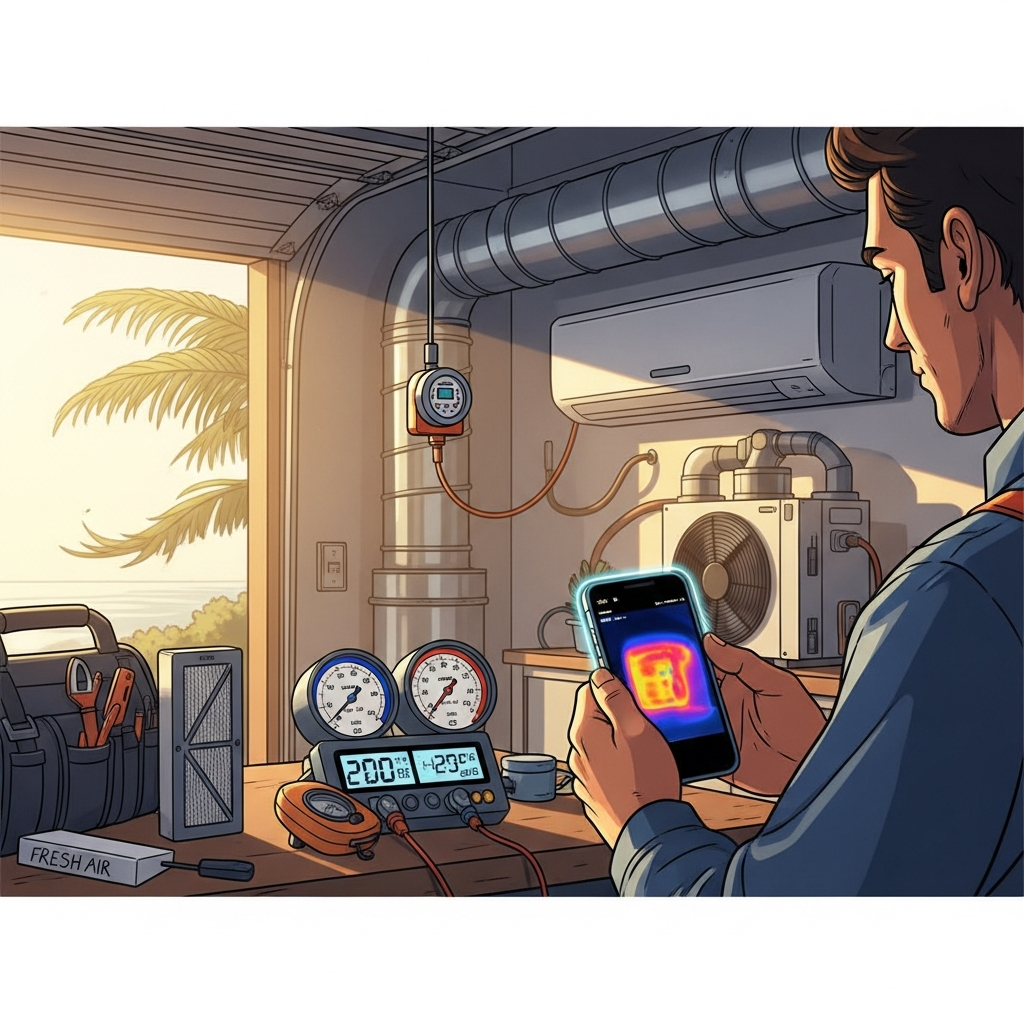
The biggest shift is the move toward data-rich maintenance. Technicians increasingly rely on connected gauges, airflow meters, and thermal cameras to build a live picture of system health. Instead of a simple pressure check, you now see superheat, subcooling, and temperature splits tracked together, which clarifies whether refrigerant charge, coil cleanliness, or airflow is the bottleneck. Over time, that data becomes a baseline for your home, so the next visit can flag even subtle drift away from ideal.
Some homeowners are adopting sensors that monitor temperature, humidity, and runtime, offering a window into how the system responds to Malibu’s daily swings. Those insights guide proactive adjustments: slightly altering blower speed to improve dehumidification on foggy mornings, or fine-tuning thermostat schedules ahead of a predicted heat spike. The trend is not about gadgets for their own sake; it’s about using information to keep the system in its most efficient mode more often.
Coastal Corrosion Management as a Standard Practice
Another trend is treating corrosion prevention as part of every maintenance plan for homes near the water. We’re seeing more frequent rinsing of outdoor units, routine application of coil-safe protectants where appropriate, and early replacement of vulnerable fasteners with corrosion-resistant options. Technicians also pay greater attention to the mounting pad and airflow clearances, ensuring the condenser stays level and ventilated, especially on sloped lots common in Malibu.
This shift recognizes that salt and wind don’t take days off. By normalizing proactive protection, homeowners see steadier performance and fewer mid-season surprises, even after weeks of foggy mornings or gusty afternoons.
Airflow Optimization and Duct Performance
Airflow is finally getting the spotlight it deserves. Modern maintenance in Malibu includes static pressure testing, targeted duct sealing in accessible runs, and careful filter selection to balance capture and resistance. Rather than simply swapping filters, the conversation now includes pressure drop measurements and the tradeoffs between different filtration media—especially important when wildfire smoke is a seasonal concern.
We’re also seeing more attention to return-air pathways in open-plan homes. When returns are undersized or obstructed, the system strains to breathe, leading to noise, uneven cooling, and longer runtime. Adjustments to grilles, added returns in distant rooms, and blower tuning are becoming more common maintenance recommendations, not just post-installation fixes.
Smart Controls With Localized Tuning
Smart thermostats are old news; the new story is in how they’re being set up. In Malibu, installers are programming thermostat schedules that anticipate the marine layer and late-day sun. Pre-cooling spaces before peak heat arrives can reduce max runtime, while relaxing setpoints when the breeze returns keeps equipment from cycling unnecessarily. The trend is away from generic factory schedules and toward local tuning that treats each home’s exposure—oceanfront, canyon, bluff—as a unique case.
With this approach, smart controls become partners in maintenance. When the system behaves predictably, it’s easier to determine whether a new issue is environmental or mechanical. That clarity reduces guesswork when making adjustments mid-season.
Cleaner Air With Less Resistance
Air quality has taken center stage. Malibu homeowners are choosing filters and indoor air quality add-ons that protect lungs without punishing airflow. Maintenance now often includes measuring pressure drop across filters and recommending alternatives that capture fine particles while keeping static pressure in check. In some homes, dedicated filtration units or upgraded return grilles allow better filtration without bottlenecking the system.
Another emerging practice is strategic dehumidification. While Malibu isn’t tropical, even small improvements in indoor humidity control can make rooms feel cooler at a slightly higher thermostat setting. Maintenance teams are adjusting blower speeds and verifying condensate drainage to support that comfort with minimal energy use.
Mini-Splits and Variable-Speed Systems
Modern variable-speed systems—and ductless mini-splits—are increasingly common in Malibu remodels and additions. Their maintenance needs differ from older single-speed units. Careful cleaning of compact coils, verification of communication signals between components, and commissioning checks that confirm modulating performance are now part of the maintenance repertoire. The goal is to ensure these sophisticated systems actually deliver their promise: precise, quiet cooling that matches output to demand.
As more homes blend traditional ducted systems with ductless zones—say, a glass-wrapped studio or a guest suite—maintenance must examine how the systems interact. The emerging trend is coordinated scheduling so both types of equipment support each other rather than competing, especially during late-afternoon peaks.
Mid-Season Micro-Visits
Because Malibu weather never stays in one lane, short mid-season visits are becoming popular. These focused appointments tackle salt residue, rinse condensers, check electrical components under current conditions, and ensure drain lines are clear after humid spells. Homeowners who commit to a recurring plan for HVAC maintenance report fewer surprises and more consistent comfort as summer stretches on.
These micro-visits reflect a new mindset: maintenance isn’t a one-and-done event; it’s an ongoing dialogue with your home’s environment. Adjusting small things when conditions change keeps the system efficient and responsive.
Documentation and Long-Term Planning
Another notable trend is better documentation. Technicians are logging measurements and photos so homeowners can see the state of their equipment over time. This transparency helps with long-term planning—deciding when it’s wise to upgrade, which components are nearing the end of their reliable life, and how to budget improvements without rush.
When the day comes to replace a system, those maintenance records pay off. Installers can design replacements with the home’s proven airflow needs, local microclimate, and occupant patterns in mind, resulting in better performance from day one.
Community Resilience and Quiet Comfort
Malibu’s maintenance culture now includes conversations about resilience. Systems that run efficiently put less strain on components during heat waves and recover faster after windy days. Quiet, balanced operation is seen as a sign of health, not just a bonus. Homeowners value equipment that adapts smoothly to the coast’s rhythms—especially when guests arrive and doors open more often, or when smoky days require tighter indoor control.
This shift is less about buying the newest thing and more about caring for what you have with intention. A clean coil, a confirmed charge, a tuned thermostat schedule—these straightforward steps, repeated consistently, make advanced technology work at its full potential.
Frequently Asked Questions
What’s the most important trend for Malibu homes?
Data-driven maintenance. Measuring superheat, subcooling, airflow, and pressure gives a clearer picture of system health, leading to precise adjustments that hold up against Malibu’s variable weather.
Do smart thermostats really help near the coast?
Yes, when programmed with local patterns in mind. Anticipating marine layers and late-day sun lets systems precondition spaces and avoid unnecessary cycling, improving comfort and efficiency.
How often should outdoor units be rinsed?
For homes close to the water, a gentle rinse every few weeks during foggy periods helps. Professional cleanings should be part of regular maintenance to avoid damaging delicate fins.
Are mini-splits easier to maintain?
They’re different, not necessarily easier. Coils are compact and need careful cleaning, and verifying communication and modulation is essential. Done right, they deliver excellent comfort with low energy use.
Can better filtration increase noise?
It can if the filter is too restrictive. That’s why measuring pressure drop during maintenance matters—so you capture fine particles without creating airflow bottlenecks that raise noise and strain.
Is mid-season service really necessary?
In Malibu, it’s often worth it. Salt, wind, and daily swings can undo early-season work. A short check-in keeps performance steady through the hottest stretch.
Bring Malibu’s Best Practices Home
If you’re ready to align your home with the newest, most practical maintenance strategies, start with a plan for air conditioning maintenance and then build from there. With consistent care and smart adjustments, your system will adapt to the coast’s natural rhythm—quietly, cleanly, and reliably—season after season.