If you live in Malibu, you know how a typical day can swing from cool, marine-layer mornings to warm, sun-drenched afternoons, and back to a breezy, salt-scented evening. That daily rhythm is part of the charm here, but it also asks a lot from your air conditioner. The system that keeps your coastal home comfortable has to handle the subtle shifts in temperature and humidity that Malibu’s microclimates create—from Point Dume to the canyons, from cliffside homes to ocean-adjacent bungalows. The most reliable way to keep your home efficient and serene is to commit to consistent air conditioning maintenance, tailored to the unique demands of our stretch of the Southern California coastline.
Saving energy in Malibu isn’t about a single trick. It’s a blend of preventive care, smart adjustments, and an understanding of how the ocean and the hills influence the way your air conditioning system breathes, cools, and circulates air. Think of maintenance as a conversation with your equipment. Each inspection and small improvement—cleaning coils, aligning airflow, balancing refrigerant charge—helps your system respond more precisely to the day’s conditions. When done properly, your AC runs shorter cycles, rests more often, and trims wasted energy you never see on the surface but feel in day-to-day comfort.
Why Malibu’s Climate Demands Attentive Care
Coastal living brings benefits that are impossible to replicate inland: a natural breeze, moderated temperatures, and that familiar coastal humidity. But salt-laden air also encourages corrosion on outdoor components—especially condenser fins, fan housings, and fasteners. Add canyon dust, cliffside gusts, and periods of wildfire smoke, and Malibu’s air conditioners must handle more than temperature control. Without maintenance, grime layers onto coils, airflow slows, and the system exerts more energy to achieve the same cooling output.
At the same time, Malibu’s microclimates can trick a system into inefficient operation. A thermostat in a cool, shaded hallway might be reporting comfort while your sun-struck living room is still baking. Or salty fog coats the outdoor unit during a marine layer morning, then an afternoon of dry warmth bakes residue into stubborn film. Routine cleaning and calibration allow your system to adapt to these daily swings without slipping into energy-wasting habits.
Coil Care: The Heart of Efficient Cooling
Coils are the unsung heroes of air conditioning efficiency. In Malibu, where windborne salt and organic matter are present year-round, the condenser coil requires vigilant attention. When fins are straight and surfaces are clean, heat can shed quickly and the compressor can relax sooner. That’s the core of energy savings: faster heat exchange reduces run time and lowers mechanical strain. Indoors, an evaporator coil free of dust and biofilm won’t choke airflow. Cleaner coils allow the blower to run at lower speeds and maintain comfortable airflow without pushing energy-hungry static pressure. Together, these improvements translate into smoother, shorter, and quieter cycles.
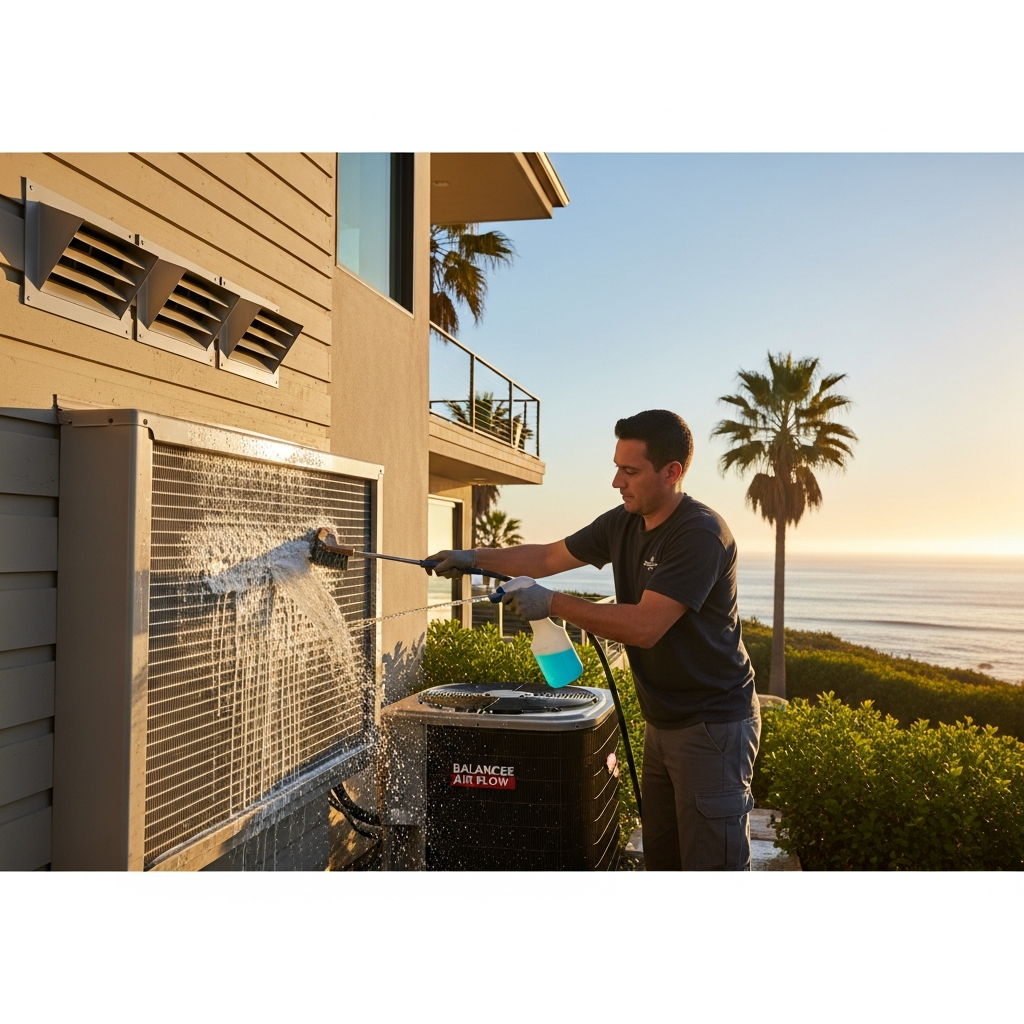
Experienced technicians will wash the condenser with the right detergents for coastal residue, carefully straighten bent fins, and test for corrosion starting at fasteners and mounting rails. Inside, coil inspections are paired with drain pan checks and condensate line clearing—a particularly important step in Malibu where humidity swings can foster algae and scale. When the water that your system pulls from the air can flow freely away, you avoid overflow risks and keep latent cooling (moisture removal) efficient.
Refrigerant Charge and the Malibu Effect
Precise refrigerant levels are critical for energy efficiency. Too little charge, and your system struggles to absorb heat; too much, and pressures climb, forcing components to work harder than necessary. Malibu’s marine layer can mask symptoms: equipment might seem to perform acceptably on mild mornings and only reveal inefficiency when the afternoon warms up. Routine maintenance includes verifying superheat and subcooling—measurements that confirm the refrigerant circuit is balanced. When these values are dialed in, your AC achieves a sweet spot where it cools effectively without overspeeding or overheating, saving energy hour after hour.
It’s also worth noting that refrigerant issues have a subtle cascade effect. A system that runs longer because of an imbalanced charge often draws more moisture, saturates the evaporator coil, and increases blower energy. By restoring proper charge, you allow each part of the system to operate within its most efficient range.
Airflow, Ducts, and Sealing: Small Leaks, Big Losses
In Malibu, many homes stretch across split levels or open plans that spill toward ocean views. Those layouts are beautiful but sometimes tax ductwork. Leaks in attic ducts draw in dusty, hot air and then force the blower to work overtime, while poor insulation loads the air with heat before it reaches the register. Energy savings often begin with airflow testing: measuring static pressure, checking temperature rise and drop, and confirming that each run is delivering its share. Sealing and insulating ducts do not just improve comfort in far rooms; they shorten run times everywhere. You can often feel the difference in how quickly the home settles into a calm, even cool rather than yo-yoing between too-warm and too-cold.
Return air is just as important. Homes along the coast tend to accumulate fine particulate from salt and sea breeze, which packs into filters and grilles. When these become restrictive, pressures climb, motors strain, and the energy efficiency you expect vanishes. Maintenance that addresses returns—cleaning grilles, checking for obstructions, and selecting the right filter—pays out in quieter operation and lower energy use.
Thermostats, Zoning, and Everyday Habits
Energy savings shine brightest when controls are well matched to the home. A properly calibrated thermostat is simple but powerful. Zoning, when appropriate, allows the system to target the areas where you live most and ease off elsewhere. Smart thermostats, when set thoughtfully for Malibu’s climate, can learn your home’s thermal personality, anticipate morning marine layers, and precondition spaces before the afternoon sun climbs. That intelligence can trim meaningful run time during peak warmth and ease the load on your equipment.
Your daily routines matter too. Shading west-facing glass in late afternoon, using ceiling fans to mix air without lowering the thermostat drastically, and delaying oven use during peak heat all allow the AC to idle more often. Maintenance supports these habits by ensuring the equipment responds efficiently to every small change you make in the home.
Indoor Air Quality: Breathing Easy While Using Less Energy
Malibu residents are increasingly mindful of indoor air quality, especially after wildfire seasons when smoke can sweep toward the coast. Clean filters and tight ducts aren’t just about health; they reduce the energy required to maintain comfort. High-efficiency filters must be chosen carefully so they capture fine particles without choking airflow. During maintenance, a technician can measure the pressure drop across the filter and recommend an option that balances cleanliness and energy use. When filtration is optimized, your blower doesn’t have to fight to move air, and the system maintains healthy circulation at lower speeds.
Dehumidification is another quiet contributor to comfort along the coast. Even modest reductions in indoor humidity can make your home feel cooler at a slightly higher thermostat setting, which saves energy. Ensuring that the evaporator coil is clean, that blower speeds are set appropriately, and that the condensate line is clear all support effective moisture control without extra energy draw.
Mid-Season Tune-ups for Peak Performance
Because Malibu weather never truly stops shifting, it’s wise to schedule a mid-season check, especially after a foggy stretch or following high-wind days that dump grit into outdoor units. That visit is a chance to re-clean coils, recheck charge, confirm electrical connections, and fine-tune blower settings. If you already have a schedule for HVAC maintenance, those brief appointments keep systems from sliding into inefficiency halfway through a long summer.
Electrical health matters more than many people realize. Loose lugs, pitted contactors, and aging capacitors do not just threaten reliability; they raise energy use by forcing motors to start harder and run hotter. Careful testing during maintenance catches those early and keeps your system operating within its most efficient window.
When Repair Meets Strategy
Not every older system requires immediate replacement to deliver meaningful energy savings. In Malibu, many units are sized generously to handle the hottest days, which can make them cycle more quickly during mild periods. A technician with local experience can adjust blower speeds, verify proper thermostatic expansion valve operation, and balance airflow room to room so that even an older system works smarter. These strategic adjustments often yield a calmer, more even comfort that feels like an upgrade without a major overhaul.
Of course, there comes a point where a modern variable-speed system with inverter technology can lock in larger energy savings by matching output precisely to demand. If your compressor and major components are still sound, targeted maintenance and system balancing can bridge the gap, giving you time to plan your next step without sacrificing efficiency today.
Protecting Outdoor Equipment From the Coast
Outdoor units in Malibu benefit from a little extra care. Keeping vegetation trimmed back, rinsing salt mist periodically with fresh water, and ensuring that the unit sits level above potential runoff all help maintain efficiency. Maintenance visits should include a visual survey of the area around the condenser: fencing that traps heat, decorative screens that restrict airflow, or planters that crowd the coil can all force longer run times. Clearing those obstacles is an instant energy saver.
It also pays to inspect anchoring hardware and the pad beneath the unit. Settling ground or shifting decks can tilt a condenser, affecting oil return and the way refrigerant migrates through the system. A level, well-ventilated, and cleanly maintained outdoor location is a small investment with a big efficiency return.
Comfort You Can Feel, Savings You Can Keep
The most convincing proof of energy savings is the way your home feels. In a well-maintained Malibu system, rooms stop battling for comfort. The kitchen that overheated during sunset calms down faster, the primary suite holds a constant temperature through the night, and the system glides through daily weather changes without drama. That steadiness is efficiency at work—your AC is using the least amount of energy required to meet the moment.
Consistency also builds resilience. When the hottest week of the year arrives, a maintained system is ready. It starts reliably, runs within designed parameters, and shuts down gracefully. You avoid the stress that comes from every cycle being a little harder than the last.
Frequently Asked Questions
How often should Malibu homeowners schedule AC maintenance?
At least once before peak summer, with a quick mid-season check if your home is near the water or you’ve had significant wind and dust. Coastal exposure accelerates corrosion and buildup, so a spring tune-up with a late-summer refresh is a smart pattern for consistent efficiency.
What maintenance task saves the most energy?
Coil cleaning—inside and out—delivers outsized savings because it restores efficient heat transfer. When paired with proper refrigerant charge and clear filters, you achieve shorter, smoother cycles that use less electricity.
Do smart thermostats make a noticeable difference by the beach?
They can, particularly when programmed to anticipate Malibu’s daily swing. Pre-cooling before late-day sun and relaxing setpoints when the marine layer returns can trim run time substantially. The key is pairing smart controls with a well-maintained system.
Are high-efficiency filters worth it for energy savings?
They’re worth it for air quality, but energy savings depend on selecting a filter that balances capture efficiency with low resistance. Maintenance technicians can measure pressure drop across the filter to choose an option that keeps both air clean and energy use low.
How does salt air really affect energy use?
Salt accelerates corrosion and binds with dust to create a film on condenser fins. That film slows heat rejection, forcing the compressor to run longer. Regular rinsing and professional cleaning prevent this drag on efficiency.
Is duct sealing a big project in older Malibu homes?
Not necessarily. Targeted sealing of accessible runs, boots, and plenums often cuts leakage significantly. Combined with insulation improvements, it can transform how evenly and efficiently cool air reaches your rooms.
Ready for Reliable, Energy-Saving Comfort?
If you’re ready to make your Malibu home quieter, cooler, and more efficient, schedule professional care that respects the coast’s quirks and your home’s character. A thoughtful plan for air conditioning maintenance will keep your system clean, calibrated, and ready for every shift in the weather. Reach out today to align your equipment with the rhythm of Malibu living and enjoy dependable comfort with less energy, all summer long.