
Ask any Malibu homeowner with a deck within earshot of the waves: salt air is generous with beauty and hard on equipment. The same fine mist that leaves a soft film on windows can work its way into outdoor components, accelerating wear and quietly eroding performance. Understanding how salt air affects air conditioning is the first step to fixing issues early and preventing new ones from appearing in the heat of summer.
Along this stretch of coast, winds shift with the clock. Mornings bring a damp onshore push, afternoons turn bright and breezy, and evenings calm down to a gentle rustle—until a Santa Ana reverses the flow and dries out the air. Through those swings, salt particles drift and settle. Left alone, they draw moisture, create tiny electrolytic cells on metals, and speed corrosion, especially on coils and fasteners. The result can be a system that looks fine from a distance but struggles to move heat efficiently.
Common Signs of Salt-Related Trouble
Early signs are subtle. Cooling feels weaker, indoor temperatures take longer to settle, and rooms that used to be easy to condition become stubborn in the afternoon. You may notice increased cycling as the system tries to catch up, or a faint change in sound as fans work harder. Outdoors, coils may show discoloration, fins bend or flake, and hardware takes on a rough patina. The longer these signals persist, the more performance slips.
Root Causes You Can See and Fix
Coils are the primary battleground. When salt residue coats the fins, heat exchange suffers. Over time, corrosion can thin fin material and create gaps in thermal contact. Fasteners and brackets rust, weakening mounts and creating vibration that translates into noise. Even condensate management indoors can suffer if drain lines pick up debris or biofilm, leading to clogs and moisture where you least want it.
Smart Placement and Shielding
Location matters. Outdoor units tucked into wind eddies or too close to breaking surf take more abuse. Moving equipment a few feet, elevating it above splash zones, or adding a non-reflective wind break that preserves airflow can dramatically reduce exposure. Thoughtful clearances keep sea grasses and coastal plantings from restricting intake, and strategic orientation reduces direct wind-driven salt spray.
Cleaning and Protective Measures
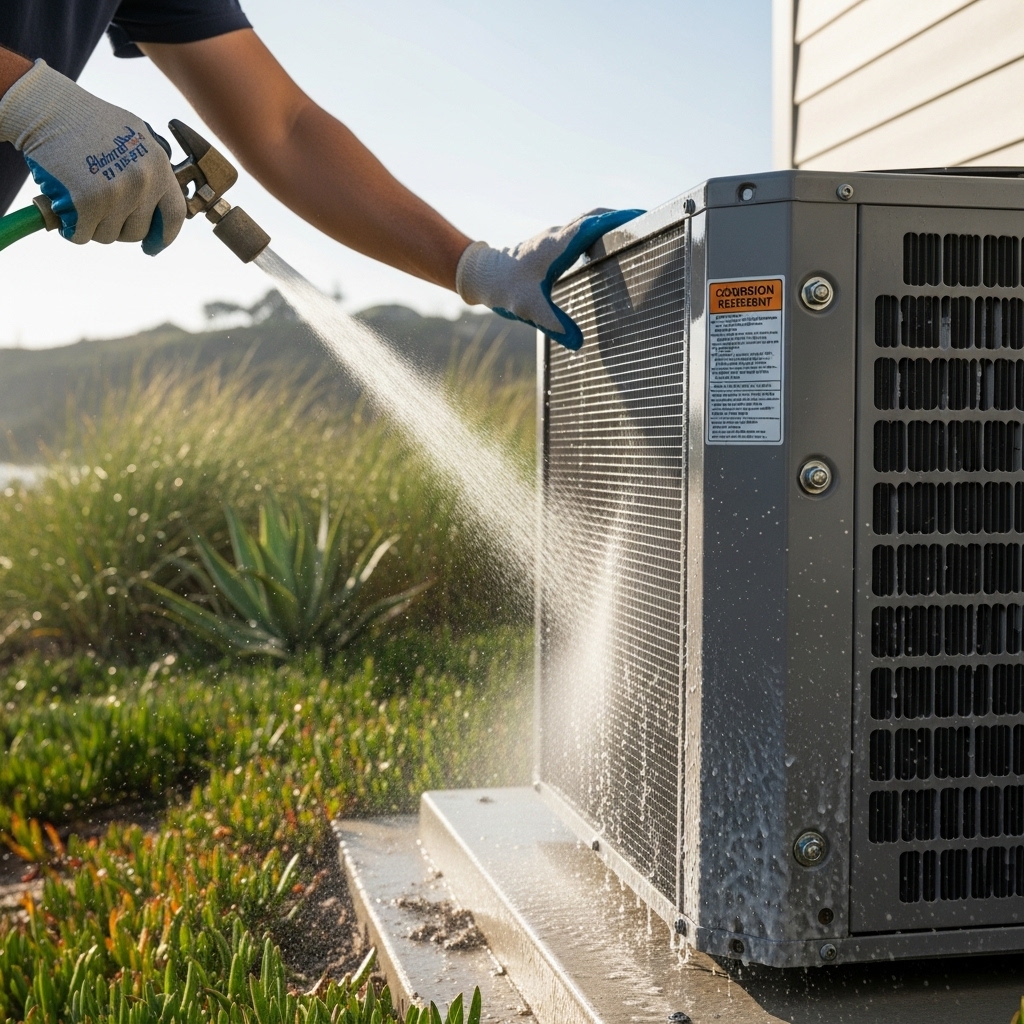
Fresh-water rinsing of outdoor coils is simple and powerful. A gentle rinse—never a harsh jet—removes salt deposits before they harden. Protective coatings on coils and corrosion-resistant fasteners add another layer of defense. Indoors, a clean drain pan and clear lines prevent moisture issues. Filters deserve frequent attention in beach homes; keeping airflow strong lightens the load on everything else.
When Performance Drops, Diagnose Methodically
Start with basics: clean filters, confirm airflow, and check for blocked returns. Inspect outdoor coils and fins for residue and damage, then assess mounting and vibration. If cooling still falls short, professional testing can verify refrigerant charge, measure temperature splits, and identify hidden restrictions. Fixing small issues quickly prevents larger ones, particularly in late summer when demand peaks.
Humidity Control as an Equal Partner
Salt-related problems often arrive with humidity complaints. Tackling moisture with targeted dehumidification makes rooms feel cooler at higher setpoints, which reduces runtime and strain on outdoor components. Bedrooms, closets, and lower levels benefit immediately, and the whole system becomes more forgiving when foggy mornings roll in.
Quieting the System as You Repair
Corrosion and vibration travel together. As fasteners weaken, sound increases. When you’re addressing salt damage, it’s the perfect time to tighten mounts, add isolation where needed, and evaluate duct runs for whistling or drumming. Returning the system to steady, low-noise operation is part of restoring comfort, not just a bonus.
Mid-Season Interventions
It’s common to discover issues in July or August when great rooms feel stubbornly warm by late afternoon. Mid-season service can still make a major difference. Clean coils, fresh filters, cleared drains, and small refrigerant corrections can restore performance quickly. Pair that with a control tune—pre-cooling ahead of peak sun and trimming humidity in bedrooms—and the house regains its balance. If you need to plan a larger equipment change, these steps buy time and comfort while you do it right.
In the longer view, building in resilience pays dividends. Durable finishes, smart placement, and service access are as much a part of good design as the equipment itself. With a plan tailored to Malibu’s microclimates, from Point Dume breezes to the still pockets along the Colony, air conditioning becomes reliably invisible again—something you feel but don’t hear or think about.
Seasonal Routines That Work on the Coast
A light rinse of outdoor coils at the start and end of the summer season, filter checks every few weeks during high use, and a thorough spring inspection create a rhythm that stays ahead of problems. Walk the property after big wind events to clear debris from equipment areas, and trim plantings that encroach on airflow. These small habits keep performance high and surprises rare.
When to Repair and When to Rethink
If corrosion has significantly compromised coils or mounting hardware, or if performance remains anemic after cleaning and tuning, it may be time to consider a more comprehensive update. Newer designs handle humidity better, run quieter, and integrate protective measures from the start. The cost of chasing incremental fixes on a system that is fundamentally tired can exceed the benefit, especially in the coastal belt.
Frequently Asked Questions
Why does salt air cause problems so quickly?
Salt particles attract moisture and create electrolytic conditions that accelerate corrosion on metals, especially thin coil fins and unprotected fasteners. Constant exposure, even in light amounts, adds up faster than most inland environments.
How often should I rinse outdoor coils near the ocean?
During heavy use or after windy, salty days, a gentle fresh-water rinse can help. At minimum, aim for seasonal rinses and add quick touch-ups after notable salt events. Always avoid high-pressure streams that can bend fins.
Can better filtration help with salt air issues?
Yes. While filters don’t stop airborne salt outside, keeping indoor airflow clean reduces strain on the system and helps maintain coil performance. It also supports better air quality when windows are closed during smoke or pollen events.
Is equipment placement really that important?
Very. Siting away from direct salt spray, elevating above splash zones, and avoiding corners that trap wind-driven residue all reduce exposure. Good placement extends life and preserves quiet operation.
What’s the quickest way to restore performance mid-summer?
Clean or replace filters, gently rinse outdoor coils, clear condensate lines, and have a professional verify charge and airflow. Small corrections often deliver a big lift in comfort during peak months.
If your system has started to struggle or you want a plan that stays ahead of salt air, reach out to a local specialist who knows the coastline from Big Rock to County Line. With the right approach to air conditioning, you can reclaim quiet, dependable comfort and protect your home from the elements.