
In Malibu, the ocean writes the first draft of your home’s maintenance plan. Salt air, morning fog, and sunny afternoons work together to test every surface and system, and your cooling equipment sits squarely in their path. Proactive air conditioning maintenance isn’t just a checklist item here; it’s a strategy for preserving comfort, protecting finishes, and extending the life of equipment in a uniquely demanding environment. After years of caring for systems from La Costa to Trancas, I’ve learned that a little foresight at the coast pays back in quieter operation, steadier humidity control, and fewer surprises during peak season.
Maintenance in Malibu differs from inland routines because the stressors are different. Sea salt accelerates corrosion on outdoor units. June gloom drives indoor moisture high even when temperatures feel mild. Santa Ana winds can deposit fine particulates that overload filters in days. And the architecture—big sliders, screened porches, and rooftop decks—invites the outdoors in. A maintenance plan that anticipates these realities doesn’t just prevent breakdowns; it keeps your home feeling consistently easy.
Seasonal Cadence That Matches the Coast
Think of maintenance as a rhythm. Spring prepares equipment for fog-heavy mornings and early summer gatherings. Mid-summer checks keep airflow and drainage in top form as humidity and occupancy peak. Fall visits reset systems for shoulder-season heating if you run a heat pump. This cadence means you catch small issues—like a drifting refrigerant charge or a partially blocked condensate line—before they evolve into bigger problems that reveal themselves on the first truly warm weekend.
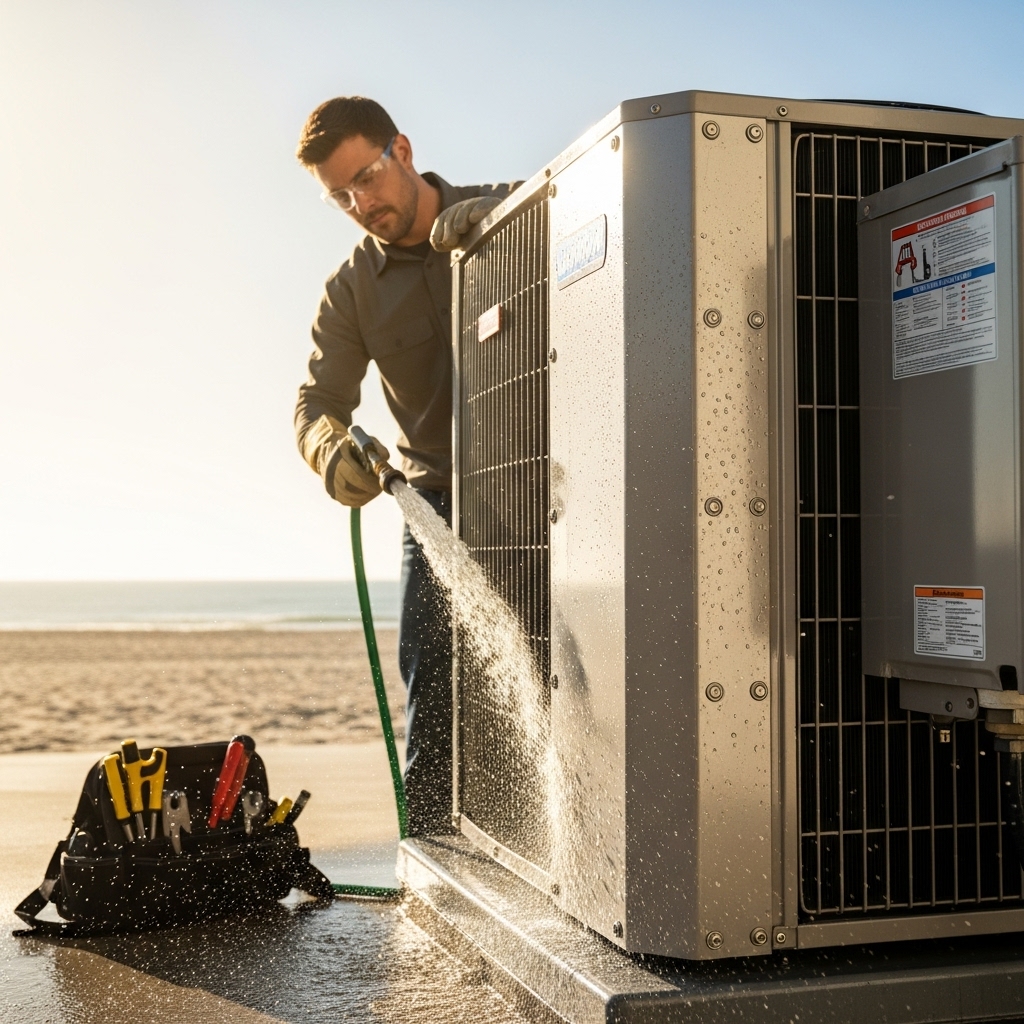
During spring service, we pay special attention to coastal exposure. Outdoor coils receive a fresh-water rinse to clear salt and dust, fan blades are inspected for buildup, and cabinet coatings are checked for nicks where corrosion can take hold. Indoors, filters are replaced or cleaned, return paths are verified, and thermostats are calibrated to understand both temperature and humidity targets as the season shifts.
Protecting Against Salt Air
Salt is subtle and relentless. It settles, it wicks, and with time it finds every unprotected edge. Choosing coastal-rated equipment is the best foundation, but maintenance keeps that advantage intact. Gentle rinses after windy weeks, especially for oceanfront homes without windbreaks, stop salt from crystallizing on coil fins. Stainless hardware and sealed electrical connections defend against incremental decay, and periodic inspections catch early rust so it can be treated before it spreads.
Placement matters, even for existing installations. If your condenser sits directly in the path of prevailing winds off the water, consider adding thoughtful, code-compliant screening that diffuses wind without obstructing airflow. The simple act of reducing wind-driven salt impact can add years to an outdoor unit’s useful life.
Humidity Management as Maintenance
Good maintenance isn’t only wrenches and gauges; it’s also humidity strategy. In Malibu, we aim for longer, gentler cooling cycles that wring out moisture while keeping temperatures even. That means validating fan speeds, ensuring thermostats can prioritize dehumidification when needed, and confirming condensate drains are clear when June gloom turns into steady dripping. If you use a dedicated dehumidifier for lower levels or beach-adjacent suites, its filters and drains deserve equal attention—nothing undermines coastal comfort faster than a damp room.
Pay attention to bedrooms and closets. These spaces can become microclimates if doors stay closed. A maintenance visit should verify that supply and return balance supports these rooms, and that airflow remains consistent even at low fan speeds. Small tweaks—register adjustments, minor damper changes—can reduce morning mustiness substantially.
Filtration for Smoke and Sea
Filters are the lungs of your system, and Malibu asks them to do double duty. When wildfire smoke drifts in, filters capture fine particulates; when the marine layer lingers, they hold salt-laden aerosols and coastal dust. Proactive maintenance means stepping up filter checks during these periods. It’s not unusual to change filters far more often than inland homeowners would, especially in households with kids, pets, or allergy sensitivities.
Return integrity is another overlooked factor. If return ducts leak in dusty attics, the system bypasses your carefully chosen filter, dragging contaminants inside and coating coils upstream. Sealing return seams and ensuring filter doors latch tightly are quiet upgrades that pay off every day.
Airflow, Noise, and the Beauty of Quiet
A well-maintained system disappears into the background. If you hear whistling at a return or feel a draft across a sofa, it’s often a sign of airflow imbalance rather than a failing component. During maintenance, measuring static pressure, confirming duct connections, and adjusting fan profiles restores the gentle, even distribution that Malibu homes deserve. This is particularly important in bedrooms, where low nighttime sound levels are part of the experience of living by the ocean.
Equipment selection influences noise, but maintenance sustains the promise. Clean indoor coils and blower wheels maintain designed airflow at lower speeds, which translates into quieter operation. Outdoor, tightened fasteners and level pads prevent micro-vibrations that can transmit into decks or walls.
Controls That Learn the Malibu Day
Modern controls are central to proactive care. We set schedules that mirror the coast’s pattern: a light pre-cool before afternoon sun, steadiness through the peak, and an easy set-back as onshore breezes return. Remote sensors in sun-exposed rooms refine decision-making, and humidity targets keep interiors crisp without driving temperatures too low.
For homes that host frequent guests, clear presets make life simpler. A “Guest Suite” mode that emphasizes quiet, dry air, or an “Open House” mode that anticipates frequent door cycles, prevents systems from chasing their tails during busy weekends. Maintenance includes testing these presets and ensuring firmware and app integrations are up to date.
Drainage and Water Safety
Water and fine finishes don’t mix. Malibu homes often place air handlers in attics or closets above living spaces, so condensate management is non-negotiable. Maintenance verifies primary drain slope, trap integrity, and clear clean-outs, and it confirms that float switches shut down equipment before overflow becomes a leak. Secondary drain pans under elevated equipment are a simple form of insurance that pays for itself in peace of mind.
In particularly humid weeks, draining volume can surprise homeowners. A quick visual once-over of drain outlets and a test of float switches during visits ensure readiness for peak moisture days, which often coincide with the times your home is most occupied.
Documentation and Trend Watching
Proactive maintenance produces data: filter change intervals, coil condition notes, refrigerant readings, and unusual noise observations. Over time, those notes reveal trends—like a slow increase in static pressure that hints at a duct developing an obstruction, or a coil that’s losing capacity faster than expected in salt air. Acting on these trends prevents comfort drift and avoids reactive, last-minute decisions.
Owners appreciate this record when planning upgrades. Knowing that upstairs rooms consistently run warmer by three degrees in August, or that the beach-level suite needs extra dehumidification during June gloom, gives shape to future improvements that are targeted rather than speculative.
Midseason Touch Points
While twice-yearly visits are a strong baseline, Malibu sometimes rewards midseason touch points. After a smoky week or a big family gathering, a quick filter check and coil rinse can restore performance. Likewise, if you’ve reprogrammed shades or installed new doors, revisiting diffuser throws or sensor weighting can keep the system and the architecture working in harmony.
These touch points don’t have to be intrusive. Many are 20-minute visits coordinated around housekeeping or landscaping schedules. They are the small investments that keep summer days steady and evenings easy.
The Comfort Dividend
When maintenance is proactive, comfort becomes predictable. Afternoons in glassy rooms feel composed rather than hot-and-then-cold. Bedrooms remain dry and restful through June gloom. Noise fades into the hush you expect when waves break in the distance. Your system runs at lower speeds more often, which is where it is quietest and most efficient. And because components aren’t pushed to extremes, they tend to last longer even in the salt air of Malibu.
This predictability shows up in human ways. You open doors to the deck when the breeze is perfect without worrying that the house will feel damp for hours afterward. You invite friends for a long weekend knowing the guest suite will stay comfortable regardless of the marine layer’s mood. Your home becomes easier to live in—less about managing the thermostat and more about enjoying the view.
Frequently Asked Questions
How often should I schedule maintenance near the ocean?
At minimum, plan for spring and fall visits, with quick midseason checks during heavy use or after smoke events. Oceanfront homes benefit from periodic freshwater rinses of outdoor units in between scheduled service.
Do I need special filters in Malibu?
Use high-quality filters your blower can handle—often MERV 11–13—and check them more frequently during June gloom or smoky periods. The right filter supports both air quality and gentle humidity control.
What’s the best way to prevent condensate leaks?
Ensure proper trap design, accessible clean-outs, and functional float switches. A secondary drain pan under elevated air handlers adds a vital layer of protection for ceilings and finishes.
Will salt air ruin my equipment anyway?
Salt is tough, but not unbeatable. Coastal-rated equipment, strategic placement, protective coatings, and routine rinsing dramatically slow corrosion. With consistent maintenance, outdoor units can enjoy a long, efficient service life even on the water.
How do controls factor into maintenance?
Controls translate maintenance into daily comfort by coordinating temperature, humidity, and airflow based on Malibu’s rhythm. Verified schedules, updated firmware, and well-placed sensors keep systems from chasing conditions and reduce wear.
Can I handle some of the maintenance myself?
Homeowners can check and replace filters, visually inspect outdoor units, and keep drains clear and visible. For coil cleaning, electrical checks, and control calibration, partner with a pro who understands Malibu’s coastal environment.
Ready to make comfort predictable?
If you’re ready to trade reactive fixes for quiet confidence, align your home with a coastal-aware plan. Explore modern air conditioning maintenance and system options that keep Malibu homes steady from foggy mornings to sunlit afternoons.