
When neighbors in Malibu start talking about new cooling systems, the conversation often circles back to what drives installation cost and how to make smart, long-term decisions for our unique coastal lifestyle. Living in a climate shaped by the Pacific, canyon breezes, and the daily rhythm of the marine layer means we plan differently than inland communities. The goal is not only relief on the hottest afternoons, but also quiet, efficient performance that stands up to salt air, hillside access challenges, and the occasional heatwave. Right from the start, it helps to ground the discussion in the local realities, and in what a properly sized, well-installed system can mean for comfort. For many homeowners, the first step is simply understanding the options and the factors that influence installation, especially for air conditioning systems that must perform reliably year after year.
Before you evaluate specific equipment, it’s helpful to think about how a Malibu home breathes. Oceanfront properties face steady salt exposure, which can increase corrosion on outdoor components, while canyon homes may see larger day-to-night temperature swings. Varying microclimates across Point Dume, Big Rock, and Malibu Park mean that your neighbor’s experience won’t necessarily translate to your home. The installation plan—and therefore the overall project complexity—will take these micro-conditions into account, which is one reason professional site evaluation matters so much here.
Local climate, comfort goals, and code requirements
Comfort in Malibu is about more than dropping the indoor temperature. Morning humidity can surge as the marine layer rolls in, and by midafternoon the sun cuts through, heating up west-facing rooms. A well-matched system balances sensible cooling with modest dehumidification, keeps noise to a minimum, and integrates well with windows and doors that are often open when breezes are good. California’s evolving energy standards also influence system choices and the details of installation. Title 24 requirements and modern efficiency ratings push homeowners toward systems that do more with less energy, but they also require attention to duct leakage, insulation, and airflow verification. These details add rigor to the project planning and affect timelines and scope.
The home’s construction age matters too. Many Malibu residences were built decades ago and updated piecemeal, creating situations where ducts are undersized, returns are inadequate, or the electrical panel is close to capacity. In hillside or stilted construction, the path for new ducts can be surprising, and mechanical locations are influenced by structural considerations and ocean views. Coastal wind exposure drives placement of outdoor equipment, since wind and salt spray can influence both efficiency and longevity. A careful assessment weaves all of these threads together so that what is installed matches reality on the ground.
What really drives installation complexity
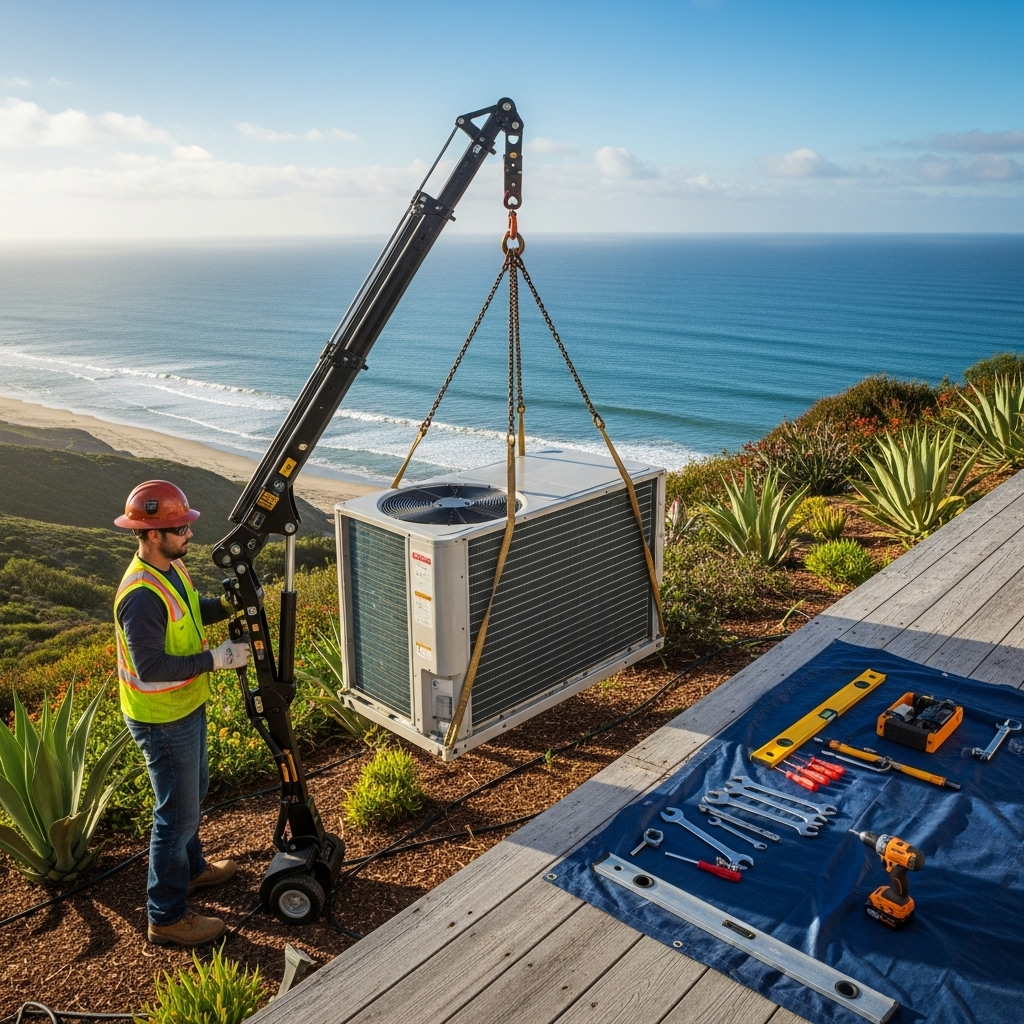
When people ask what determines installation effort, I start with access. Can crews stage equipment easily? Is crane service required to lift a condenser over a home or to a terraced yard? Is there adequate space for service clearances without intruding on outdoor living areas? Then I look at distribution. If the home has existing ductwork, what condition is it in? Are there sections running through hot attics that need sealing and insulation upgrades? Do we need new supply runs to back bedrooms that never quite get cool in the afternoon? Each of these questions influences labor, materials, and schedule in ways that are specific to our local housing stock.
Ventilation and infiltration are also part of the Malibu story. Ocean breezes are wonderful, but they also can push warm, moist air into rooms whenever doors and windows are open. Older homes with original fenestration might be leakier than they appear. That affects sensible and latent loads, which in turn inform equipment selection and duct design. The best projects treat the structure as a system and look beyond the shiny outdoor unit to the quieter fundamentals of air movement and envelope behavior.
Choosing equipment that fits Malibu living
Because marine air can be corrosive, homeowners often choose outdoor units with coastal-rated coils and cabinets or additional protective coatings. Inverter-driven compressors are popular for their ability to modulate capacity smoothly, which enhances comfort on those mild days when a fixed-speed unit would short-cycle. Heat pump systems have become a strong option, especially in milder shoulder seasons, and they integrate well with smart thermostats that learn how your home responds to sun and fog. Ductless mini-splits can make sense for room-by-room comfort in homes with open-beam ceilings or limited attic access, while traditional ducted systems still shine in whole-home applications when ducts are designed and balanced with care.
Noise is an underrated part of the decision process here. Malibu evenings are quiet, and you don’t want outdoor equipment distracting from conversations on the deck. Locating condensers away from sleeping areas, selecting low-sound fan profiles, and using vibration isolation pads are small choices that elevate the overall experience. The right technician will help you visualize this before anything is installed, so you’re not surprised by where the hum ends up.
Permitting, inspections, and timelines
Permits and inspections are not just paperwork. They are checkpoints that ensure the installed system meets ventilation and energy standards that align with California’s approach to comfort and efficiency. In our coastal zone, that often means duct testing, refrigerant charge verification, and documentation of airflow. Timelines can vary with season, especially if there’s a heat wave and everyone is upgrading at once, or if high winds or red-flag warnings delay deliveries. The best way to keep things moving is to line up your decisions early—duct plan, equipment spec, thermostat choice—and stay flexible about scheduling to accommodate coastal weather surprises.
There’s also the question of electrical readiness, which sometimes becomes a project within the project. Homes with limited panel capacity or older wiring may require evaluation to ensure a new system can operate safely. This can affect sequencing, because it may be more efficient to coordinate electrical updates in tandem with equipment placement rather than as an afterthought. Your contractor should plan these steps with you, clarifying how they interface with mechanical work and inspections.
Ductwork and distribution: the quiet backbone
While shiny equipment receives the attention, ducts determine whether rooms feel balanced and consistent. Malibu homes with high ceilings, open staircases, and long hallways present airflow challenges that are best solved by thoughtful supply and return placement. In older houses with partial remodels, adding new returns or resizing supply trunks can bring a startling improvement in comfort. Sealing duct seams, insulating runs in attics, and calibrating dampers are all part of the installation scope that sets lasting performance. When people ask why two homes with similar square footage have very different installation efforts, duct condition and layout are often the answer.
Another local nuance is attic temperature. Our coastal influence moderates extremes, but attics still heat up under afternoon sun, and that warmth can bleed into ducts if they’re undersized, poorly insulated, or routed inefficiently. A good plan keeps duct runs short where possible, avoids tight turns that strangle airflow, and ensures returns are sized to match the quiet power of modern variable-speed blowers. You feel the results not only in temperature, but in air quality and noise profile.
Longevity, corrosion, and maintenance planning
Longevity deserves a deliberate plan in a salt-air environment. Protective coatings on coils, stainless hardware, and strategic placement away from direct ocean spray reduce wear. Landscaping to avoid debris accumulation around condensers and scheduling a gentle rinse of fins help maintain efficiency. Many homeowners also commit to annual professional checkups, particularly before the warmest months. Decisions you make at installation—clearances, service access, and component selection—simplify future maintenance, which in turn underpins long-term value.
Because we experience fewer extreme temperature swings than inland valleys, systems here often spend more of their life modulating at low speeds. That’s great for comfort and energy use, but it also means airflow details and thermostat setup make a bigger difference. Proper static pressure, clean filters, and well-tuned fan profiles keep everything whisper-quiet while avoiding unnecessary strain on components. It’s part of the hidden calculus of installation planning that pays dividends every day.
Why local expertise matters
Local expertise adds context you can’t google. A technician who has wrestled ducts through a low-clearance attic in La Costa knows the constraints you might face. Someone who has set condensers on seaside decks understands how wind patterns bounce off railings and walls. These lived experiences shape the advice you receive, from choosing corrosion-resistant fasteners to deciding whether a ductless system makes sense in a room with floor-to-ceiling glass. When a home is also a refuge overlooking the water, the installation has to respect aesthetics as much as performance.
Ultimately, installation cost is a reflection of design. The price tag follows the plan, and the plan responds to the house. While it’s tempting to compare equipment by brand alone, Malibu projects reward those who zoom out and think like builders and stewards of a home. Structural access, utility readiness, comfort profiling, noise management, and a maintenance roadmap all blend into the final result. Centering the conversation on these elements clarifies where time and effort are best invested.
The middle mile: scoping, staging, and staying flexible
Between the initial site visit and the final walkthrough, there’s a practical middle mile. This is where crews coordinate deliveries, stage condensers without damaging landscaping, and protect floors and finishes during indoor work. It’s where ductboard is measured twice, registers are chosen to complement trim and paint, and wall penetrations are sealed cleanly for both sound and weather. Good contractors communicate clearly at this stage, with calendar updates and a phone call when fog or wind changes what’s feasible that day. Homeowners who understand this rhythm find the experience far less stressful, especially during peak summer when schedules are tight and patience is a virtue. If you’re evaluating proposals, listen for how teams talk about staging and protection; it tells you a lot about the installation you’ll get and the life you’ll lead with your air conditioning afterward.
Commissioning is the capstone in this middle stretch. It’s the quiet hour when technicians verify refrigerant charge, confirm airflow at key registers, and align thermostat settings with the modulation profile of the system. Many homeowners never see this part, but its fingerprints are on every comfortable afternoon that follows. A methodical commissioning ensures the equipment isn’t just running—it’s tuned for your home, your climate, and your personal comfort preferences.
Thinking long-term: energy, comfort, and resale
Malibu buyers notice details, and a thoughtfully installed cooling system signals care. Beyond comfort, it’s a marker of efficiency and home stewardship, especially when duct testing and energy documentation are available. Smart controls that integrate with shading strategies and ventilation further polish the experience, reducing peak loads on sunny days and protecting interior finishes from humidity. Over time, the value of a quiet, balanced system shows up in how effortlessly the home feels the way you want it to feel, summer after summer.
For many of us, home is part retreat and part gathering place. The right cooling system supports both. It handles the clatter of a family get-together with doors opening and closing without missing a beat, and it quietly hums along when the house is still and the ocean is the loudest sound you hear. That’s the benchmark in Malibu—not just a number on a thermostat, but a lived-in ease that lets the setting shine.
FAQ: Malibu air conditioning installation
How do Malibu’s microclimates affect installation planning? The variety in wind exposure, humidity swings, and solar gain across neighborhoods means a cookie-cutter approach rarely works. Site-specific load considerations, duct routing options, and outdoor unit placement all shift with topography and exposure. A careful assessment tailors the system to the home, which creates more stable comfort and lowers strain on equipment over time.
Do coastal conditions really influence equipment selection? Yes. Salt air accelerates corrosion, so coastal-rated coils, protective coatings, and stainless hardware are smart choices. Placement away from direct spray, thoughtful condensate routing, and routine rinsing protect performance. These decisions are small individually, but together they add years of reliable service and help maintain quiet operation.
What role does ductwork play in installation cost? Duct condition and layout often determine whether an installation is straightforward or intricate. Sealing, insulating, resizing, or adding returns can elevate comfort dramatically, but these tasks require planning and craftsmanship. In Malibu’s open-plan homes, airflow balance is crucial, and the time invested in ducts often distinguishes an okay install from an exceptional one.
Is a heat pump a good choice near the coast? In our temperate climate, modern heat pumps perform very well, providing efficient cooling and shoulder-season heating. They pair nicely with variable-speed indoor blowers and smart controls, which together deliver steady comfort with minimal noise. Protective measures for outdoor components are wise to ensure longevity in the salt air.
How should I think about system sizing? Avoid rules of thumb. A proper calculation considers insulation, window orientation, shading, infiltration, and occupancy patterns. Oversizing can lead to short cycling and uneven humidity control, while undersizing strains equipment on the hottest afternoons. A room-by-room assessment yields a system that matches Malibu’s mild-to-warm rhythm without sacrificing comfort.
What can I do during installation to improve long-term reliability? Focus on access and protection. Ensure clearances for service, select quality filters, and ask for attention to condensate management. Discuss corrosion protection and verify that commissioning includes airflow and refrigerant verification. These steps lower day-to-day stress on components and simplify maintenance over the years.
Will installation disrupt my home? Expect some short-term disruption, especially if ducts are being replaced or routed through tight spaces. Good teams protect floors and furnishings, manage dust carefully, and coordinate work to minimize intrusion. Clear communication about daily goals and walk paths keeps the process smooth, and most projects are sequenced to keep living areas as functional as possible.
When is the best time to schedule installation? Spring and early fall are often ideal, with milder weather and more schedule flexibility. That said, Malibu’s climate allows for year-round projects, and being flexible helps when coastal winds or fog impact deliveries or crane access. The key is planning ahead so that equipment and permitting are squared away when crews are ready to work.
Get started with a plan that fits your Malibu home
If you’re weighing an installation for your Malibu home, start with a walk-through that focuses on comfort goals, duct condition, outdoor placement, and electrical readiness. Let a local expert translate the particularities of your property—sun, wind, views—into a system design that feels effortless once it’s running. When you’re ready to take the next step, reach out for a site visit and a tailored proposal that respects the home you’ve built by the water. For guidance on systems that perform beautifully in our climate, explore air conditioning options with a trusted team, and let the coastal air be the backdrop rather than a challenge.