
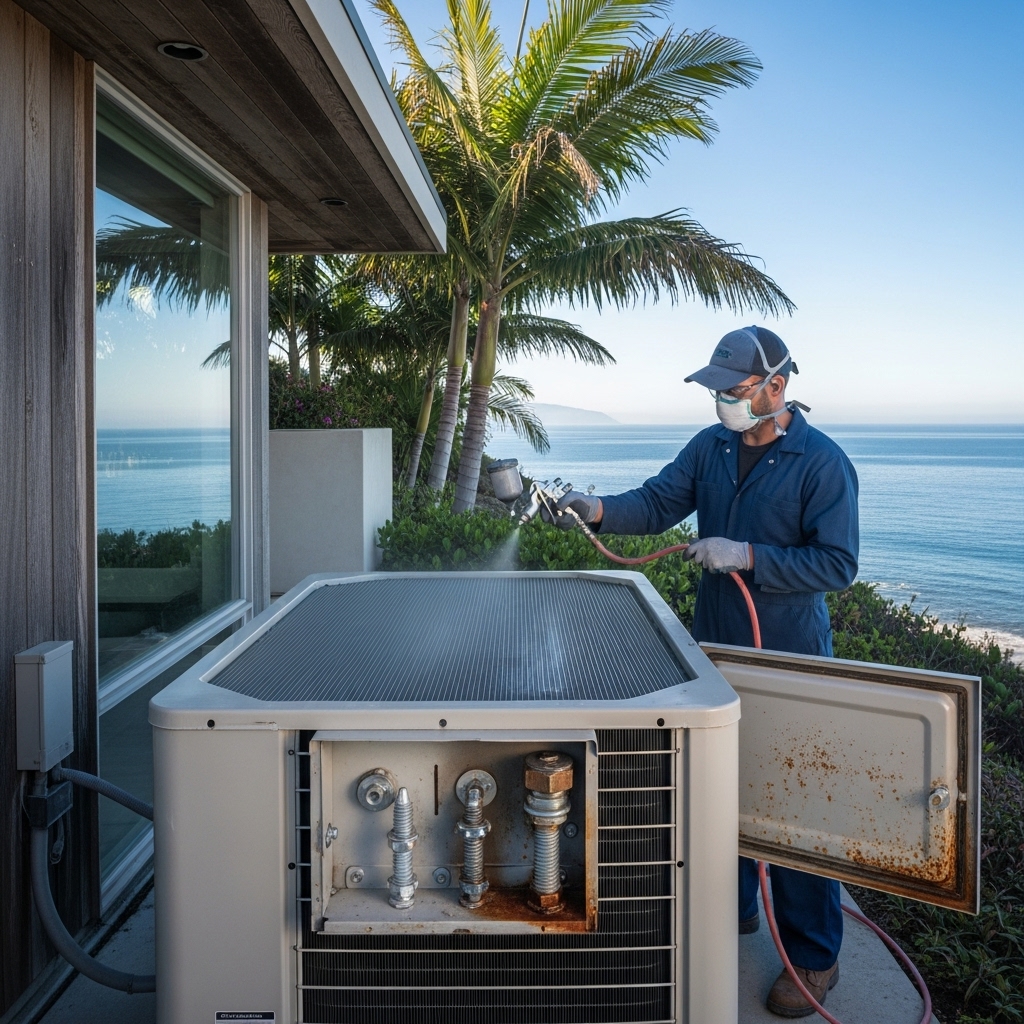
The Science of Salt Air and Your AC
Malibu’s beauty is inseparable from the ocean, and so is the quiet chemistry that challenges air conditioning systems here. Salt-laden breezes roll up the coast and into our canyons, carrying chloride ions that settle on metal surfaces. Given a bit of moisture—from the marine layer at dusk, from foggy mornings, or from the fine condensation that forms on cool equipment—those ions create a thin electrolyte film that accelerates corrosion. In practical terms, it means that unprotected aluminum fins can turn powdery, copper can pit, and steel fasteners can stain and seize long before the same parts would age inland. The antidote is intention: a plan for cleaning, protecting, and monitoring that treats corrosion as a predictable force you can manage, not a mystery you must endure. That plan starts with routine air maintenance designed for our coastline.
Coastal corrosion is not dramatic until it is. For months, the coil might look fine from a few feet away while microscopic changes unfold on its surface. Then, seemingly quickly, performance drops, the condenser grows noisy, and inspection reveals fins that crumble at a touch. Understanding the steady progression helps you see why small, frequent actions work far better than occasional heroic efforts.
Where Corrosion Strikes First
On outdoor units, the leading edges of the coil and the cabinet seams catch the brunt of salt exposure. Wind hits these surfaces, and turbulence lays a mist across the fins that becomes sticky with dust and organic particles. If the cabinet paint is compromised at a seam or fastener, rust begins there, eventually migrating under the finish. Inside the coil, where copper and aluminum meet, galvanic differences can encourage localized corrosion, particularly if the protective oxide layers are frequently wetted and dried by coastal humidity cycles.
Fans, motor housings, and electrical components also suffer. Thin layers of corrosion on fan blades alter balance and can increase vibration, which shortens bearing life. Electrical terminals exposed to salt air can grow resistive films that heat under load, undermining the very efficiency we rely on along the coast. Left unattended, these small degradations accumulate into a condenser that runs hotter and louder and a system that burns more electricity to produce less comfort.
Cleaning as a Corrosion Strategy
Because corrosion feeds on the presence of salts and moisture, the first line of defense is keeping surfaces clean and dry whenever possible. Regular, gentle rinsing removes salts before they can catalyze oxidation. Think of it as washing off beach sand from your car: routine and light is better than rare and aggressive. Spraying from the inside out with low pressure lets fins shed residue without bending, and it avoids driving contaminants deeper into the coil.
Timing matters. Rinsing after periods of heavy marine layer or after a storm that whipped salt spray inland gives you the best return on effort. Allow the unit to dry thoroughly, ideally with afternoon sun and onshore breezes. If your property is particularly exposed—say, on a bluff with direct wind paths—a monthly rinse during high-exposure seasons is not overkill; it is sensible prevention.
Protective Coatings and Materials
Coil coatings have advanced significantly and are often the difference between a coil that surrenders in a handful of years and one that carries on comfortably along the coast. These thin films, applied by professionals, act like raincoats for the coil’s metal, slowing the exchange of ions and creating a barrier to chemical attack. When selecting coatings, compatibility matters: the film should adhere without overly insulating the coil, and it should be applied in a way that preserves fin edges and heat transfer characteristics. When done correctly, coatings add years of resilience without a notable performance penalty.
Beyond coils, hardware choices are important. Stainless fasteners, UV-stable cabinet finishes, and gaskets that resist salt hardening make outdoor units easier to service and less prone to leak paths. For homes closest to the surf, even small touches help—dielectric grease on electrical connections, corrosion-resistant fan guards, and drain holes kept clear so water never pools in the base of the cabinet.
Placement, Airflow, and Wind Screens
The best protection begins with where and how the condenser sits. Elevation on a sturdy pad above splash zones, good drainage around the base, and a clear path for airflow keep the cabinet drier and cooler. Thoughtfully designed wind screens—slatted, with ample spacing—can deflect direct salt blasts while preserving airflow. The goal is to tame the wind, not trap the heat. Dense hedges may look appealing but often hold moisture against the coil and drop leaves that clog the fan guard; they should be trimmed well back or replaced with open plantings.
Do not overlook microclimates around your home. A narrow side yard that funnels wind, a retaining wall that reflects salty mist, or a pergola that shades morning sun but blocks drying breezes can all influence corrosion risk. A quick study of how wind and moisture move across your property informs small changes with big effects, like shifting a screen or clearing a path that invites airflow.
Indoor Components Are Not Immune
While the outdoor unit takes the brunt, indoor parts feel coastal influence too. Evaporator coils can develop biofilms that hold moisture and encourage surface corrosion, particularly in homes that run the system gently for long periods. Condensate traps and pans, if not kept clean, create damp microclimates that invite oxidation on nearby metal. Electrical boards and terminals in air handlers also benefit from periodic inspection and light cleaning to remove dust and salts that ride in on return air.
Seal the building envelope to reduce the amount of salty, humid air that enters. Weatherstripping at ocean-facing sliders, well-sealed attic penetrations, and ducts with tight joints keep indoor components cleaner and drier. Every bit of moisture and salt you keep out is a bit of corrosion you prevent down the line.
Monitoring and Early Warnings
Corrosion announces itself quietly at first. Listen for a change in the condenser’s tone at startup or a faint rattle that suggests a fan blade has lost balance. Look for light surface chalking on aluminum fins or small rust blooms near fasteners and seams. Note if oil stains appear at coil U-bends, which can hint at a leak accelerated by corrosion. Catching these signs early allows for corrective action when it is still simple: cleaning, a protective touch-up, or a hardware swap before a part fails under load.
Routine professional inspections support this vigilance. A technician familiar with Malibu will measure static pressure to confirm airflow is friendly to coils, test electrical resistance at terminals, and evaluate corrosion patterns to predict where attention is needed next. They may also recommend a schedule for reapplying coatings, replacing vulnerable fasteners, or adjusting screens and landscaping to improve drying and reduce direct exposure.
Santa Ana Winds, Storms, and the Seasonal Dance
Our climate layers its challenges. Late summer and fall can bring Santa Ana winds that strip moisture but deliver dust and fine debris that lodge in coils and under fan blades. Winter storms reverse the pattern, drenching cabinets and blowing salt spray farther inland than usual. A successful corrosion-maintenance plan respects this seasonality. In late summer, emphasize cleaning for particulates and balancing airflow; in winter, emphasize rinsing, drying, and touch-up protection at seams and fasteners. That rhythm keeps the equipment in a sweet spot between dust management and salt control.
After any major wind event or storm, a short walkaround is wise. Clear leaves, check for water pooling in the cabinet base, and peer through the coil to ensure you can see daylight between fins. If the condenser’s tone changes or if the fan guard shows signs of salt crust, schedule a cleaning before normal operation grinds that contamination deeper into the system.
When Replacement Makes Sense
Even the best maintenance does not freeze time. If your outdoor coil loses structural integrity—fins that turn to powder at a brush, widespread pitting on copper tubes, or repeated leaks at U-bends—replacement may be the smart path. Choose equipment with coastal-rated coils and robust finishes, and plan the installation with corrosion in mind: proper clearances, elevated pads, open wind screens, and electrical connections treated with protective compounds. The upfront thought pays off in fewer surprises over the next decade.
Sometimes the right move is not only new equipment but also a modest redesign of airflow. Additional return capacity, quieter fan profiles, and controls that extend post-cooling fan runs all help keep indoor coils drier and reduce the damp microclimates that spur corrosion. Think of replacement as a chance to reset the system’s relationship with our coast, eliminating the vulnerabilities you have observed over the years.
Frequently Asked Questions
Below are practical answers to common Malibu questions about corrosion and AC care.
How often should I rinse the condenser to manage salt?
During high-exposure months, a gentle rinse every month or two is a strong baseline, with extra attention after storms or thick fog. Low pressure from the inside out avoids fin damage while removing the salt film that accelerates corrosion.
Do protective coatings affect performance?
When correctly selected and applied, modern coatings add minimal thermal resistance and provide significant corrosion protection. The key is professional application that preserves fin edges and does not pool or clog air passages.
What signs suggest corrosion is becoming serious?
Powdery fins that shed at a touch, recurring refrigerant leaks at U-bends, rust migrating under cabinet paint, and persistent fan vibration are all red flags. At that stage, repairs become less effective, and replacement with coastal-rated equipment is often the smarter route.
Will planting hedges around the unit protect it?
Dense hedges can block direct salt blasts, but they also trap moisture and drop debris that clog the coil. An open, slatted wind screen or spaced plantings are better. Always preserve ample airflow and a clear drying path around the cabinet.
Should indoor components be treated for corrosion too?
Yes. While the outdoor unit is the primary target, indoor coils, pans, and electrical terminals benefit from cleanliness and dry operation. Keep condensate paths clear, seal the building envelope, and consider brief post-cooling fan runs to dry the coil.
How do Santa Ana winds affect corrosion maintenance?
Santa Anas deliver dust that loads coils and can unbalance fans. After these events, focus on cleaning particulates and verifying airflow. When winter returns with moisture and salt, switch your emphasis back to rinsing and protective touch-ups.
Set Your System Up to Resist the Coast
Corrosion is a given along our shoreline, but it does not have to dictate your comfort. A rhythm of cleaning, protection, and observation keeps equipment healthy and quiet year after year. If you want a reliable partner to help shape that rhythm, begin with expert air maintenance tailored to Malibu’s coastal realities, and let your home breathe easy by the sea.