
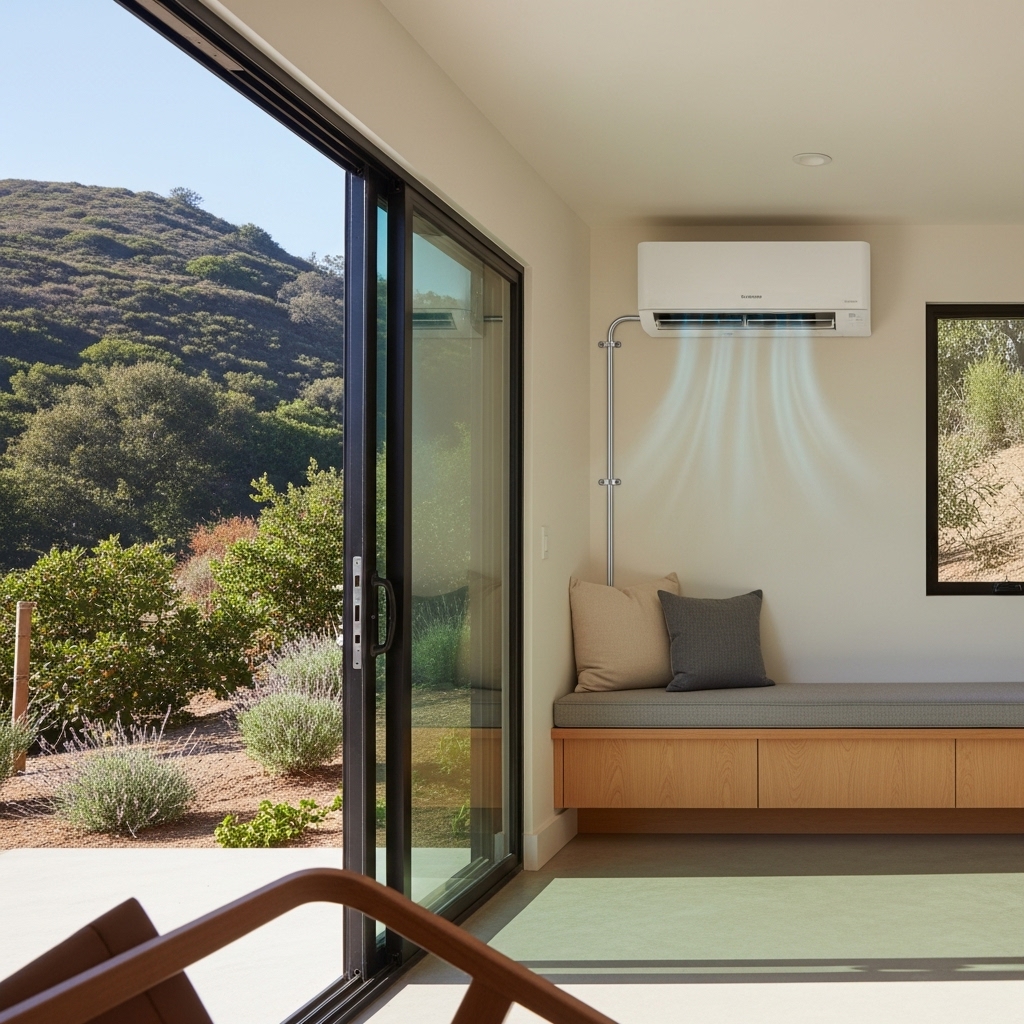
Adding an accessory dwelling unit in Malibu is about more than carving out extra square footage. It is about creating a small home that lives gracefully within the rhythm of the coast. Whether you are converting a garage near the sand, building a hillside studio for visiting family, or setting up a detached retreat tucked behind native landscaping, comfort will define how well your ADU works day to day. Mini split systems fit these spaces beautifully because they provide precise control without bulky ductwork, and they adapt to Malibu’s microclimates the way a surfboard adapts to a shifting break. Before we talk models and mounts, we look at the property, the exposure, and the way you plan to use the space, and we frame a solution that makes air conditioning feel like a natural part of the design.
Life on the coast means living with sea breeze, fog, and sun that arcs differently across each canyon and bluff. An ADU that faces the ocean can run cool and damp in the morning, while a backyard unit up the slope bakes in midday light. Mini splits shine because they modulate; the compressor doesn’t just flip on and off, it glides to meet the moment. That means softer sound, smoother temperatures, and better humidity control in tight footprints where the feel of the room matters as much as the measurement on a thermostat.
Why mini splits suit Malibu ADUs
Most ADUs do not have the loops and bends in walls and ceilings that make traditional duct runs easy. Mini splits avoid all that, with slim line sets and compact indoor heads that mount high on a wall, low near the floor, or flush in the ceiling. In a converted garage, a wall-mounted unit keeps the floor open for flexible furniture. In a quiet artist’s studio, a recessed cassette disappears into the design. Because many ADUs are built with large sliders or bi-folds to blend inside and outside, quick recovery from a few minutes of open-door living matters, and inverter-driven mini splits handle those transitions with grace.
Efficiency is another fit. Malibu’s code expectations and our shared ethic of coastal stewardship encourage systems that do more with less. Mini splits do not waste energy pushing cooled air through long duct runs. Their ability to stage quietly at low speed provides steady comfort without the on-off rollercoaster that makes small spaces feel drafty or overcooled. For homeowners thinking about future solar or battery integration, the gentle electrical profile of a mini split pairs well with smart energy planning.
Wall, floor, and ceiling options
The choice of indoor unit style is a blend of architecture and lifestyle. Wall mounts are the common workhorses: easy to service, efficient, and well-suited to the typical ADU layout. We place them where they can wash air across the room without blowing directly on the sofa or bed. Floor consoles make sense in spaces with raked ceilings or limited wall area, offering a gentle, upward throw that feels calm. Ceiling cassettes provide the most invisible finish and distribute air evenly, but they require sufficient attic or joist space and careful condensate management to avoid surprises on the ceiling after a foggy morning.
Noise is part of the decision. In a home office where you are on calls, the quietest head styles and thoughtful mounting—using vibration isolation and proper line-set routing—keep the room serene. In a guest suite, simple controls that prevent accidental mis-settings keep everyone happy. We also plan for maintenance access so filter changes and coil cleanings are quick rather than a half-day project.
Single-zone versus multi-zone strategies
Some ADUs thrive with a single indoor unit, especially studios or one-bedroom layouts with good air pathways. Others, particularly those with tight bedrooms, lofts, or a dedicated office nook, benefit from a multi-zone setup. One outdoor unit can serve multiple indoor heads, each with its own set point. The trick is balancing capacity and line-set lengths while preserving efficiency. On the coast, we also pay special attention to how the outdoor unit breathes; salt air and wind swirl in curious ways between fences and planting beds, and maintaining clear, calm airflow keeps the system both quiet and durable.
We think about future use, too. If your ADU may shift from office to rental to family quarters over time, pre-planning for an extra head or a slightly different layout can save opening walls later. Mini splits reward foresight with flexibility, and ADUs tend to evolve as families do.
Humidity, fog, and smoky days
Even when temperatures are mild, Malibu mornings can feel damp. Mini splits with fine-grained dehumidification modes are helpful in compact spaces where clamminess reads as discomfort quickly. We look for models that maintain gentle coil temperatures without overcooling, so the room feels dry but not chilly. During wildfire season, filtration becomes the headline. High-quality filters matched to the indoor head style, and a maintenance plan that makes swaps easy, keep indoor air cleaner without choking the system.
Condensate management is a small detail with big consequences. In a detached ADU, especially one down-slope from the main house, we design drainage with redundancy. A clear gravity path is ideal; a quiet, reliable condensate pump, carefully isolated and accessible, is the backup. Salt air makes fittings crusty if neglected, so clean-out access is a built-in feature in our designs.
Placement and coastal durability
Outdoor placement in Malibu is about air, sun, and salt. A mini split condenser needs space to breathe and a location that avoids direct blast from prevailing winds. We look for sheltered spots that do not trap hot exhaust against a wall, and we prefer surfaces that do not amplify noise into sleeping or work areas. Coastal-rated coatings and stainless hardware are non-negotiable. We route line sets in UV-stable covers and, when crossing stucco, flash penetrations carefully so salt-laden moisture cannot find a home behind the skin of the building.
We also consider neighbors and the ADU’s relationship to the main house. A condenser tucked out of sight is good manners, but not if it means cramped airflow or difficult service. Malibu’s permitting standards encourage this balance, and thoughtful placement keeps everyone’s evenings quieter.
Electrical planning and smart control
Many ADUs are added to existing electrical panels that are already balancing a home’s needs. Mini splits are friendly in that they sip rather than gulp electricity, but we still plan circuits with intention. Running dedicated lines with proper disconnects and surge protection avoids nuisance trips and protects sensitive electronics during wind-related outages. For smart control, we choose options that play well with phones and tablets while avoiding overly complex interfaces for guests or tenants. Scheduling that mirrors the fog burn-off and afternoon warmth keeps the room steady without babysitting the settings.
For owners considering future batteries or demand response enrollment, the even power profile of a mini split is a plus. The system’s preference for long, low-power cycles aligns with the idea of stretching stored energy, a practical benefit when a warm, still evening lands during a grid event.
Permitting notes for Malibu ADUs
An ADU changes a property’s use pattern, and the mechanical system is part of that story. Permitting typically looks at equipment location, clearances, and sound, with a goal of blending the ADU into the neighborhood calmly. We prepare documentation that shows where the condenser lives, how it satisfies setbacks and noise guidelines, and how the indoor units tie into the structure without compromising fire safety or moisture control. In flood-prone zones or hillside situations, we consider anchoring and elevation to keep equipment safe during storm runoff.
During the build, inspections focus on workmanship and safety: line-set flare quality or brazed joints, proper insulation, electrical connections, and correct condensate routing. We welcome those inspections because a well-executed mini split is easy to pass and easier to live with for years.
Designing for everyday life
Every successful ADU feels natural to occupy. That means the mini split should be quiet enough to disappear into the background, responsive enough to make mornings pleasant without thought, and simple enough that a guest can change the temperature without a tutorial. We aim registers and diffusers to avoid blowing on a workspace or a favorite reading chair. In sleeping areas, we dial in fan settings that lull rather than intrude. All of this is easier when the system is selected and placed with the specific ADU in mind rather than as a generic afterthought.
It also means planning for cleaning. Removable, washable filters and accessible coils turn a maintenance task into a five-minute chore. For owners who travel, Wi‑Fi control provides peace of mind; you can ease the room cooler before you arrive or check in during a heat wave to confirm everything is working as it should. In the middle of that ownership arc, we revisit performance to ensure your air conditioning still matches how the ADU is actually used, adjusting settings or adding a head if your needs evolve.
Mini split heat pump advantages
Many Malibu ADUs choose heat pump versions of mini splits for their ability to heat in the cooler months without lighting up a separate system. Morning fog gives way to evenings that can feel brisk, and a heat pump’s gentle warmth takes the edge off without drying the air. The same variable-speed logic that smooths summer cooling makes winter operation calm and efficient. For ADUs where gas extensions are impractical or undesired, this all-electric path simplifies construction and aligns with broader goals for resilient, low-emission housing.
In small spaces, the ability to hold a steady temperature matters more than a fast blast of hot or cold. Heat pump mini splits excel here, delivering a consistent, quiet backdrop that lets the ADU support work, sleep, or creative time without fuss.
Frequently Asked Questions
How big should a mini split be for a typical Malibu ADU?
Size depends on the ADU’s orientation, glazing, insulation, and how it is used. We run a load calculation rather than guess from square footage. The right capacity ensures steady, quiet operation and better humidity control. Oversizing leads to short cycles and less comfort, especially in the marine layer.
Is a multi-zone system better than a single-zone for an ADU?
It depends on the layout. A studio may be perfectly served by a single head. If your ADU has separate rooms or a loft, multiple heads offer personalized comfort. We balance capacity so each zone performs well without overcomplicating the system.
Will salt air damage a mini split?
Salt accelerates wear on outdoor components. We specify coastal-rated condensers, use stainless hardware, and plan for easy rinsing access. With routine maintenance, including gentle coil rinses and periodic inspections, a mini split can live a long, healthy life on the coast.
Are ceiling cassettes a good idea in ADUs?
They can be excellent when there is ceiling space for the unit and safe routing for condensate. They disappear visually and distribute air evenly. The key is proper installation to avoid leaks and to preserve quiet operation in a compact room.
Can I control the ADU’s mini split from my phone?
Yes, most modern systems offer Wi‑Fi control. We help set up user-friendly apps and schedules that match Malibu’s daily temperature swings. For rentals, we often create simple presets so guests can adjust comfort without getting lost in settings.
What maintenance do mini splits need?
Regular filter cleaning, occasional coil cleaning, and an annual check of refrigerant charge, electrical connections, and condensate lines keep them healthy. On the coast, quick rinse-downs of the outdoor unit help remove salt film and extend life.
How loud are mini splits in small spaces?
Properly selected and installed units are remarkably quiet. We mount indoor heads securely, isolate vibration, and choose outdoor locations that shield sound. In a home office or bedroom, that attention to detail keeps the system a whisper rather than a presence.
Start your ADU comfort plan
If you are envisioning a calm, comfortable ADU that feels tuned to Malibu rather than forced, we would be glad to help. We will walk the site, listen to how you want the space to live, and design a mini split plan that balances beauty, resilience, and ease. When you are ready to take the next step, reach out and we will guide you to the right air conditioning choice for your project.