
When summer settles over Malibu, the ocean offers its calming breath, but inland canyons warm quickly and even beach neighborhoods see afternoons that call for steady cooling. In that rhythm, your AC relies on ductwork to carry comfort where it is needed. If rooms feel uneven, the system sounds strained, or the thermostat seems to chase comfort instead of achieving it, the ducts often hold the answer. Homeowners naturally ask about the cost of replacing AC ducts, looking for simple rules of thumb. The reality is that the most meaningful part of the project is not the number itself but the design behind it—how runs are routed, how returns are sized, and how the system is sealed and insulated. If you are at the early stage of planning, a quick primer on duct replacement can help frame the conversation before a site-specific evaluation.
AC duct replacement is about restoring the system’s ability to move air smoothly and quietly. Square footage alone does not tell the story here in Malibu. A hillside home with multiple half-levels and exposed beams might force a complex routing that has nothing to do with floor area. A beach cottage with a shallow attic may constrict access, slowing work and limiting options. An open-plan modern with tall glazing needs supply placement and throw that respect solar gain and occupant comfort without drafts. The system must adapt to the home, not the other way around.
Understanding AC performance in our coastal climate
Cooling comfort depends on more than thermostat setpoints. It hinges on how evenly air washes across rooms, how gently it mixes, and how quickly the system can respond to changes. Malibu’s microclimates put pressure on these variables. Marine layers cool mornings but leave homes slightly damp; afternoon sun loads up glassy rooms; evenings cool fast when breezes pick up. Replacement planning should anticipate those swings. Supplies near large windows need to deliver air that counteracts solar gain without creating a draft. Returns should sit where warm, stratified air collects so that the system removes it efficiently.
In many homes, AC complaints trace back to duct layout and condition. Kinked flex, long detours, undersized returns, and leaky connections force the equipment to work harder than it should. Replacement is the moment to reset the network so that the AC unit can operate within its comfort zone—shorter runs, smoother transitions, tighter sealing, and thoughtful insulation.
Access and architecture guide the plan
Malibu’s architecture is adventurous. We see low-slope roofs with minimal attic clearance, exposed rafters, and cantilevered rooms that eliminate obvious pathways. We also see classic ranch homes with long attics that invite trunk-and-branch layouts. Access dictates the strategy. Where attics are walkable, we can reshape routes more freely, use radius fittings, and optimize returns. Where ceilings are architectural and space is tight, we may rely on chases, soffits, and shorter, more direct branches that preserve aesthetics while improving performance.
Stilted beach homes present their own pattern: braced crawlspaces, salt air, and proximity to the marine layer. In those spaces, attention to sealing and support is paramount. Shallow bays require careful selection of fittings so that turns remain gentle and airflow stays quiet. The home’s structure does not change, but the pathway for air can, and that is where replacement earns its keep.
Materials and details that matter
AC ducts should be insulated, sealed, and supported with a level of care that resists Malibu’s conditions. Metal trunks and plenums provide stability and quiet where volumes are high; flex branches offer adaptable routing when kept short, taut, and supported correctly. Joints deserve mastic attention; boots and collars should seat firmly. Where ducts cross hot attic zones, insulation continuity protects delivered air temperature and overall efficiency.
Return strategy is central for AC performance. Returns that are too small or poorly located generate noise and starve the system of the air it needs to circulate. During replacement, right-sizing and repositioning returns is one of the most transformative changes you can make, especially in open plans and high-ceiling spaces where warm air collects up high.
Noise: the background of comfort
A truly comfortable AC system is heard only as a gentle presence. Duct replacement is a chance to replace tight elbows with radius fittings, trim unnecessary length, and manage velocities so that air arrives with a whisper. Malibu homeowners often cite quiet as the first improvement they notice after a thoughtful project. Bedrooms become restful, living spaces hold conversations more easily, and home offices feel composed.
Testing and verification
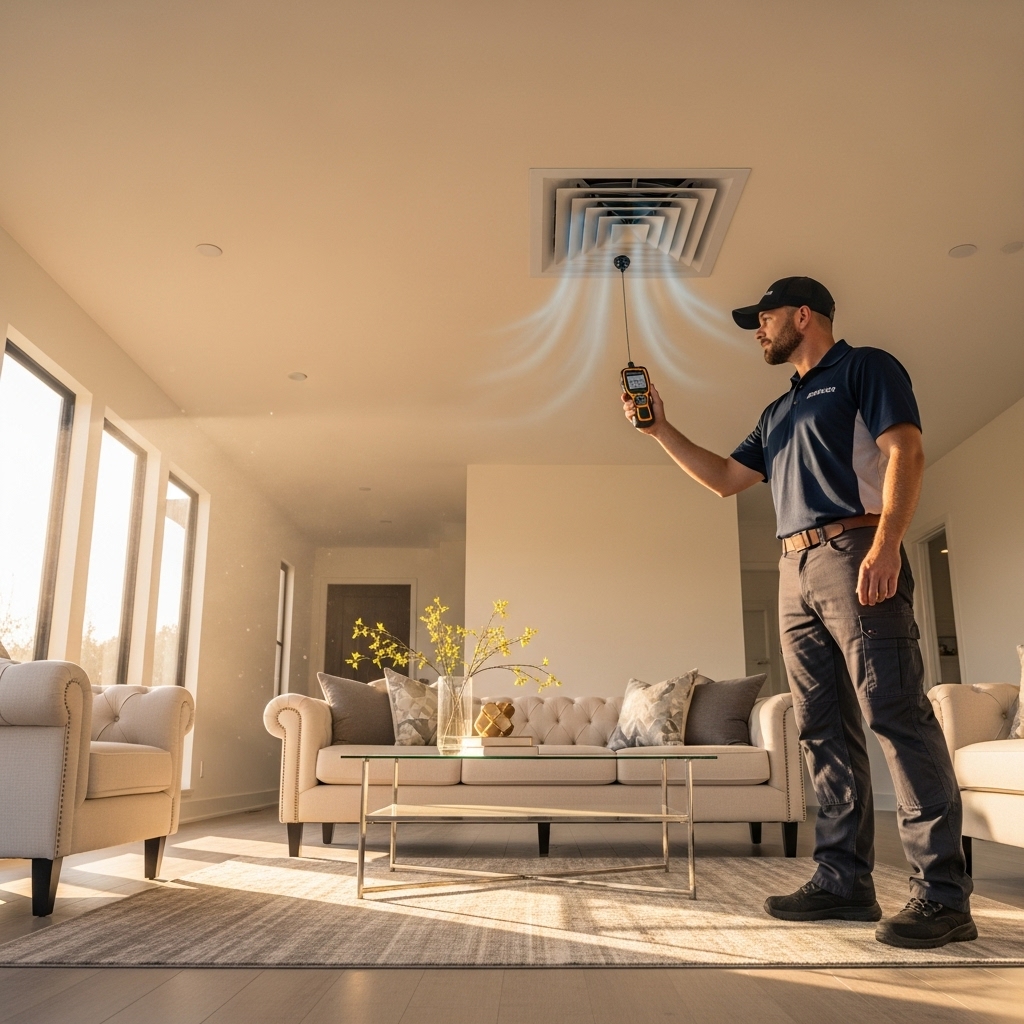
Replacing AC ducts should end with proof. Leakage testing, airflow measurements, and pressure checks confirm that the design is delivering what the equipment can produce. For homeowners, this step converts promises into confidence. It also creates a baseline for the future, especially if equipment upgrades are planned down the road. A tuned distribution system makes any future AC unit feel stronger because it is not fighting hidden losses.
Air quality and Malibu’s seasonal realities
While AC is about cooling, the duct network also shapes how clean the air feels. Malibu’s coastal breeze carries salt and moisture; our region also experiences smoky periods that push families indoors. Tight ducts that avoid pulling unconditioned air from attics or crawlspaces help filters work properly. Replacement is a good time to discuss filtration improvements and return placement that supports cleaner air, particularly in homes where occupants are sensitive to allergens or odors.
Mid-project insights
With old ducts removed, a clearer picture emerges of structural paths, obstructions, and opportunities. Many of the best adjustments happen at this stage: shifting a supply to wash a large window better, shortening a branch that once took an unnecessary detour, or upgrading a return route to calm background sound. These refinements are small on paper and big in daily life, the kind of changes you feel every time the system runs.
How proposals translate into outcomes
When you review proposals, pay attention to how the plan addresses comfort complaints, not just how many feet of duct will be replaced. Look for clarity about return sizing, sealing methods, insulation continuity, and how tricky turns will be handled. Ask where the system will be tested and balanced. Malibu homes reward this level of specificity, and so do the people who live in them. You are investing in how your home will feel in the peak of summer; the details decide whether that investment pays off.
Design harmony and visibility
Even in AC-focused projects, visible components matter. Registers and grilles should complement finishes and avoid drafts where people sit and sleep. In architecturally expressive homes, supply and return placement align with lighting, art, and sightlines. Replacement can make the mechanical system feel like a quiet, integrated part of the home rather than an afterthought. That harmony is as much about comfort as it is about aesthetics.
Living with the results
After replacement, homeowners often describe a sense of calm. The AC cycles more naturally, rooms feel even, and the background sound fades. Thermostat adjustments become less frequent because the network delivers what the equipment produces more faithfully. Those are the outcomes that matter. They are also the reason square-foot rules fall short in Malibu, where architecture and climate ask for a tailored response.
The middle of your research
Once you have walked the attic with a professional and considered a few design options, you will be in the middle of your research: informed enough to ask precise questions, but still choosing between layout strategies. This is the moment to revisit core concepts. Look at return placement, sealing, insulation, and how each branch serves its room. If a refresher would help, spend a few minutes with a clear overview of duct replacement so that your comparisons stay grounded in principles, not just line items.
Frequently asked questions
Q: Will AC feel stronger after duct replacement?
A: Usually, yes. When leakage is controlled, returns are right-sized, and runs are shortened and smoothed, the system delivers the cooling you already pay for more effectively.
Q: Do I need to replace returns as well as supplies?
A: In many cases, yes. Returns dictate how quietly and efficiently the system breathes. Right-sizing and relocating returns often produce immediate improvements in noise and evenness.
Q: How long does AC duct work take?
A: Duration depends on access, the extent of rerouting, and coordination with other work in the home. The right team protects finishes, communicates clearly, and keeps daily life moving around the project.
Q: Can replacement help with humidity or stuffiness?
A: Tightening ducts and improving return placement helps manage humidity and stale zones by promoting better air mixing and giving filters a fair shot at cleaning the air.
Q: What materials are best for AC ducts?
A: Many homes benefit from a blended approach—rigid trunks and plenums for control and quiet, paired with short, well-supported flex branches where needed for fit and gentle routing.
Q: How does Malibu’s climate influence choices?
A: Salt air, sun exposure, and microclimates push designs toward durable materials, meticulous sealing, and strategies that respect solar gain and evening breezes.
Q: Will the project be loud or messy?
A: Good teams protect surfaces, control dust, and stage work to limit disruption. Expect daytime activity, but the home should remain comfortable and clean each evening.
Q: How will we know the new ducts are performing?
A: Verification through leakage tests, airflow measurements, and pressure checks provides proof and a baseline for the future, reinforcing that the design meets its goals.
Ready to bring quiet, even cooling back to your Malibu home? Invite a local expert to trace your routes, discuss your daily patterns, and shape a plan that respects both architecture and airflow. Begin by learning the essentials of duct replacement, then schedule a site visit. We will protect your finishes, communicate clearly, and deliver a tuned system that makes summer feel easy again.