
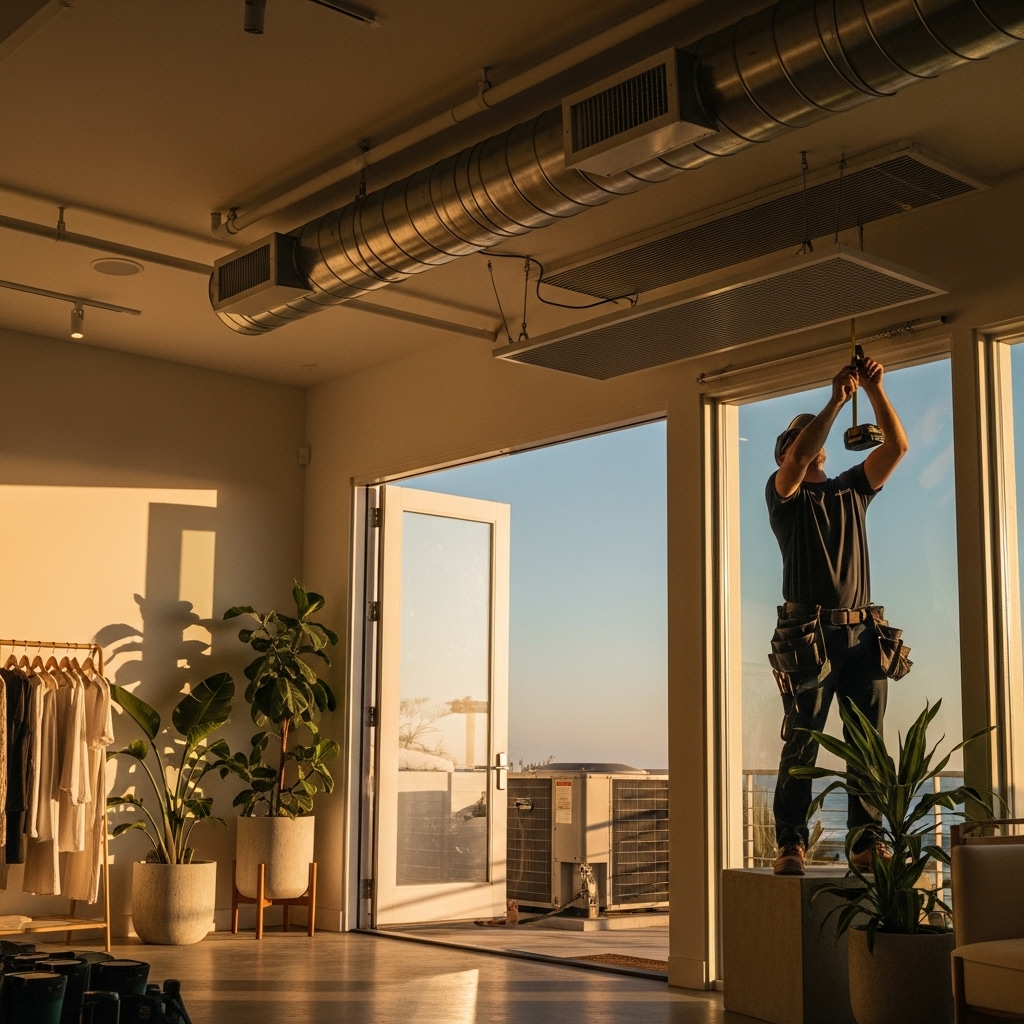
Retail in Malibu is more than a transaction; it’s an experience shaped by ocean light, open doors, and the rhythm of Pacific Coast Highway. Whether you’re curating a boutique near the Civic Center, welcoming diners at a café in Malibu Colony, or running a fitness studio perched above the water, the way your space feels determines how long guests linger and how often they return. Installing a new cooling system in this environment isn’t just a mechanical task—it’s a design decision that affects comfort, acoustics, product preservation, and your brand. When we plan air conditioning installations for coastal retail, we factor in salt air, foot traffic, door cycles, and glass-heavy architecture that turns sunsets into heat loads.
In a city where beach breezes meet canyon gusts, a retail storefront can face multiple climates in one day. Morning fog chills the entrance, mid-day sun heats the fitting rooms, and late afternoon crowds bring body heat and moisture. Your cooling system serves as a quiet conductor, smoothing those swings without calling attention to itself. That’s why the best installations tailor equipment selection, duct design, and controls to the exact way your space operates. A yoga studio that emphasizes serenity needs invisible airflow and very low sound; a gallery requires precise humidity control to protect artwork; a wine shop must avoid temperature spikes that can compromise inventory. Each of these realities shapes the equipment we select and the way we install it.
Designing for Salt, Sun, and Sound
Coastal placement influences performance. Outdoor condensers near the beach need corrosion-resistant coils, hardware that resists oxidation, and strategic siting that shelters from direct salt spray while preserving airflow. Rooftop units serving PCH-facing façades must account for midday glare and heat rising off the pavement. Sound is just as critical; compressors and fans should be isolated so they don’t add a hum to dining patios or spill into quiet dressing rooms. When installation includes vibration control, acoustic lining, and careful equipment pad selection, guests notice the comfort rather than the machinery.
Inside, duct routing and diffuser selection make or break the experience. Retail spaces often have high ceilings and long sightlines; dumping cold air from above can create chilly zones that clash with the warmth of sunlight streaming through storefront glass. We prefer mixed-air strategies: high-induction diffusers to blend air gently, perimeter runs that counter solar gain near windows, and returns placed to sweep heat and humidity away from the front door. These choices keep the space even, so a shopper feels comfortable at the entrance, in the back corner, and at the register.
Load Calculations That Reflect Real Operations
Textbook load calculations don’t capture what open doors, seasonal crowds, and event nights do to a retail space. We measure and model for your patterns: door count during peak hours, people density in popular zones, and interior gains from lighting and equipment. In Malibu, afternoon sun can transform west-facing glass into a radiant panel; if your installation doesn’t account for that, the system will chase comfort and never quite catch it. We also look at after-hours behavior. If you close at sunset and the marine layer moves in, do you need setback control that balances dehumidification with energy stewardship? The more precisely we frame your reality, the better your installation performs on day one.
Humidity control deserves special attention. Foggy mornings and ocean air raise indoor moisture even when temperatures feel mild. For boutiques and galleries, consistent humidity protects fabrics, wood, and finishes. For fitness and dining, it shapes comfort and the perception of freshness. We often specify equipment with dedicated dehumidification modes or couple cooling with a control strategy that lowers airflow at the coil to increase moisture removal while keeping temperatures steady. The result is a space that feels crisp without being cold, and products that look and smell the way you intend.
Electrical, Controls, and Integration
Modern retail thrives on data and control. During installation, we coordinate with electricians to ensure clean power, proper circuit protection, and surge mitigation—especially important along the coast where salt and mist can influence electrical reliability. Controls should match how you manage the space: zoning for back-of-house offices, remote access for managers, and sensors that account for door openings without overreacting. Integrating HVAC with building management or simple app-based platforms allows real-time monitoring so you can spot trends—like a zone that drifts warm whenever a particular door is propped open—and adjust proactively.
We also plan for wildfire smoke events that occasionally drift across Malibu. Tight return paths, well-sealed ducts, and filtration that fits correctly protect indoor air quality when you need it most. Including an economizer mode that’s smart enough to disable during smoke or high humidity helps maintain consistency. These details aren’t add-ons; they are part of a complete installation that respects the realities of operating a retail space on the coast.
Construction Coordination and Timeline
Installing in an active retail environment requires choreography. We aim to perform loud or disruptive tasks during off-hours, to coordinate crane lifts with property managers and PCH timing, and to plan staging so sidewalks remain clear and safe. Many Malibu retail spaces share walls or rooftop access; early communication prevents surprises and keeps neighboring businesses comfortable. When the plan includes duct modifications, we’ll mock up diffuser placement to verify sightlines and aesthetics from the sales floor before any cuts are made. Owners and designers appreciate that we treat HVAC as part of the overall gallery of the space, not an afterthought.
From procurement to commissioning, we set expectations. Equipment subject to coastal lead times or specialty coatings is ordered early, and we share milestones so you can plan staff schedules around any brief closures. Once equipment is in, we progress from rough-in to testing with a bias toward quietness and control accuracy. Numbers matter—static pressure, superheat, airflow—but so does the tactile feel in the room. We fine-tune registers and balance air so mannequins don’t ruffle and napkins don’t lift off café tables.
Energy Stewardship Without Compromising Comfort
Malibu businesses value sustainability and cost control. Title 24 compliance shapes many choices, from equipment efficiency to controls that prevent excessive after-hours runtime. Beyond code, we seek the sweet spot where guests are comfortable and systems don’t overwork. Demand response capability, variable speed compression, and staged ventilation let your store ride out hot afternoons gracefully, smoothing peaks that would otherwise strain equipment. When equipment can breathe—clean coils, correct clearances, protected from salt—it runs cooler and lasts longer, reducing the likelihood of emergency shutdowns on busy weekends.
Retrofits often reveal surprises. In older beachside buildings, we discover ducts that were sized for different concepts decades ago. We approach those findings with respect, salvaging what works and replacing what doesn’t, always mindful of ceilings that hide artwork lighting and sound systems. When we must open finishes, we plan minimal, clean cuts and coordinate with finishers so no one can tell where we were. Our installation isn’t just about performance; it’s about leaving the space better than we found it.
Communication is the final ingredient. Staff should know what to expect, which areas will be warm for a few hours during switchover, and when we’ll be calibrating at the register. Clear signage and friendly updates keep customers at ease and reinforce that improvements are underway. When we hand over the system, we share a simple guide for daily operation and a seasonal playbook that explains how to prepare for heat waves, foggy mornings, and smoky days. That transfer of knowledge helps your team maintain consistency when crowds surge and doors stay open.
In the middle of summer, Malibu retail rhythms change as surfers, tourists, and locals mix in new patterns. That’s why we revisit after the first few hot weekends to verify that the system’s real-world performance matches our models. A slight adjustment to diffuser angles or a tweak to a sensor’s location can transform the feel of a space. Our commitment to lifecycle support means we’re invested in how the installation performs months later, not just on the commissioning day. Consistency is everything, and it’s built on thoughtful design paired with responsive service that keeps your air conditioning quietly in tune with your brand.
Frequently Asked Questions
Q: How do you prevent rust and corrosion on rooftop or alley-facing condensers by the beach? A: We specify corrosion-resistant materials, protective coatings when appropriate, and strategic placement that avoids direct salt spray while maintaining airflow. Regular rinsing and periodic inspections keep coils clean and hardware stable.
Q: My space has lots of glass and doors that stay open. Can we still achieve even comfort? A: Yes. Proper load calculations, perimeter air distribution, high-induction diffusers, and smart controls that account for door cycles keep temperatures steady without drafts or cold spots.
Q: How quiet can my system be? A: Very quiet with the right design. Variable-speed equipment, vibration isolation, acoustic duct lining where beneficial, and careful diffuser selection maintain a tranquil environment suitable for galleries and upscale boutiques.
Q: Will the installation disrupt business? A: We coordinate to minimize downtime, performing noisy tasks off-hours and sequencing work so you can remain open as much as possible. When brief closures are necessary, we schedule and communicate well in advance.
Q: Do we need special filtration for wildfire smoke days? A: Tight return paths, properly fitted filters, and smart economizer control help maintain indoor air quality. We tailor options to your space so filtration supports comfort without introducing noise or airflow penalties that guests notice.
Q: How do you plan for events or seasonal peaks? A: We include those patterns in our design assumptions and controls, building in capacity and response that aligns with the way your store fills and empties over the day and throughout the year.
Q: What kind of maintenance should I expect after installation? A: A simple plan that includes coil rinsing, filter changes, and inspections tied to seasonal transitions. We train staff on daily best practices and schedule professional visits to keep performance consistent.
Bring the feel of the ocean inside without the discomfort that sometimes follows. If your retail concept deserves a cooling experience as refined as your brand, we’re ready to design and install a system that listens to your space and responds with precision. Reach out today, share your vision, and let us deliver air conditioning that keeps guests relaxed, products protected, and your story front and center.